8 citations
,
January 2022 in “Journal of Experimental Orthopaedics” It's unclear if cell-based therapies from lipoaspirate devices improve clinical outcomes due to inconsistent data.
4 citations
,
October 2025 in “Science Advances” VCAM1 appears early in kidney injury and signals future nephron loss.
 4 citations
,
August 2017 in “Journal of cutaneous pathology”
4 citations
,
August 2017 in “Journal of cutaneous pathology” An 8-year-old girl had a rare, benign skin tumor on her forehead.
Moderate immune responses help hair growth, while excessive responses slow it down.
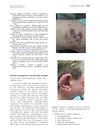
A 72-year-old man was diagnosed with a rare skin form of Rosai-Dorfman disease after years of misdiagnosis.
2 citations
,
May 2024 in “International Journal of Molecular Sciences” Targeting CD169+ skin macrophages may help treat psoriasis.
 April 2016 in “Journal of Investigative Dermatology”
 A specific type of immune cells, called CD301b-expressing macrophages, are crucial for skin repair processes.
July 2025 in “Journal of Investigative Dermatology” Schwann cell and M2 macrophage interactions contribute to keloid growth by increasing matrix deposition.
5 citations
,
September 2023 in “Journal of Cosmetic Dermatology” c-Maf positive macrophages help form hypertrophic scars by affecting fibroblasts and collagen production.
1 citations
,
June 2024 in “Journal of Investigative Dermatology” Macrophages are crucial for hair regrowth in contact hypersensitivity.
 36 citations
,
April 2018 in “Journal of Investigative Dermatology”
36 citations
,
April 2018 in “Journal of Investigative Dermatology” Macrophages help hair growth after injury through CX3CR1 and TGF-β1.
2 citations
,
June 2024 in “Frontiers in Immunology” 3D cultures can create active macrophages from fat tissue.
4 citations
,
October 2024 in “Tissue Engineering and Regenerative Medicine” November 2025 in “Wound Repair and Regeneration” Single-cell sequencing shows that different types of macrophages have unique roles in wound healing.
 7 citations
,
February 2015 in “Journal of comparative pathology”
7 citations
,
February 2015 in “Journal of comparative pathology” CD8+ T cells play a key role in graft-versus-host disease in certain mice models.
89 citations
,
March 1996 in “Proceedings of the National Academy of Sciences” CD18-deficient mice developed psoriasis-like skin disease, useful for studying inflammatory skin disorders.
IL-18 signaling helps mature Tregs move into the thymus.
 175 citations
,
December 2014 in “PLoS Biology”
175 citations
,
December 2014 in “PLoS Biology” Macrophages help activate hair follicle stem cells, affecting hair growth and skin repair.
April 2023 in “Journal of Investigative Dermatology” CD206+ macrophages are crucial for hair growth in alopecia areata treatment.
 24 citations
,
May 2021 in “Nature Communications”
24 citations
,
May 2021 in “Nature Communications” Cavity macrophages gather on organ surfaces but don't really invade or help repair the organs after injury.
41 citations
,
April 2019 in “PLOS genetics” CD34+ and CD34- melanocyte stem cells have different regenerative abilities.
 27 citations
,
May 2018 in “Journal of Dermatological Science”
27 citations
,
May 2018 in “Journal of Dermatological Science” M2 macrophages, a type of immune cell, help in new hair growth on scars by producing growth factors.
IL-18 signaling helps mature Tregs move into the thymus.
8 citations
,
February 2024 in “Matrix Biology” August 1994 in “American Journal of Veterinary Research” Monoclonal antibody B72.3 selectively reacts with certain dog tissues, mainly in the gastrointestinal and respiratory tracts.
 September 2022 in “Research Square (Research Square)”
 Macrophages help maintain mammary stem cells and balance through specific signaling.
 15 citations
,
May 2023 in “npj Regenerative Medicine”
15 citations
,
May 2023 in “npj Regenerative Medicine” Macrophages help maintain mammary stem cells and tissue balance through specific signaling pathways.
April 2021 in “Journal of Investigative Dermatology” Arg1+ macrophages may play a role in causing alopecia areata.
20 citations
,
June 2024 in “Journal of Autoimmunity” Inflammation in rheumatoid arthritis increases steroid activation in cells, reducing inflammation.
Bipotent dermal stem cells and specific macrophages are crucial for hair regrowth and regeneration.