 October 2022 in “The Egyptian Journal of Hospital Medicine”
 Topical corticosteroids are the preferred first treatment for children with Alopecia Areata.
 March 2022 in “Research Square (Research Square)”
 A girl with severe hair loss saw hair regrowth after using cannabis.
 January 2022 in “Skin appendage disorders”
 A woman with alopecia totalis regrew dark hair in bands after using a corticosteroid ointment.
 December 2021 in “Research Square (Research Square)”
 M-CSF-stimulated myeloid cells can cause alopecia areata in mice.
 December 2021 in “Signal transduction and targeted therapy”
 Increasing sebum production might help reduce fat and improve metabolism.
 July 2021 in “PARIPEX INDIAN JOURNAL OF RESEARCH”
 PRP injections significantly improve hair regrowth in alopecia areata.
 July 2021 in “Clinical case reports and studies”
 Topical diphencyprone effectively treated a 9-year-old boy's alopecia areata with fewer side effects.
 April 2021 in “Journal of Investigative Dermatology”
 Photobiomodulation therapy may help treat hair loss in people with darker skin, but more research is needed.
 November 2020 in “Dubai medical journal”
 Tofacitinib may effectively regrow hair in alopecia totalis patients.
 June 2020 in “Journal of Investigative Dermatology”
 Tiny particles from skin cells can help activate hair growth.
 January 2020 in “Mastology”
 Flow cytometry was effective in diagnosing metastatic breast cancer in a bone marrow sample.
 October 2019 in “Skin appendage disorders”
 The vitreous membrane in hair follicles changes shape during the hair cycle and may affect hair growth and nutrient exchange.
 April 2019 in “Journal of Investigative Dermatology”
 Differences in growth factors in platelet-rich plasma therapy for hair loss can vary between patients and can be influenced by the devices used, possibly leading to inconsistent results.
 March 2019 in “Nasza Dermatologia Online”
 A man had both alopecia areata and lichen planus, which is uncommon.
 November 2018 in “Atlas of genetics and cytogenetics in oncology and haematology”
 WNT10B is linked to cancer development and affects survival and disease progression in various cancers.
 November 2018 in “The Journal of Allergy and Clinical Immunology: In Practice”
 Using old drugs for new uses can help treat rare immune deficiencies.
 April 2018 in “Journal of Investigative Dermatology”
 Mint water extract boosts protective enzymes in skin cells.
 April 2018 in “Journal of Investigative Dermatology”
 Claudin-1 and Claudin-3 are crucial for keeping hair follicle structure and preventing a type of hair loss called telogen effluvium.
 April 2018 in “Journal of Investigative Dermatology”
 Acne patients' skin, both with and without lesions, shows a strong immune response and higher antimicrobial activity.
 April 2018 in “Journal of Investigative Dermatology”
 The role of γδT-cells in causing alopecia areata remains unclear.
 April 2018 in “Journal of Investigative Dermatology”
 Nicotinic acid reduces excessive oil production in skin cells by activating a specific receptor, which could help treat acne.
 March 2018 in “Suez Canal University Medical Journal”
 NKG2D gene polymorphism doesn't affect SLE risk but may influence symptoms like rash and hair loss.
 April 2017 in “Journal of Investigative Dermatology”
 Researchers improved a method to study individual cells in newborn mouse skin and found a way to assess the severity of a skin condition in humans.
 April 2017 in “Journal of Investigative Dermatology”
 Early and late matrix progenitors in hair follicles create different cell layers, with early ones forming the companion layer and later ones forming the inner root sheath and hair shaft.
 April 2017 in “Journal of Investigative Dermatology”
 Sweat glands and hair follicles are determined by opposing signals, with BMPs promoting sweat glands and blocking BMPs leading to hair follicles.
 April 2017 in “Journal of Investigative Dermatology”
 Chemotherapy and radiation therapy cause skin and hair damage by altering gene expression and signaling pathways.
 January 2017 in “Postepy Dermatologii I Alergologii”
 The CRH/CRH-R1 system might be involved in causing lichen planus.
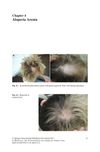 December 2016 in “Springer eBooks”
 A 45-year-old woman with autoimmune diseases experienced patchy hair loss due to alopecia areata, which has no cure but can be treated, with varying success.
 August 2016 in “Journal of Investigative Dermatology”
 The enzyme CD73 helps control human hair growth and could be targeted to treat hair growth disorders.
 August 2016 in “Journal of Investigative Dermatology”
 Human hair follicles have a scent receptor that can influence hair growth.