1 citations
,
September 2020 in “bioRxiv (Cold Spring Harbor Laboratory)” γδ T cells are crucial for early wound healing after a skin virus infection.
The CD4 protein may play a role in the behavior of certain skin cells, affecting their growth, movement, and differentiation.
July 2026 in “Journal of Investigative Dermatology” January 2011 in “Repository KITopen (Karlsruhe Institute of Technology)” Blocking certain proteins on immune cells may help treat alopecia areata.
1 citations
,
November 2024 in “Blood” PI3Kδ inhibition may effectively treat cutaneous chronic graft-versus-host disease.
August 2026 in “British Journal of Dermatology” sCD83 shows promise for treating hair loss by promoting growth and reducing inflammation.
April 2023 in “Journal of Investigative Dermatology” Contact immunotherapy can change immune responses in alopecia areata, suggesting new treatment targets.
89 citations
,
March 1996 in “Proceedings of the National Academy of Sciences” CD18-deficient mice developed psoriasis-like skin disease, useful for studying inflammatory skin disorders.
 11 citations
,
September 1999 in “Journal of the European Academy of Dermatology and Venereology”
11 citations
,
September 1999 in “Journal of the European Academy of Dermatology and Venereology” Immunomodulatory therapies are effective for treating cutaneous lymphoma, particularly in early stages.
 August 2023 in “European journal of dermatology/EJD. European journal of dermatology”
 Combining topical delgocitinib with a 308-nm excimer laser can effectively treat severe alopecia areata and vitiligo.
July 2024 in “Journal of Investigative Dermatology” PH-762 shows promise in treating skin cancer by effectively targeting and silencing PD-1 in tumors with minimal side effects.
 15 citations
,
April 2017 in “Cell Stem Cell”
15 citations
,
April 2017 in “Cell Stem Cell” Some brain cancer cells avoid immune system detection, and certain treatments could target this to slow their growth; also, certain fat cell precursors help regenerate hair and skin after injury.
 11 citations
,
March 2014 in “Journal of Investigative Dermatology”
11 citations
,
March 2014 in “Journal of Investigative Dermatology” Genetic mutation and carcinogen treatment are both needed for skin cancer to develop in these specific mice.
33 citations
,
October 2006 in “European Journal of Immunology” The CD44-CD49d complex boosts T cell activation and survival in autoimmune disease.
 40 citations
,
December 2012 in “PLoS ONE”
40 citations
,
December 2012 in “PLoS ONE” Removing Ctip2 in skin cells causes skin inflammation similar to atopic dermatitis.
 February 2011 in “Journal of Investigative Dermatology”
 New findings suggest targeting IL-23 could treat psoriasis, skin cells can adapt to new roles, direct conversion of skin cells to blood cells may aid cell therapy, removing certain tumor cells could boost cancer immunotherapy, and melanoma may have many tumorigenic cells, not just cancer stem cells.
 103 citations
,
January 2011 in “Blood”
103 citations
,
January 2011 in “Blood” Thymus transplantation successfully restored immune function in infants with FOXN1 deficiency.
CMV infection increases the risk of GvHD after bone marrow transplants.
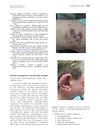
A 72-year-old man was diagnosed with a rare skin form of Rosai-Dorfman disease after years of misdiagnosis.
CD28 is a promising target for treating alopecia areata with belatacept.
CD28 is a promising target for treating alopecia areata with belatacept.
3 citations
,
April 2012 in “Cancer research” Mouse skin cancer progression involves a unique group of cells marked by ABCG2 and MTS24.
12 citations
,
September 2022 in “Frontiers in Immunology” Soluble CD83 speeds up wound healing and reduces scarring.
 November 2022 in “Journal of Investigative Dermatology”
 Scientists found a new type of skin cell that could help with skin repair and these cells work better with a certain protein.
May 2026 in “Chemical Engineering Journal” 4 citations
,
October 2024 in “Experimental Dermatology” CD8A and FOXD2-AS1 may be key for diagnosing and treating alopecia areata.
60 citations
,
October 2020 in “Nature Communications” AP-1 and TGFß work together to drive resistance in basal cell carcinoma, suggesting new treatment options.
January 2014 in “Repository KITopen (Karlsruhe Institute of Technology)” Autoimmune diseases need combined therapy of tolerance induction and immunosuppression.
65 citations
,
February 2011 in “Molecular cancer therapeutics” CCT128930 is a promising new drug that effectively targets and inhibits a cancer-related protein, showing potential for cancer treatment.