 March 2024 in “Clinical, cosmetic and investigational dermatology”
 Upadacitinib may effectively treat alopecia areata without side effects.
 January 2024 in “Dermatology practical & conceptual”
 Lymecycline may help with Frontal Fibrosing Alopecia but needs more research.
Baricitinib may effectively treat oral lichen planus.
 October 2023 in “Benha Journal of Applied Sciences”
 PPAR-γ may be a key target for treating alopecia areata and other skin conditions.
 August 2023 in “Research Square (Research Square)”
 Melanocytes may trigger the immune response in alopecia areata, affecting hair regrowth.
 June 2023 in “British journal of dermatology/British journal of dermatology, Supplement”
 Some multiple sclerosis treatments may trigger hair loss conditions like alopecia areata.
COVID-19 may trigger or worsen rapid hair loss in alopecia areata.
 October 2022 in “The Egyptian Journal of Hospital Medicine”
 Topical corticosteroids are the preferred first treatment for children with Alopecia Areata.
 March 2022 in “Research Square (Research Square)”
 A girl with severe hair loss saw hair regrowth after using cannabis.
 January 2022 in “The Egyptian Journal of Hospital Medicine”
 Higher IL-21 levels may help predict alopecia areata activity.
 January 2022 in “Skin appendage disorders”
 A woman with alopecia totalis regrew dark hair in bands after using a corticosteroid ointment.
 December 2021 in “Research Square (Research Square)”
 M-CSF-stimulated myeloid cells can cause alopecia areata in mice.
 December 2021 in “Signal transduction and targeted therapy”
 Increasing sebum production might help reduce fat and improve metabolism.
 July 2021 in “PARIPEX INDIAN JOURNAL OF RESEARCH”
 PRP injections significantly improve hair regrowth in alopecia areata.
 July 2021 in “Clinical case reports and studies”
 Topical diphencyprone effectively treated a 9-year-old boy's alopecia areata with fewer side effects.
 April 2021 in “Journal of Investigative Dermatology”
 Photobiomodulation therapy may help treat hair loss in people with darker skin, but more research is needed.
 November 2020 in “Dubai medical journal”
 Tofacitinib may effectively regrow hair in alopecia totalis patients.
 June 2020 in “Journal of Investigative Dermatology”
 Tiny particles from skin cells can help activate hair growth.
 January 2020 in “Mastology”
 Flow cytometry was effective in diagnosing metastatic breast cancer in a bone marrow sample.
 October 2019 in “Skin appendage disorders”
 The vitreous membrane in hair follicles changes shape during the hair cycle and may affect hair growth and nutrient exchange.

Live imaging helps us understand skin immune responses and develop treatments.
 April 2019 in “Journal of Investigative Dermatology”
 Differences in growth factors in platelet-rich plasma therapy for hair loss can vary between patients and can be influenced by the devices used, possibly leading to inconsistent results.
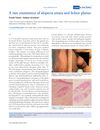 March 2019 in “Nasza Dermatologia Online”
 A man had both alopecia areata and lichen planus, which is uncommon.
 November 2018 in “Atlas of genetics and cytogenetics in oncology and haematology”
 WNT10B is linked to cancer development and affects survival and disease progression in various cancers.
 November 2018 in “The Journal of Allergy and Clinical Immunology: In Practice”
 Using old drugs for new uses can help treat rare immune deficiencies.
 May 2018 in “White Rose eTheses Online (University of Leeds, The University of Sheffield, University of York)”
 Alopecia areata may be treated by using EGCG to balance immune cells and reduce inflammation.
 April 2018 in “Journal of Investigative Dermatology”
 Mint water extract boosts protective enzymes in skin cells.
 April 2018 in “Journal of Investigative Dermatology”
 Claudin-1 and Claudin-3 are crucial for keeping hair follicle structure and preventing a type of hair loss called telogen effluvium.
 April 2018 in “Journal of Investigative Dermatology”
 Acne patients' skin, both with and without lesions, shows a strong immune response and higher antimicrobial activity.
 April 2018 in “Journal of Investigative Dermatology”
 The role of γδT-cells in causing alopecia areata remains unclear.