Search
for
Sort by
Research
570-600 / 1000+ resultsresearch A Nonrandomized Clinical Trial Investigating Keratinocyte Growth Factor‐Hair Serum for the Prevention of Chemotherapy‐Induced Alopecia
Keratinocyte Growth Factor-Hair Serum may help prevent hair loss during chemotherapy, but more research is needed.

research CYP3A5 Polymorphism in Circulating Tumor Cells Confers an Increased Disease-Free Survival in DLBCL Patients Treated with R-CHOP
A specific genetic trait in tumor cells is linked to longer survival without disease in certain lymphoma patients.
research Protein Kinase C Epsilon Signals Ultraviolet Light‐induced Cutaneous Damage and Development of Squamous Cell Carcinoma Possibly Through Induction of Specific Cytokines in a Paracrine Mechanism
Protein kinase C epsilon may promote skin cancer development after UV exposure by affecting nearby cells.

research Upadacitinib for the Treatment of Systemic Immune Co-Morbidity in One Case: Alopecia Areata, Vitiligo, Ankylosing Spondylitis, and Allergic Rhinitis-Asthma – Multifaceted Control
Upadacitinib improved multiple immune-related conditions in one patient.
research Activation of AR Sensitizes Breast Carcinomas to NVP-BEZ235's Therapeutic Effect Mediated by PTEN and KLLN Upregulation
Breast cancer treatments work better with AR activation, improving results and reducing side effects.
research Hair-Growth-Promoting Effect of Conditioned Medium of High Integrin α6 and Low CD 71 (α6bri/CD71dim) Positive Keratinocyte Cells
A special mix from certain skin cells can help hair grow by making hair root cells grow faster and activating growth signals.
research Deucravacitinib, an oral, selective, allosteric tyrosine kinase 2 inhibitor, in patients with alopecia areata: efficacy and safety results of a phase II, multicenter, randomized, double-blinded, placebo-controlled trial
Deucravacitinib did not significantly improve hair regrowth in alopecia areata patients.
research Co-operation between follicular ornithine decarboxylase and v-Ha-ras induces spontaneous papillomas and malignant conversion in transgenic skin
High levels of ODC and a mutant Ha-ras gene cause tumors in mice.
research Oral and Topical Janus Kinase Inhibitors in Patients With Cutaneous T‐Cell Lymphoma: A Real‐World Single‐Center Experience
Janus kinase inhibitors may help treat cutaneous T-cell lymphoma, but more research is needed.
research Hair Growth Promoting and Anticancer Effects of p21-activated kinase 1 (PAK1) Inhibitors Isolated from Different Parts of Alpinia zerumbet
Compounds from Alpinia zerumbet may help with hair regrowth and cancer treatment by targeting PAK1.
research Vandetanib-associated alopecia areata in a patient with metastatic medullary thyroid cancer
A cancer patient developed a type of hair loss after starting a cancer drug called vandetanib.
research Targeting the Hypoxic Microenvironment in Cutaneous Chronic Graft-Versus-Host Disease through PI3Kδ Inhibition
PI3Kδ inhibition may effectively treat cutaneous chronic graft-versus-host disease.
research Protein Kinase C Epsilon Signals Ultraviolet Light-induced Cutaneous Damage and Development of Squamous Cell Carcinoma Possibly Through Induction of Specific Cytokines in a Paracrine Mechanism
Protein kinase C epsilon may increase skin cancer risk by affecting nearby cells.
research 092 Novel biallelic RIPK4 mutations cause ectodermal dysplasia with cutaneous syndactyly
New RIPK4 gene mutations were found to cause a type of skin and limb birth defect.
research 575 INTASYL self-delivering RNAi: A flexible platform to treat dermatological malignancies
INTASYL is a promising, adaptable RNAi technology for treating skin cancers.
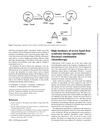
research High incidence of severe hand–foot syndrome during capecitabine–docetaxel combination chemotherapy
About half the patients treated with capecitabine and docetaxel developed severe hand-foot syndrome.
research 138: Induction of cellular senescence and hair follicle stem cell dysfunction upon p14ARF and p16Ink4a expression in the skin
p14ARF and p16Ink4a cause hair follicle stem cell aging and dysfunction.
research The effect of cilostazol, a phosphodiesterase 3 (PDE3) inhibitor, on human hair growth with the dual promoting mechanisms
Cilostazol helps hair grow by making hair root cells grow faster and changing growth factor levels.
research Inhibiting Janus kinases to treat alopecia areata
JAK inhibitors might help treat alopecia areata.
research Androgen receptor inhibits the hair follicle induction potential of dermal papilla cells by binding with Tcf4 at the A574 binding site
research First-in-human phase 1 study of ETC-159 an oral PORCN inhbitor in patients with advanced solid tumours.
ETC-159 was safe up to 30 mg, but no tumor shrinkage was seen.
research Nε-(carboxymethyl) lysine (CML) inhibits hair follicle formation by suppressing hair bulb condensation
research Synthesis of 17β-N-arylcarbamoylandrost-4-en-3-one derivatives and their anti-proliferative effect on human androgen-sensitive LNCaP cell line
Compounds 6f and 6g effectively stop prostate cancer cell growth without harming healthy cells.
research Epigenetic Regulation of Medulloblastoma Proliferation by Finasteride-Induced Modulation of BTG2 and CD244 Gene Methylation
Finasteride may help treat childhood brain tumors by activating certain genes.
research Evaluating the Therapeutic Potential of Ritlecitinib for the Treatment of Alopecia Areata
Ritlecitinib shows promise for hair regrowth in alopecia areata patients.
research Unexpected hair growth induced by gefitinib treatment in two patients with EGFR gene mutation-positive adenocarcinoma of the lung
Gefitinib treatment led to unexpected hair growth in two lung cancer patients.
research Post-marketing safety signals of four JAK inhibitors for alopecia areata: an indication-restricted FAERS pharmacovigilance study
JAK inhibitors for alopecia areata have different safety risks, requiring specific monitoring for each drug.
research Keratosis Pilaris-like Eruption during Treatment of Chronic Myeloid Leukemia with Tyrosine Kinase Inhibitors: Literature Review and Report of a Case Related to Imatinib
Some leukemia treatments can cause skin reactions similar to keratosis pilaris.
research Atypical Protein Kinase C Isoform, aPKCλ, Is Essential for Maintaining Hair Follicle Stem Cell Quiescence
aPKCλ is crucial for keeping hair follicle stem cells inactive and maintaining normal hair growth.