50 citations
,
February 2007 in “The Journal of Pathology” Somatic BHD mutations are rare in Japanese renal tumors.
 5 citations
,
July 2022 in “Orphanet journal of rare diseases”
5 citations
,
July 2022 in “Orphanet journal of rare diseases” RSPO1 mutations in certain patients lead to skin cells that don't develop properly and are more likely to become invasive, increasing the risk of skin cancer.
1 citations
,
July 2017 in “Cancer Research” Overexpressing NSD3 in mice causes breast cancer-like tumors and gland abnormalities.
3 citations
,
September 2023 in “Genes” Dkk genes evolved faster in birds and reptiles, affecting hair development functions.
3 citations
,
January 2014 Collagen XVIII and Bmx tyrosine kinase are important for hair growth and skin cancer development.
27 citations
,
November 2007 in “Genomics” Mutations in specific keratin genes cause improper hair structure in mice due to faulty keratin protein assembly.
39 citations
,
September 2018 in “American Journal of Medical Genetics Part A” A new genetic mutation in the ODC1 gene causes developmental delay and other symptoms in a young girl.
April 2021 in “The journal of investigative dermatology/Journal of investigative dermatology” TET enzymes are important for skin and hair development by controlling gene activity in specific areas.
1 citations
,
May 2016 in “Journal of Cosmetic Dermatology” Cytokeratins 15 and 19 may help track vitiligo treatment progress.

The treatment was ineffective in humans.
117 citations
,
August 1999 in “Nature Genetics”  April 2017 in “Journal of Investigative Dermatology”
 Targeted siRNA therapy may be a promising treatment for KID syndrome by reducing mutant gene expression and improving cell communication.
119 citations
,
September 2000 in “Journal of Biological Chemistry” GKLF/KLF4 and Sp1 control Keratin 19 gene activity, influencing cancer-related changes.
 174 citations
,
November 2016 in “Cell stem cell”
174 citations
,
November 2016 in “Cell stem cell” Different types of skin cells have unique genetic markers that affect how likely they are to spread cancer.
37 citations
,
August 2000 in “Journal of Cutaneous Pathology” Poromas are related to sweat duct cells, and CK patterns help distinguish apocrine poromas from other neoplasms.
 September 2020 in “Acta Scientific Cancer Biology”
 Personalized treatment based on detailed tumor analysis successfully managed and reduced the patient's aggressive hair follicle cancer.
 April 2019 in “The journal of investigative dermatology/Journal of investigative dermatology”
 848 genes related to fat and metabolism are less active in people with Central Centrifugal Cicatricial Alopecia.
46 citations
,
November 1998 in “Experimental Cell Research” K15 gene is mainly active in the basal layers of hair follicles and epithelia, aiding early skin cell development.
51 citations
,
December 2006 in “Mammalian Genome” 27 citations
,
February 2003 in “European Journal Of Oral Sciences” SVpgC2a cells show abnormal growth and keratin changes, modeling early cancer development.
 3 citations
,
January 2023 in “Science advances”
3 citations
,
January 2023 in “Science advances” The enzymes Tet2 and Tet3 are important for skin cell development and hair growth.
105 citations
,
October 2018 in “Nature” A small group of slow-growing cells causes basal cell carcinoma to return after treatment.
11 citations
,
March 2021 in “Molecular Carcinogenesis” Twist1 is crucial for UVB-induced skin cancer development.
8 citations
,
March 2015 in “International Journal of Oncology” Tsc2-deficient stem cells can help understand and treat TSC-related tumors.
July 2017 in “Cancer Research” Polyamines help repair DNA breaks and may influence cancer development.
11 citations
,
October 2007 in “Journal of Investigative Dermatology” Mutations in the Sgk3 gene cause fuzzy hair in mice.

A genetic mutation in the CDH3 gene causes hair loss and vision problems in a young Saudi girl.
146 citations
,
February 2012 in “Journal of Clinical Investigation” Blocking Hedgehog signaling offers new treatment options for advanced basal cell carcinoma.
 9 citations
,
May 2013 in “JAMA Dermatology”
9 citations
,
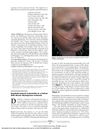
May 2013 in “JAMA Dermatology” A woman's hair turned white after taking a cancer drug called dasatinib.
The microenvironment affects the behavior and survival of melanocytes with the GNAQ oncogene in melanoma.