 1 citations
,
December 2022 in “The journal of investigative dermatology/Journal of investigative dermatology”
1 citations
,
December 2022 in “The journal of investigative dermatology/Journal of investigative dermatology” Choosing the right method to separate skin layers is key for good skin cell research.
 1 citations
,
November 2022 in “Frontiers in medicine”
1 citations
,
November 2022 in “Frontiers in medicine” The study found that giant pandas have more melanin in black hair follicles than white, with gene expression differences that could affect hair color and skin health.
 1 citations
,
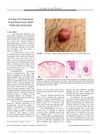
February 2017 in “The American journal of dermatopathology/American journal of dermatopathology”
1 citations
,
February 2017 in “The American journal of dermatopathology/American journal of dermatopathology” A man with a skin nodule was diagnosed with a rare skin condition called cutaneous focal mucinosis, which can be confused with other skin cancers.
 1 citations
,
January 2017 in “Springer eBooks”
1 citations
,
January 2017 in “Springer eBooks” Understanding the immune-related causes of Alopecia Areata has led to potential treatments like JAK inhibitors.
 1 citations
,
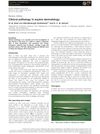
June 2016 in “Equine Veterinary Education”
1 citations
,
June 2016 in “Equine Veterinary Education” The document concludes that using the right diagnostic methods and careful sample handling is crucial for accurately diagnosing horse skin diseases.
 1 citations
,
January 2015 in “Annals of Dermatology”
1 citations
,
January 2015 in “Annals of Dermatology” Cocaine possibly mixed with levamisole caused a woman's skin condition and blood issues, which improved with treatment.

The study found that different genes are active in cashmere goats' hair growth stages, which can help improve cashmere production.
January 2026 in “International Journal of Molecular Sciences” S100a4 is key for hair growth in cashmere goats.
 January 2026 in “Communications Biology”
 Yak hair follicles adapt to cold through specific gene regulation, enhancing cell growth.
 October 2025 in “bioRxiv (Cold Spring Harbor Laboratory)”
 Root hair growth slows under force, confirming a model of cell wall mechanics.
June 2025 in “Cell Metabolism” Serine is vital for hair follicle stem cells to balance hair growth and skin repair.
 May 2025 in “International Journal of Molecular Sciences”
 Exosomes from rat hair follicle stem cells may help heal wounds and regenerate skin.
 April 2025 in “Journal of Investigative Dermatology”
 High LH levels cause hair loss by damaging and aging hair follicles.
 April 2025 in “Health Science Reports”
 Smoking and lighter hair color increase alopecia risk, especially in women and those over 25.
 March 2024 in “Cell communication and signaling”
 Lack of sleep in mice leads to prostatitis by reducing certain hormones and activating an inflammatory pathway, which can be temporarily fixed with normal sleep.
 February 2024 in “Advanced Science”
 The new scaffold with two growth factors speeds up skin healing and reduces scarring.

Elastin-like recombinamers show promise for better wound healing and skin regeneration.
 December 2023 in “Curēus”
 Surgical removal of a scalp keratoacanthoma is effective and prevents recurrence, but hair may not regrow.
FGF9 helps hair follicles grow in small-tailed Han sheep by affecting cell growth and certain signaling pathways.
 May 2023 in “Stem Cells International”
 Different parts of the body's fat tissue have unique cell types and characteristics, which could help treat chronic wounds.
 January 2023 in “International journal of biological sciences”
 COX2 and ATP synthase control the size of hedgehog spines.
 September 2022 in “Institutional Repositories DataBase (IRDB)”
 3D-oxy exosomes may significantly boost hair growth, offering new treatment options for hair loss.
Moles may stop growing because of cell cooperation, not just because of aging cells.
Moles may stop growing due to cell cooperation, not just because of individual cell aging.

Ocu-miR-205 affects hair density in Rex rabbits by influencing cell processes and signaling pathways.

PlacMA hydrogels from human placenta are versatile and useful for cell culture and tissue engineering.

Keratin hydrogels from human hair show promise for tissue engineering and regenerative medicine.
 May 2013 in “Springer eBooks”
 Skin problems in the elderly are unique and may indicate other diseases, involving changes in skin, hair, nails, and increased cancer risk.
 September 2010 in “Companion Animal”
 The guide explains how to diagnose and treat hair loss in dogs, covering causes and treatments, with some conditions lacking treatment options.
May 2026 in “Science Advances” Caloric stress and differentiation increase IRES translation, affecting stem cell function and potential therapies.