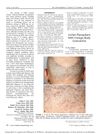
 5 citations
,
April 2014 in “The American Journal of Dermatopathology”
5 citations
,
April 2014 in “The American Journal of Dermatopathology” Foreign-body granuloma may be a marker for late-stage Lichen Planopilaris and should be considered in diagnosis.
 4 citations
,
January 2021 in “Skin appendage disorders”
4 citations
,
January 2021 in “Skin appendage disorders” Trichodynia is a painful scalp condition not directly linked to the amount or type of hair loss and may involve psychological factors, with treatments showing mixed results.
 2 citations
,
October 2023 in “Dermatology practical & conceptual”
2 citations
,
October 2023 in “Dermatology practical & conceptual” More research is needed to understand hair and scalp disorders in people with skin of color.
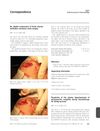 2 citations
,
August 2013 in “British Journal of Dermatology”
2 citations
,
August 2013 in “British Journal of Dermatology” Chemotherapy improved a girl's painful foot condition linked to pachyonychia congenita.
 2 citations
,
March 2011 in “Journal of Cutaneous Pathology”
2 citations
,
March 2011 in “Journal of Cutaneous Pathology” The document suggests simplifying alopecia diagnosis and improving techniques for better accuracy.
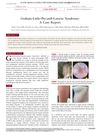 1 citations
,
January 2023 in “Journal of Drugs in Dermatology”
1 citations
,
January 2023 in “Journal of Drugs in Dermatology” Early detection of Graham-Little-Piccardi-Lasseur syndrome is key for better management.
 1 citations
,
July 2018 in “Elsevier eBooks”
1 citations
,
July 2018 in “Elsevier eBooks” Triple horizontal scalp biopsies are 98% accurate in diagnosing hair loss, better than single biopsies.
 July 2024 in “Plastic and Aesthetic Research”
 Careful planning and accurate diagnosis are crucial for successful hair restoration surgery.

The document is a detailed guide on skin conditions and treatments for dermatologists.
 July 2018 in “Elsevier eBooks”
 The most common cause of hair loss in children is tinea capitis, followed by alopecia areata and telogen effluvium.
 August 2017 in “Journal of The American Academy of Dermatology”
 The book is a detailed and well-organized resource on skin conditions, useful for medical students and dermatologists.
 July 2016 in “American Journal of Dermatopathology”
 The meeting showcased rare skin disease cases, highlighting the need for accurate diagnosis and treatment.
 April 2012 in “Informa Healthcare eBooks”
 Classifying hair diseases, like alopecia, is difficult and needs more research to understand their causes.
 10 citations
,
June 2000 in “Primary Care”
10 citations
,
June 2000 in “Primary Care” The document explains different hair loss types and treatments, emphasizing diagnosis through examination and tests, and specific treatments for each condition.
 April 2012 in “Informa Healthcare eBooks”
 Lichen planopilaris is a rare, chronic condition causing hair loss, mainly in middle-aged women, and early treatment is important to prevent permanent baldness.
 160 citations
,
March 2009 in “Seminars in Cutaneous Medicine and Surgery”
160 citations
,
March 2009 in “Seminars in Cutaneous Medicine and Surgery” New insights show Lichen Planopilaris is a rare, scarring hair loss condition, hard to treat, mainly affecting middle-aged women, and significantly impacts mental health.
 27 citations
,
May 2017 in “Marine Drugs”
27 citations
,
May 2017 in “Marine Drugs” Undariopsis peterseniana extract helps hair grow by activating certain cell growth pathways and could be a new treatment for hair loss.
 1 citations
,
May 1965 in “Medical Clinics of North America”
1 citations
,
May 1965 in “Medical Clinics of North America” Hair growth dysfunction involves various conditions with limited treatment options.
 46 citations
,
January 2020 in “Theranostics”
46 citations
,
January 2020 in “Theranostics” Injecting a special gel with human protein particles can help hair grow.
 42 citations
,
April 2011 in “Annals of Pharmacotherapy”
42 citations
,
April 2011 in “Annals of Pharmacotherapy” Flutamide effectively treats female pattern hair loss with low doses showing good liver tolerance.
 32 citations
,
June 2017 in “Journal of Pharmaceutical Sciences”
32 citations
,
June 2017 in “Journal of Pharmaceutical Sciences” Chitosan-coated nanoparticles improve skin delivery of hair loss treatments with fewer side effects.
 25 citations
,
May 2020 in “Aesthetic Surgery Journal”
25 citations
,
May 2020 in “Aesthetic Surgery Journal” The regenerative solution, tSVF, is a safe and effective treatment for various conditions like aged skin, scars, wounds, and more, but more research is needed to find the best way to use it.
 19 citations
,
July 2015 in “Journal of Ginseng Research”
19 citations
,
July 2015 in “Journal of Ginseng Research” Korean Red Ginseng may protect against hair loss caused by chemotherapy.
 14 citations
,
December 1998 in “The Journal of Clinical Endocrinology and Metabolism”
14 citations
,
December 1998 in “The Journal of Clinical Endocrinology and Metabolism” MENT could be a better option than testosterone for male hormone therapy and birth control because it works well at lower doses and has fewer side effects on the prostate.
 4 citations
,
January 2012 in “Elsevier eBooks”
4 citations
,
January 2012 in “Elsevier eBooks” The document concludes that various skin conditions have specific treatments, ranging from antihistamines for urticaria to surgery and medication for tumors and chronic skin diseases.
 3 citations
,
July 2021 in “Aesthetic Plastic Surgery”
3 citations
,
July 2021 in “Aesthetic Plastic Surgery” PHAT may improve hair growth better than PRP alone.
 1 citations
,
April 2019 in “Advances in Cosmetic Surgery”
1 citations
,
April 2019 in “Advances in Cosmetic Surgery” Platelet-rich plasma shows potential for hair growth, but more research is needed to determine the best preparation method.
August 2025 in “Tropical Journal of Natural Product Research” Celery extract and candlenut oil effectively and safely boost hair growth.
 August 2025 in “Research Square (Research Square)”
 High TNF-α levels may increase hair loss risk after PRP therapy.
 January 2019 in “Elsevier eBooks”
 Different hair disorders have specific treatments and outcomes, with some resolving on their own and others requiring medication or emotional support.