1 citations
,
December 2023 in “International journal of molecular sciences” miR-199a-3p controls hair growth and is linked to alopecia areata.
 April 2026 in “Antibodies”
 The role of antibodies in alopecia is unclear, but JAK inhibitors show promise for treatment.
 June 2025 in “Journal of Cluster Science”
 Metal nanoparticles show promise for treating hair loss but need more research to ensure safety.
 October 2023 in “International journal of women’s dermatology”
 Hair camouflage methods like wigs and extensions can help Black women with alopecia feel better but may also damage hair if not used carefully.
1 citations
,
January 2018 in “Skin appendage disorders” The complement system might be involved in the development of alopecia areata and could lead to new treatments.
2 citations
,
May 2023 in “Journal of Indian Society of Periodontology” Dental care may help improve hair loss in alopecia patients.
 May 2025 in “Journal of Nanobiotechnology”
 The gel improves hair regrowth and reduces irritation in alopecia areata treatment.
46 citations
,
October 2018 in “JCI insight” CD8+ T cells are involved in alopecia areata and may cause disease relapse.
 31 citations
,
July 2017 in “Stem cell investigation”
31 citations
,
July 2017 in “Stem cell investigation” Platelet-rich plasma (PRP) is a simple, cost-effective treatment that promotes hair growth and reduces hair loss, with high patient satisfaction.
18 citations
,
February 2023 in “eLife” ILC1-like cells can independently cause alopecia areata.
 4 citations
,
January 2023 in “Skin health and disease”
4 citations
,
January 2023 in “Skin health and disease” Blocking Janus kinase 1 helps stop inflammation and regrow hair, making it a good treatment for hair loss from alopecia areata.
 4 citations
,
January 2022 in “The journal of investigative dermatology/Journal of investigative dermatology”
4 citations
,
January 2022 in “The journal of investigative dermatology/Journal of investigative dermatology” A faulty KLHL24 gene leads to hair loss by damaging hair follicle stem cells.
 4 citations
,
January 2020 in “International Journal of Trichology”
4 citations
,
January 2020 in “International Journal of Trichology” Too much epidermal growth factor can cause hair loss.
 October 2024 in “International Journal of Molecular Sciences”
 Rosa rugosa extract promotes hair growth and could be a natural treatment for hair loss.
ILC1-like cells can independently cause alopecia areata by affecting hair follicles.
May 2019 in “Journal of Acupuncture Research” Sebalgukhwa-san (SGS) can help treat hair loss without liver toxicity.
September 2025 in “Journal of the American Academy of Dermatology”  1 citations
,
August 2023 in “Andrology”
1 citations
,
August 2023 in “Andrology” Finasteride changes hormone levels and certain proteins in rats, but these effects can be reversed after stopping the drug.
Hair prostheses are important for people with significant hair loss.
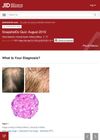 July 2019 in “Journal of Investigative Dermatology”
 The research found that male pattern hair loss is mostly genetic and involves hair thinning due to hormonal effects and changes in gene expression.
Hair disorders are complex and varied, including hair loss, excessive growth, color, and shaft issues.
January 2018 in “Journal of Investigative Dermatology” Blocking certain pathways with kinase inhibitors may help treat cutaneous lupus erythematosus.
3 citations
,
October 2024 in “Experimental Dermatology” Higher CRHR1 levels in AA patients lead to increased inflammation.
 8 citations
,
November 2021 in “The Journal of Dermatology”
8 citations
,
November 2021 in “The Journal of Dermatology” The article simplifies trichoscopy terms and offers a new diagnostic flowchart.
 5 citations
,
November 2021 in “Skin appendage disorders”
5 citations
,
November 2021 in “Skin appendage disorders” Hair loss can cause stress and mental health issues, so treatments should address both the physical and psychological aspects, involving a team of dermatologists, psychologists, and hair specialists.
 1 citations
,
January 2013 in “Dermatology practical & conceptual”
1 citations
,
January 2013 in “Dermatology practical & conceptual” The book is a useful guide for identifying hair loss conditions with clear photos and treatment tips, recommended for skin and hair specialists.
May 2026 in “Dermatologic Surgery” GLP-1RAs may cause hair loss but could also help regrow hair in some cases.

Non-drug treatments like saw palmetto, horsetail, pumpkin seed oil, curcumin, and addressing nutritional deficiencies may help female hair loss.
 September 2018 in “PubMed”
 Hair becomes thinner, grayer, and may fall out more as people get older, and styling habits can worsen these effects.
 January 2017 in “Journal of Investigative Dermatology Symposium Proceedings”
 The 2015 Hair Research Congress concluded that stem cells, maraviroc, and simvastatin could potentially treat Alopecia Areata, topical minoxidil, finasteride, and steroids could treat Frontal Fibrosing Alopecia, and PTGDR2 antagonists could also treat alopecia. They also found that low-level light therapy could help with hair loss, a robotic device could assist in hair extraction, and nutrition could aid hair growth. They suggested that Alopecia Areata is an inflammatory disorder, not a single disease, indicating a need for personalized treatments.