23 citations
,
July 2016 in “JAMA Ophthalmology” CDH3-related disease causes worsening eye and hair issues.
18 citations
,
March 2009 in “Experimental Dermatology” Pilomatricoma can develop into various hair-related structures.
49 citations
,
April 2007 in “Pediatric Dermatology” Biotin improved hair appearance in uncombable hair syndrome but didn't change hair structure.
14 citations
,
January 2014 in “Annals of Dermatology” Some cases of folliculotropic mycosis fungoides may progress slowly and not need aggressive treatment.
February 2025 in “International Journal of Clinical & Experimental Dermatology” Trichotillomania in children is a sign of emotional distress needing tailored treatment and family support.
5 citations
,
April 2023 in “Life” CCCA affects adolescents too, with genetic and environmental links, requiring careful diagnosis.
 June 2023 in “Italian journal of dermatology and venereology”
 Trichoscopy effectively diagnoses allergic scalp contact dermatitis.

A 12-year-old girl was misdiagnosed with alopecia areata but actually had a nevus sebaceus with a genetic mutation.
 11 citations
,
April 2020 in “Journal of Dermatological Treatment”
11 citations
,
April 2020 in “Journal of Dermatological Treatment” Taking oral isotretinoin with creams worked better for treating a type of hair loss than creams alone.

Frontal fibrosing alopecia in men is often misdiagnosed and needs better diagnostic criteria and treatments.
January 1976 in “Revista de Estudios Agrosociales” Frontal fibrosing alopecia and vitiligo might be linked by similar immune issues.

A rapid screening method using trichoscopy and clinical data can improve diagnosis and treatment of tinea capitis.
 April 2026 in “International Journal of Drug Delivery Technology”
 Trichoscopy is a reliable, non-invasive tool for diagnosing scalp alopecias.
 May 2017 in “InTech eBooks”
 Trichoscopy and trichogram are useful for diagnosing hair and scalp conditions.
1 citations
,
March 2006 in “Journal of Cosmetic Dermatology” The woman's forehead lesion was caused by ointment use and resolved with treatment.
 32 citations
,
September 2017 in “Journal of the American Academy of Dermatology”
32 citations
,
September 2017 in “Journal of the American Academy of Dermatology” Oral isotretinoin effectively treats yellow facial papules in frontal fibrosing alopecia patients.
 September 2024 in “Archiv Euromedica”
 Trichoscopy is a quick, accurate, and non-invasive method to diagnose and treat non-scarring hair loss.
January 2024 in “Muller Journal of Medical Sciences and Research” Trichoscopy is a useful tool for diagnosing patchy hair loss, reducing the need for biopsies.
 1 citations
,
September 2021 in “CRC Press eBooks”
1 citations
,
September 2021 in “CRC Press eBooks” Frontal Fibrosing Alopecia is a hair loss condition mainly affecting postmenopausal women, with unclear causes and various clinical patterns.
 August 2021 in “Case Reports”
 A woman thought to have rosacea was actually suffering from Frontal Fibrosing Alopecia, a hair loss condition. Despite treatment, her condition didn't change, showing the importance of accurate early diagnosis.
4 citations
,
November 2020 in “Case reports in dermatology” A rare skin condition causes red, dark, bumpy facial lesions.
 15 citations
,
November 2012 in “International Journal of Dermatology”
15 citations
,
November 2012 in “International Journal of Dermatology” The conclusion is that hair loss from CCCA may be genetic and not solely caused by hair grooming practices.
1 citations
,
March 2013 in “Clinical, cosmetic and investigational dermatology” The boy's hair loss was due to a hair-pulling disorder, not just a fungal infection.
23 citations
,
February 2003 in “British Journal of Dermatology” A rare type of skin lymphoma was identified, affecting hair follicles and sweat glands.
 January 2025 in “International Journal of Dermatology”
 Tofacitinib improved hair and nail conditions in a teen with alopecia areata.
1 citations
,
December 2023 in “JAAD International” Mast cells may significantly contribute to central centrifugal cicatricial alopecia.
August 2019 in “Anais Brasileiros de Dermatologia” 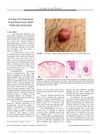 1 citations
,
February 2017 in “The American journal of dermatopathology/American journal of dermatopathology”
1 citations
,
February 2017 in “The American journal of dermatopathology/American journal of dermatopathology” A man with a skin nodule was diagnosed with a rare skin condition called cutaneous focal mucinosis, which can be confused with other skin cancers.
 July 2024 in “JAAD Case Reports”
 Corticosteroid injections for hair loss may cause eye problems, so caution is needed.
Benign tumors from hair follicles can look like other skin cancers but have distinct features under dermoscopy.