60 citations
,
July 1997 in “Journal of Wildlife Diseases” Young northern elephant seals with skin disease were smaller, had nutrient imbalances, and higher PCB levels, possibly linked to the disease.
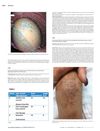 October 2017 in “The American journal of gastroenterology”
 Three patients suffered severe health issues due to not getting enough vitamins and minerals after weight-loss surgery.
 103 citations
,
March 2011 in “PLoS Biology”
103 citations
,
March 2011 in “PLoS Biology” Birds can lose neck feathers due to a genetic change that increases a gene's activity, helping them adapt to heat.
67 citations
,
September 2017 in “Cell Reports” Caloric restriction improves skin and fur structure but can cause muscle loss and movement issues.
33 citations
,
January 1977 in “PubMed” Feeding rats oxidized rapeseed oil and lard caused weight loss, organ damage, and toxicity symptoms.
 10 citations
,
June 2021 in “Primates”
10 citations
,
June 2021 in “Primates” Wild geladas in crop areas show less grooming and aggression.
February 2026 in “The Laryngoscope” Airway issues can occur in Conradi–Hünermann–Happle syndrome and can be managed with minimally invasive procedures.
 May 2026 in “Zenodo (CERN European Organization for Nuclear Research)”
 Amalaki Churna effectively reduces hair fall and improves hair health.
Early and precise nutritional intervention is crucial for managing anorexia nervosa.
 130 citations
,
January 2005 in “American Journal of Clinical Dermatology”
130 citations
,
January 2005 in “American Journal of Clinical Dermatology” Eating disorders like anorexia and bulimia cause skin problems, and dermatologists can help detect these disorders early for better treatment outcomes.
 4 citations
,
January 2017 in “Ciência Rural”
4 citations
,
January 2017 in “Ciência Rural” A horse in Brazil with skin and gut issues was diagnosed with a severe disease and had to be euthanized.
17 citations
,
January 2015 in “JOURNAL OF CLINICAL AND DIAGNOSTIC RESEARCH” Cronkhite-Canada syndrome is a rare, non-inherited condition causing various symptoms like polyps, hair loss, and weight loss.
December 2009 in “Pediatrics in review” A girl with Crohn's disease had a hairball causing bowel obstruction, which was removed, and she recovered well.
 5 citations
,
March 2013 in “International journal of surgical pathology”
5 citations
,
March 2013 in “International journal of surgical pathology” Cronkhite-Canada syndrome can be diagnosed without gastrointestinal polyps if there is severe mucosal atrophy and edema.
2 citations
,
April 2021 in “Journal of Mind and Medical Sciences” A man thought to have appendicitis actually had a rare pancreas-related condition.
126 citations
,
November 1987 in “The Journal of Pediatrics” Selenium deficiency can cause skin and hair color loss, muscle weakness, and blood cell changes, but these improve with selenium supplements.
Eclipta alba can effectively kill worms like the drug Albendazole.
2 citations
,
January 1981 16 citations
,
January 2015 in “Forensic science international” The hair of two ancient Chilean mummies is well-preserved and contains high levels of heavy metals.
 4 citations
,
July 2013 in “Journal of dermatology”
4 citations
,
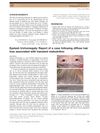
July 2013 in “Journal of dermatology” Malnutrition can cause unusual eyelash growth and hair loss.
6 citations
,
October 1998 in “PubMed” Antifungal treatment can improve severe skin infections with cutaneous horns.
 December 2021 in “Journal of clinical images and medical case reports”
 Moth-eaten alopecia is linked to various skin diseases and requires early treatment to prevent worsening.
 May 2026 in “Zenodo (CERN European Organization for Nuclear Research)”
 The EDAR V370A allele in East Asians likely evolved due to reliance on aquatic resources providing essential nutrients.
 May 2026 in “Zenodo (CERN European Organization for Nuclear Research)”
 The EDAR V370A allele in East Asians likely evolved due to reliance on aquatic resources providing essential nutrients.
 10 citations
,
March 2015 in “American journal of primatology”
10 citations
,
March 2015 in “American journal of primatology” Ingesting Leucaena leucocephala caused hair loss and increased infant mortality in ringtailed lemurs.
May 2021 in “Indian journal of forensic medicine and toxicology” Eating too much clove can cause serious liver damage.
Malnourished people have weaker hair that is easier to pluck.
 February 2025 in “Frontiers in Veterinary Science”
 Prussian Blue successfully treated thallium poisoning in a dog.