 January 2026 in “RSC Advances”
 The hydrogel helps heal wounds without scars by releasing two drugs gradually.
 January 2026 in “Materials Horizons”
  January 2026 in “Clinical Cosmetic and Investigational Dermatology”
 Placenta polypeptide injection is a safe and effective treatment for sensitive skin.
 November 2025 in “Nanoscale Advances”
 Inorganic nanoparticle-based scaffolds can improve wound healing by fighting bacteria and helping tissue grow.
 July 2025 in “Bulgarian Portal for Open Science”
 Granulation and epithelialization are crucial for healing large skin wounds.
 January 2025 in “ARC Journal of Dermatology”
 Vaping may harm skin health by causing inflammation.
 December 2024 in “Journal of Population Therapeutics and Clinical Pharmacology”
 Rosemary and kalonji seeds can improve hair health and treat hair conditions.
 October 2023 in “Plant Archives/Plant archives”
 Hibiscus rosa-sinensis is effective and safe for use in herbal soaps and hair oils, promoting skin and hair health.
 December 2011 in “Asia-Pacific biotech news”
 In 2011, there were major scientific breakthroughs in cancer treatment, immunity, Parkinson's, virus simulation, schizophrenia, hair growth, lung cancer, and medical grafts.
 October 2007 in “Journal of Investigative Dermatology”
 The document suggests a bacteria plays a significant role in acne rosacea and that white hair can regain color after transplant, meriting more research on reversing grey hair.
 June 2026 in “Gümüşhane Üniversitesi Fen Bilimleri Enstitüsü Dergisi”
 PVA/agar films with Achillea millefolium essential oil are promising for wound dressings due to good strength and selective antibacterial effects.
 June 2026 in “International Journal of Homoeopathic Sciences”
 Personalized homeopathic treatment improved chronic facial melasma and skin texture.
 February 2026 in “International Journal of Advanced Research in Science Communication and Technology”
 Herbal anti-dandruff shampoos can be as effective as synthetic ones, with fewer side effects.
Barbers trained in hair loss can better support and refer clients with alopecia.
 November 2025 in “Journal of Ayurveda and Integrated Medical Sciences”
 Using essential oils in Shiroabhyang can improve hair health and growth.
 December 2024 in “Mağallaẗ ʻulūm al-rāfidayn”
 Adding more zinc oxide nanoparticles increases sunblock SPF.
Onabotulinumtoxin-A effectively treated a painful scalp condition when other treatments failed.
 January 2024 in “Institutional Repositories DataBase (IRDB)”
 The method accurately measures steroid hormones in hair to study hormone dynamics related to hair loss.
 December 2023 in “International Journal of Research in Ayurveda and Pharmacy”
 Ayurvedic remedies may boost immunity and balance in cancer treatment but need more research.
 November 2023 in “Regenerative Biomaterials”
 The new adhesive seals wounds quickly, works well in wet conditions, and helps with healing.
 August 2023 in “International Journal of Science and Research (IJSR)”
 Kadali is a versatile medicinal plant used to treat various health issues.
 January 2023 in “International Journal of Indian Medicine”
 Ayurveda offers holistic treatments for hair fall, including therapies and lifestyle changes.
 December 2021 in “Benha Journal of Applied Sciences”
 Higher Claudin 3 levels in the blood are linked to more severe alopecia areata.
 March 2021 in “Egyptian Journal of Chemistry”
 The herbal shampoo with Momordica charantia and Hibiscus Rosa-Sinensis is safe and promotes hair growth and scalp health.
 September 2020 in “Benha Journal of Applied Sciences”
 Protein hair straighteners damage the hair more than hair dyes.
 August 2019 in “Journal of archaeological science: Reports/Journal of archaeological science: reports”
 Ancient hair can preserve hormones, revealing health and fertility insights.
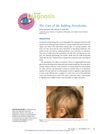 November 2017 in “Pediatrics in Review”
 A 4-year-old girl with hair loss was diagnosed with early-onset trichotillomania and improved with behavioral interventions.
 April 2003 in “Experimental Dermatology”
 The workshop highlighted the genetic links and psychological impacts of hair loss and skin disorders.

Hair loss in African American women, caused by hair care, genetics, and environment, needs more research for better treatment.
 March 2023 in “International Journal of Advanced Research in Science, Communication and Technology”
 Various medicinal plants like Polygonum multiflorum, Red ginseng extract, and Zizyphus jujuba can potentially treat hair loss, offering benefits like low cost and multiple ways of working. Other effective natural substances include Pygeum africanum, Seneroa, Urtica dioica, and more.