December 2022 in “Scientific Reports” Compound 4 is a promising treatment for hair loss with low toxicity.
2 citations
,
May 2019 in “International Journal of Molecular Sciences” Tranexamic acid turns white hair brown in certain mice by affecting specific proteins.
October 2023 in “Lithuanian University of Health Sciences” The TG5 gene affects beef cattle weight, and the CC genotype leads to higher weights.
April 2023 in “Journal of Investigative Dermatology” cp-asiAR may effectively treat hair loss by targeting androgen receptors.
February 2009 in “RePub (Erasmus University Rotterdam)” Androgen receptor activity is influenced by hormones, co-factors, modifications, and mutations.
October 2023 in “Journal of cystic fibrosis” 43 citations
,
May 1999 in “Journal of Biological Chemistry” Agouti protein affects melanocortin receptors through competitive antagonism and receptor down-regulation.
25 citations
,
March 2004 in “Regulatory Toxicology and Pharmacology” Using testosterone-stimulated weanling rats can effectively replace castrated rats for anti-androgen testing, reducing animal stress.
 September 2025 in “Tạp chí Da liễu học Việt Nam”
 2.5 mg/mL TAC is as effective and safe as 5 mg/mL, but 5 mg/mL may improve hair regrowth and density more.
 April 2023 in “Cancer research”
 KRTAP2-3 could help predict cancer recurrence by identifying specific cancer cells.
 August 2023 in “Dermatology Reports”
 Acne not improved by usual treatments may indicate a genetic disorder.
September 2023 in “Journal of the American Academy of Dermatology” CTP-543 is generally safe for treating alopecia areata.
10 citations
,
August 2020 in “Acta histochemica” All-trans-retinoic acid stops mink hair growth by affecting cell growth and causing cell death.
 April 2018 in “Journal of Investigative Dermatology”
 CREB, a protein that can promote cancer traits, is controlled by β-catenin in skin cancer cells.
October 2021 in “QJM: An International Journal of Medicine” N-acetyl-cysteine improves hair growth and is safe for treating early male hair loss.
 402 citations
,
August 2011 in “Cancer research”
402 citations
,
August 2011 in “Cancer research” Prostate cancer cells can make their own androgens to activate the androgen receptor, and treatments like abiraterone may increase this ability, suggesting new therapies should target the entire steroid-making pathway.
11 citations
,
October 1941 in “Experimental Biology and Medicine” PABA helps prevent gray hair and hair loss in mice.
 23 citations
,
December 2013 in “British Journal of Dermatology”
23 citations
,
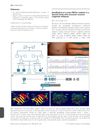
December 2013 in “British Journal of Dermatology” A new gene mutation linked to a skin condition was found in a Spanish family.
 7 citations
,
March 2022 in “Scientific reports”
7 citations
,
March 2022 in “Scientific reports” Removing anthrax toxin receptor 1 in pigs prevents Senecavirus A infection and causes a rare disease similar to GAPO syndrome.
March 2013 in “Pigment Cell & Melanoma Research” A gene called Taqpep affects cat coat patterns like stripes and blotches.
11 citations
,
May 2012 in “Genesis” Bmpr2 and Acvr2a receptors are crucial for hair retention and color.
December 2022 in “Ecological Chemistry and Engineering S” A new compound was made to detect copper ions effectively.
 1 citations
,
January 1970
1 citations
,
January 1970 Precise objectives can improve student achievement in health education.
22 citations
,
June 2002 in “Journal of Medicinal Chemistry” Compounds 15, 20, and 25 are strong inhibitors of human steroid 5α-reductase type 2.
42 citations
,
January 2002 in “Skin Pharmacology and Physiology” Reconstructed skin models are useful for studying how skin processes certain chemicals.
1 citations
,
July 2021 in “Small ruminant research” Vitamin E, alone or with yeast, helped reduce arsenic poisoning effects in young goats.
 15 citations
,
March 2015 in “Experimental Dermatology”
15 citations
,
March 2015 in “Experimental Dermatology” Clotrimazole, an antifungal cream, may safely reduce skin pigmentation by breaking down the enzyme needed for making melanin.
1 citations
,
July 2020 in “The Egyptian Journal of Hospital Medicine” The MDR1 C3435T polymorphism does not significantly affect methotrexate response in rheumatoid arthritis patients.
 January 2026 in “Academic Journal of Medicine & Health Sciences”
 Phage therapy could be a safe and effective new treatment for acne.
 7 citations
,
July 2020 in “Immunological Investigations”
7 citations
,
July 2020 in “Immunological Investigations” The rs231775 genetic variant is linked to a higher risk and severity of Alopecia Areata in males.