36 citations
,
July 1980 in “Journal of Toxicology and Environmental Health” High doses of ethynylestradiol in rats caused growth issues, organ changes, and some tumors, but didn't increase overall tumor rates.
 16 citations
,
September 2018 in “Journal of Molecular Liquids”
16 citations
,
September 2018 in “Journal of Molecular Liquids” The PS-b-PAA copolymer nanomicelles are effective for delivering a cancer treatment drug in photodynamic therapy.
 14 citations
,
September 1954 in “Textile Research Journal”
14 citations
,
September 1954 in “Textile Research Journal” Hair absorbs different substances from solutions based on pH levels.
43 citations
,
July 2005 in “Journal of Chromatography B” A new method accurately measures hair lipids, revealing individual differences.
6 citations
,
October 2003 in “Journal of applied polymer science” A new method using poly(ethylene imine) improves hair dyeing at lower temperatures with better color retention.
 1 citations
,
January 2020 in “Research Square (Research Square)”
1 citations
,
January 2020 in “Research Square (Research Square)” Inherited color dilution in Rex rabbits is linked to DNA methylation changes in hair follicles.
 April 2018 in “The journal of investigative dermatology/Journal of investigative dermatology”
 Blue light can help hair grow by affecting certain receptors in hair follicles.
4 citations
,
June 2024 in “Animals” Genes like MC1R, TYR, MITF, ASIP, and KIT determine horse and donkey coat colors and affect breeding and health.
50 citations
,
February 2004 in “Journal of Investigative Dermatology”  August 2025 in “ChemPhotoChem”
 A new method using solid-state circular dichroism anisotropy can distinguish similar chiral compounds better than traditional techniques.
 4 citations
,
October 2009 in “Skin research and technology”
4 citations
,
October 2009 in “Skin research and technology” Colorimetry can accurately measure hair growth rates in mice.
 January 2017 in “Nihon Keshouhin Gijutsushakaishi/Journal of S C C./Nihon Keshouhin Gijutsushakai kaishi”
 Sunlight and chemical treatments change hair's internal structure differently, needing specific care.
November 2021 in “Natural product research” Certain polyphenols may help treat skin pigmentation disorders.
 November 2022 in “Journal of Investigative Dermatology”
 Dynlt3 is important for melanosome transport and skin coloration.
 11 citations
,
April 2021 in “Advanced synthesis & catalysis”
11 citations
,
April 2021 in “Advanced synthesis & catalysis” PXX is an effective and affordable photocatalyst for creating new chemical bonds in organic synthesis.
6 citations
,
March 1996 in “Journal of Investigative Dermatology” 
Hair coloring and bleaching can permanently break down hair protein and temporarily change its properties.
 July 1989 in “British Journal of Dermatology”
 Long-term use of canthaxanthin may cause reversible changes in the eye, including crystal deposits and altered vision responses.
June 1996 in “Journal of Dermatological Science” September 2017 in “The journal of investigative dermatology/Journal of investigative dermatology” Different types of human skin cells respond uniquely to various colors and doses of light, which could lead to specialized light treatments for skin conditions.
 1 citations
,
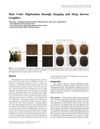
January 2022 in “Electronic Imaging”
1 citations
,
January 2022 in “Electronic Imaging” A new method accurately captures and renders hair color for virtual reality and hair dye use.
30 citations
,
July 2000 in “PubMed” Hair has unevenly distributed proteins and lipids, with lipids mainly in the cuticle and proteins in the cortex and medulla.
January 2018 in “대한미용학회지” White hair is denser and more hydrophobic than black hair.
4 citations
,
April 2014 in “Lasers in Surgery and Medicine” TRASER effectively targets blood vessels and hair follicles for potential use in vascular and hair removal treatments.

research Hair
1 citations
,
April 2023 in “Elsevier eBooks” Hair analysis can detect drug use but is costly and interpretation is complex.
25 citations
,
March 2002 in “Scanning” Confocal microscopy is better than scanning electron microscopy for studying hair in its natural state and understanding hair products' effects.
6 citations
,
August 1937 in “Journal of the Society of Chemical Industry”  10 citations
,
January 2012 in “Journal of biomedical optics”
10 citations
,
January 2012 in “Journal of biomedical optics” Melanin density affects hair color, and this method can help in cosmetic assessments and diagnosing hair diseases.
 November 2025 in “Zenodo (CERN European Organization for Nuclear Research)”
 Hair dyeing changes hair structure, but new technologies help protect hair while coloring.
17 citations
,
May 2019 in “Molecules” These temporary hair dyes may be harmful to human health.