 17 citations
,
April 2004 in “Acta Clinica Belgica”
17 citations
,
April 2004 in “Acta Clinica Belgica” UV light makes skin signs of lack of carotene and vitamin A more visible.
10 citations
,
November 2009 in “Pigment cell & melanoma research” The document concludes that MGRN1 affects mouse fur color by interfering with a receptor's signaling, but its full role in the body is still unknown.
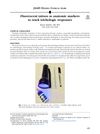 July 2018 in “Journal of The American Academy of Dermatology”
 Fluorescent tattoos are a good way to mark the scalp for hair treatments because they're accurate, invisible in normal light, and have low risk.
18 citations
,
March 2009 in “Skin pharmacology and physiology” Sunlight damages hair, causing cuticle loss, protein changes, and discoloration.
1 citations
,
May 2012 in “Clinical and Experimental Dermatology” Iron can be present in hair color changes without overall iron deficiency.
![[4-t-Butylphenyl]-N-(4-imidazol-1-yl phenyl)sulfonamide (ISCK03) Inhibits SCF/c-kit Signaling in 501mel Human Melanoma Cells and Abolishes Melanin Production in Mice and Brownish Guinea Pigs](/images/assets/4eb017dc-711d-4926-bcd0-c3b8f48e3a99/small/19974.jpg) 26 citations
,
July 2007 in “Biochemical Pharmacology”
26 citations
,
July 2007 in “Biochemical Pharmacology” ISCK03 stops melanin production in human melanoma cells and lightens skin color in mice and guinea pigs.
31 citations
,
October 1992 in “Journal of Clinical Pharmacy and Therapeutics” Some medications can change hair color, especially chloroquine and cancer treatments.
 113 citations
,
March 2018 in “Biological reviews/Biological reviews of the Cambridge Philosophical Society”
113 citations
,
March 2018 in “Biological reviews/Biological reviews of the Cambridge Philosophical Society” Animals that change color with the seasons mainly do so in response to daylight changes, but climate change is causing camouflage problems that may require evolutionary changes.
 November 2025 in “Zenodo (CERN European Organization for Nuclear Research)”
 Oxidative dyes damage hair more than semi-permanent dyes, but new technologies help protect hair while coloring.
10 citations
,
March 2016 in “Toxicology and applied pharmacology” Using A132 hair dye with sunlight can cause skin damage and hair loss.
July 2018 in “Current Analytical Chemistry” The method effectively detects minoxidil in hair-growth products.
 1 citations
,
November 1983 in “The Lancet”
1 citations
,
November 1983 in “The Lancet” Acute leukemias with the Philadelphia chromosome may be biphenotypic, and identifying this is important for proper treatment.
 1 citations
,
May 2020 in “Beilstein Journal of Organic Chemistry”
1 citations
,
May 2020 in “Beilstein Journal of Organic Chemistry” Scientists made a sensor that can detect a specific type of RNA related to androgen receptors quickly and accurately.
 April 2026 in “Cosmetics”
 The shampoo effectively covers gray hair gradually and maintains color after multiple washes.
February 2022 in “arXiv (Cornell University)” A new method accurately captures and renders hair color for real and synthetic images.
 August 2023 in “International Journal of Molecular Sciences”
 The human scalp hair bulb contains different types of melanocytes with varying abilities to produce melanin.
23 citations
,
March 2023 in “eLife” Stem cell differentiation involves gradual chromatin changes and dynamic gene activity.
17 citations
,
February 2011 in “International Journal of Cosmetic Science” Grey hair is wilder, drier, and less manageable than pigmented hair.
February 2026 in “Biophysical Journal”  13 citations
,
March 2020 in “Frontiers in cell and developmental biology”
13 citations
,
March 2020 in “Frontiers in cell and developmental biology” A substance called TCQA could potentially darken hair by activating certain genes and increasing melanin.
October 2019 in “European Journal of Dermatology” The boy's hair and skin color differences are due to a pigmentation disorder.
 September 2021 in “Physiology News”
 The Society's journals now have a policy to make colors in their content accessible to people with color blindness.
140 citations
,
August 2010 in “Pigment Cell & Melanoma Research” We know a lot about mouse hair color, but not much about human hair color differences.
 November 2025 in “International Journal of Science and Research Archive”
 Oxidative dyes damage hair more than semi-permanent dyes, but new technologies help protect hair while coloring.
60 citations
,
July 2014 in “Autophagy” The protein FLCN is involved in cellular cleanup and is regulated by ULK1.
44 citations
,
June 1967 in “The journal of nutrition/The Journal of nutrition” Lack of essential fatty acids in diet causes reproductive issues and poor health in male rabbits.
39 citations
,
October 2012 in “Familial cancer” New therapies for Birt–Hogg–Dubé syndrome are being developed based on understanding the FLCN gene's role.
20 citations
,
June 1985 in “Toxicologic Pathology” Some steroid-induced health issues in rodents improved after stopping treatment, but hair loss and eye problems did not.
May 2024 in “International Journal of Cosmetic Science” A new method using near-infrared light can effectively detect and analyze internal hair damage.
September 2010 in “대한화장품학회지(J. Soc. Cosmet. Scientists Korea)” The study developed a reliable method to measure active ingredients in hair nourisher products using HPLC.