37 citations
,
June 2000 in “Experimental dermatology” The Lanceolate hair-J mutation in mice mimics human hair disorders like Netherton's syndrome.
12 citations
,
March 2013 in “The American journal of dermatopathology/American journal of dermatopathology” Birt–Hogg–Dubé Syndrome requires genetic testing for accurate diagnosis due to its similarities with tuberous sclerosis.
11 citations
,
July 2010 in “European Journal of Dermatology” The condition is linked to chromosome 12, but no mutations were found in the known genes.
 December 2016 in “Int J Genet”
 Male pattern baldness is partly caused by specific genes, but most genetic factors are still unknown.
 September 2021 in “Physiology News”
 Conditions affecting sex development show that sexual diversity is a natural part of human variation.
 13 citations
,
June 2006 in “Pituitary”
13 citations
,
June 2006 in “Pituitary” A woman with acromegaloidism and normal growth hormone levels had a rare X-Tetrasomy, suggesting a need to study X-chromosome genes for their role in growth and facial development.
226 citations
,
January 2006 in “International review of cytology” Keratin-associated proteins are crucial for hair strength and structure.
97 citations
,
March 2006 in “Journal of Investigative Dermatology” Mutations in the DSG4 gene cause a severe form of brittle hair and skin issues.
47 citations
,
July 2005 in “European Journal of Cell Biology” Terrestrial vertebrates have balanced keratin gene clusters, unlike teleost fish.
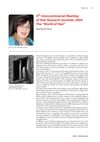 1 citations
,
May 2004 in “Journal der Deutschen Dermatologischen Gesellschaft”
1 citations
,
May 2004 in “Journal der Deutschen Dermatologischen Gesellschaft” The meeting presented new findings on hair stem cells, pigmentation, genetics, and modern hair treatment techniques.
 62 citations
,
April 2008 in “Neurobiology of aging”
62 citations
,
April 2008 in “Neurobiology of aging” Scientists found a gene in mice that causes early hearing loss.
 62 citations
,
March 2008 in “American Journal of Human Genetics”
62 citations
,
March 2008 in “American Journal of Human Genetics” Hair loss gene found on chromosome 3q26.
 32 citations
,
February 1998 in “The journal of investigative dermatology/Journal of investigative dermatology”
32 citations
,
February 1998 in “The journal of investigative dermatology/Journal of investigative dermatology” Two specific hair keratin genes are active during hair growth and decline as hair transitions to rest.
 32 citations
,
April 1994 in “Journal of the American Academy of Dermatology”
32 citations
,
April 1994 in “Journal of the American Academy of Dermatology” High androgen levels and genetic factors likely cause Becker's nevus and related symptoms.
 7 citations
,
March 2011 in “Hormone and Metabolic Research”
7 citations
,
March 2011 in “Hormone and Metabolic Research” Certain gene variations might help protect against insulin resistance and glucose intolerance in people with Polycystic Ovary Syndrome.
 4 citations
,
July 2020 in “Biochemical and Biophysical Research Communications”
4 citations
,
July 2020 in “Biochemical and Biophysical Research Communications” A protein called ectodysplasin-A2 increases a hair growth inhibitor in balding cells, which could be a target for hair loss treatment.
 49 citations
,
January 2004 in “Journal of steroid biochemistry and molecular biology/The Journal of steroid biochemistry and molecular biology”
49 citations
,
January 2004 in “Journal of steroid biochemistry and molecular biology/The Journal of steroid biochemistry and molecular biology” Selective non-steroidal inhibitors of 5α-reductase type 1 can help treat DHT-related disorders.
 98 citations
,
June 2001 in “Journal of biological chemistry/The Journal of biological chemistry”
98 citations
,
June 2001 in “Journal of biological chemistry/The Journal of biological chemistry” A cluster of sulfur-rich hair protein genes was found on chromosome 17.
 51 citations
,
January 2007 in “Animal Genetics”
51 citations
,
January 2007 in “Animal Genetics” The gene for slick hair in Senepol cattle is located on chromosome 20 and may involve the SRD5A2 gene.
 39 citations
,
December 2011 in “PLoS ONE”
39 citations
,
December 2011 in “PLoS ONE” Radiofrequency exposure can stimulate hair growth by increasing IGF-1 in hair follicle cells.
 36 citations
,
October 2000 in “British Journal of Dermatology”
36 citations
,
October 2000 in “British Journal of Dermatology” A different gene near the hairless gene on chromosome 8p21 causes a rare hair loss condition in a German family.
 25 citations
,
May 2020 in “Daehan saengsik uihak hoeji/Clinical and experimental reproductive medicine”
25 citations
,
May 2020 in “Daehan saengsik uihak hoeji/Clinical and experimental reproductive medicine” Injecting platelet-derived growth factors into ovaries may improve IVF outcomes by enhancing egg quality and embryo health.
 19 citations
,
November 1993 in “Mammalian Genome”
19 citations
,
November 1993 in “Mammalian Genome” A gene mutation in mice causes permanent hair loss and skin issues.
 12 citations
,
August 2011 in “Asian-Australasian Journal of Animal Sciences”
12 citations
,
August 2011 in “Asian-Australasian Journal of Animal Sciences” KAP8.1 gene variations affect cashmere weight in Inner Mongolian goats.
 10 citations
,
October 2014 in “Journal of Ovarian Research”
10 citations
,
October 2014 in “Journal of Ovarian Research” The IRS-2 Asp/Asp genotype may increase the risk of PCOS in Chinese women, especially if they are not obese.
 9 citations
,
February 2005 in “The journal of investigative dermatology/Journal of investigative dermatology”
9 citations
,
February 2005 in “The journal of investigative dermatology/Journal of investigative dermatology” The document concludes that the human keratin gene cluster is complex, with a need for updated naming to reflect over 50 functional genes important for hair and skin biology.
 5 citations
,
May 2011 in “European Journal of Medical Genetics”
5 citations
,
May 2011 in “European Journal of Medical Genetics” A genetic duplication on chromosome 5 was linked to a woman's unique combination of medical conditions.

Whiskers can form without sensory nerves or Foxd1, thanks to Meis2 in mesenchymal cells.
 October 2023 in “Sinkron”
 The system can accurately classify hair diseases with 94.5% accuracy using a CNN.
 January 2023 in “International Journal of Zoological Investigations”
 Certain genetic variations in IL-16 may increase the risk of alopecia areata.