 5 citations
,
September 2015 in “BMC Medical Genetics”
5 citations
,
September 2015 in “BMC Medical Genetics” The EDAR gene mutation leads to thinner and more deformed hair shafts.
7 citations
,
July 2024 in “Animals” The Shh gene controls cell growth and death in cashmere goat hair follicles, affecting hair growth.

A 15% clove leaf extract shampoo promotes hair growth but is less effective than minoxidil.
 11 citations
,
September 2012 in “Journal of Nanjing Medical University”
11 citations
,
September 2012 in “Journal of Nanjing Medical University” Cyclosporine A was found to increase hair growth in mouse whisker follicles.
 July 2024 in “Biological and Pharmaceutical Bulletin”
 Licorice extract helps hair growth and may treat hair loss.
1 citations
,
July 1935 in “Nature” Animal hair can curl tightly on its own, especially in foxes, due to changes in keratin.
12 citations
,
January 2013 in “Indian dermatology online journal” The document reports a unique case of woolly hair with a combination of conditions not previously seen together.
24 citations
,
January 2001 in “International Journal of Cancer” Permanent hair dye use may increase bladder cancer risk, especially in female smokers with certain genetic traits.
 4 citations
,
February 2022 in “Journal of Pharmaceutical and Biomedical Analysis”
4 citations
,
February 2022 in “Journal of Pharmaceutical and Biomedical Analysis” The conclusion is that a new method can measure caffeine and drugs in hair, finding caffeine abusers have 70 times more caffeine than normal, with a proposed cut-off value for abuse.
 13 citations
,
November 1959 in “Annals of the New York Academy of Sciences”
13 citations
,
November 1959 in “Annals of the New York Academy of Sciences” Human hair follicles can grow back.
March 2018 in “Journal of Experimental Biology” Hair curliness is caused by the arrangement and length of two different cell types.
14 citations
,
November 2012 in “SLAS discovery” Some herbal extracts can promote hair growth and prevent hair loss.
 41 citations
,
March 1998 in “Archives of Dermatological Research”
41 citations
,
March 1998 in “Archives of Dermatological Research” The enzyme that changes testosterone to a stronger form is mostly found in the part of the hair follicle called the dermal papilla.
 April 2017 in “Journal of Investigative Dermatology”
 The hair follicle dermal sheath is essential for hair shedding and needs to communicate with the outer root sheath for normal hair growth cycles.
Hibiscus leaf extract in hair tonic promotes hair growth effectively.
49 citations
,
March 2004 in “Journal of Investigative Dermatology” The hHa7 gene is regulated by androgens in certain body hair, not scalp hair.
24 citations
,
May 2000 in “Journal of the American Academy of Dermatology” Pseudopelade can affect both the scalp and beard, causing hair loss.
 February 2023 in “Journal of vaccines and immunology”
 Alopecia areata causes sudden hair loss, often on the scalp, and can be severe, especially with early onset or related health issues.
 12 citations
,
August 1984 in “Genetics Research”
12 citations
,
August 1984 in “Genetics Research” The N gene affects the protein makeup of mouse hair.
January 2025 in “Dermatological Reviews” Cyperus rotundus is a promising natural hair removal option with minimal side effects.
22 citations
,
December 1991 in “PubMed” 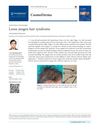 February 2023 in “Cosmoderma”
 Loose anagen hair syndrome causes easily shed hair but usually improves with time.
4 citations
,
December 2020 in “Journal of the American Academy of Dermatology” Pulling 2 or fewer hairs is normal for all hair types, including Afro- and Asian-textured hair.
88 citations
,
July 1958 in “Nature” Citrulline was found in hair follicle proteins for the first time.
 March 2015 in “Journal of Visualized Experiments”
 A new method measures mouse hair loss using shades of gray.
June 2014 in “Toxicologie analytique et clinique/Annales de toxicologie analytique” Hair analysis can be unreliable due to external contamination and varying drug concentrations.
January 1980 in “中国科学A辑(英文版)” The protein structures in the hair and tendon were preserved, but their molecular arrangements changed.
 October 2023 in “Deleted Journal”
 No single method is best for quitting smoking; it depends on individual preferences and health.
 14 citations
,
January 1996 in “Journal of Forensic Sciences”
14 citations
,
January 1996 in “Journal of Forensic Sciences” Hair can absorb and transfer opiates when soaked in water, with damaged hair absorbing more.
 6 citations
,
July 2018 in “Advances in Clinical and Experimental Medicine”
6 citations
,
July 2018 in “Advances in Clinical and Experimental Medicine” Different body parts have varying levels of certain hair follicle markers.