March 2022 in “JAAD case reports” Accurate diagnosis is crucial for effective treatment of hair loss.
 77 citations
,
July 2020 in “European Journal of Clinical Pharmacology”
77 citations
,
July 2020 in “European Journal of Clinical Pharmacology” Blocking the virus's entry into cells by targeting certain pathways could lead to early COVID-19 treatments.
 10 citations
,
March 2015 in “Journal of dermatology”
10 citations
,
March 2015 in “Journal of dermatology” The boy's severe skin disorder is caused by two new mutations in his TGM1 gene.
 July 2022 in “The journal of investigative dermatology/Journal of investigative dermatology”
 The early genes of a specific virus can cause abnormal skin cell growth and hair follicle changes.
6 citations
,
May 2016 in “Experimental Dermatology” The type of tumor suppressor gene lost affects the behavior of skin cancer.
141 citations
,
February 1988 in “Molecular and Cellular Biology” Only one K16 gene on chromosome 17 makes a functional keratin protein.
 1 citations
,
September 2019 in “Journal of Investigative Dermatology”
1 citations
,
September 2019 in “Journal of Investigative Dermatology” The research showed that CRISPR/Cas9 can fix mutations causing a skin disease in stem cells, which then improved skin grafts in mice, but more work on safety and efficiency is needed.
 22 citations
,
October 2021 in “Dermatologic Therapy”
22 citations
,
October 2021 in “Dermatologic Therapy” COVID-19 may cause temporary hair loss in some people.
8 citations
,
June 2016 in “Journal of Investigative Dermatology” A rare genetic deletion in the KRT1 gene causes unique skin symptoms in a family.
 April 2023 in “Research Square (Research Square)”
 A specific RNA helps increase the growth of skin cells in Liaoning cashmere goats by working with a protein to boost a growth-related gene.
 March 2025 in “OncoTargets and Therapy”
 A specific genetic trait in tumor cells is linked to longer survival without disease in certain lymphoma patients.

BLTP1 and KIF27 gene mutations can help breed better wool sheep.
March 2026 in “Annals of Medicine” Standardized tools and treatments are needed to better manage long COVID-19 in kids and teens.

RNase L hinders hair follicle regeneration by altering immune signals.
 14 citations
,
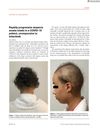
February 2021 in “Journal of the European Academy of Dermatology and Venereology”
14 citations
,
February 2021 in “Journal of the European Academy of Dermatology and Venereology” A COVID-19 patient with severe hair loss did not improve with hair loss medication after stopping and restarting it due to the infection.

Tofacitinib significantly improved symptoms in a patient with overlapping autoimmune disorders.
 October 2022 in “Ophthalmic Plastic and Reconstructive Surgery”
 A child lost eyelashes on one eyelid after COVID-19, likely due to a temporary hair loss condition.
 7 citations
,
March 2022 in “Scientific reports”
7 citations
,
March 2022 in “Scientific reports” Removing anthrax toxin receptor 1 in pigs prevents Senecavirus A infection and causes a rare disease similar to GAPO syndrome.
 August 2020 in “International Journal of Research in Dermatology”
 Clouston's syndrome is a rare disorder affecting nails, hair, teeth, and skin, caused by a gene mutation, and currently has no treatment, only supportive care.
 25 citations
,
December 2018 in “Human Molecular Genetics”
25 citations
,
December 2018 in “Human Molecular Genetics” The document concludes that certain mutations may contribute to the inflammation in hidradenitis suppurativa and suggests that targeting TNFα could be a treatment strategy.
 16 citations
,
April 2022 in “PLoS ONE”
16 citations
,
April 2022 in “PLoS ONE” Certain microRNAs found in normal cells can effectively suppress various cancers.
March 2026 in “Sexual Development” Tortoiseshell tomcats with XX/XY chimerism can be fertile.
September 2022 in “Research Square (Research Square)” 5% topical minoxidil improves hair density and quality in monilethrix patients.
 2 citations
,
November 2022 in “Skin research and technology”
2 citations
,
November 2022 in “Skin research and technology” 5% topical minoxidil improves hair density and quality in monilethrix patients.
 1 citations
,
April 2019 in “Journal of Investigative Dermatology”
1 citations
,
April 2019 in “Journal of Investigative Dermatology” VB1953 gel significantly reduced acne and resistant bacteria in patients who didn't respond to clindamycin.
14 citations
,
February 1991 in “FEBS Letters” Introducing the rat OTC gene partially corrected OTC deficiency in mice.
7 citations
,
February 2011 in “Journal of dermatology” The 736T>A mutation in the LIPH gene is common in Japanese people with autosomal recessive woolly hair.
Suppressing ODC activity reduces tumor growth in hair follicles.
30 citations
,
January 2013 in “Human Mutation” A mutation in the HOXC13 gene causes hair and nail problems in a Syrian family.
47 citations
,
September 2004 in “Journal of Biological Chemistry” Hoxc13 regulates specific hair protein genes on mouse chromosome 16.