 1 citations
,
April 2022 in “AACE clinical case reports”
1 citations
,
April 2022 in “AACE clinical case reports” A 36-year-old person with a female appearance but male chromosomes was diagnosed with a rare enzyme deficiency affecting sexual development.
34 citations
,
January 2004 in “Genomics” A cluster of 21 keratin-associated protein genes important for hair growth was found on human chromosome 21.
 9 citations
,
March 2018 in “European journal of dermatology/EJD. European journal of dermatology”
9 citations
,
March 2018 in “European journal of dermatology/EJD. European journal of dermatology” A new mutation in the ST14 gene causes a rare skin and hair disorder in a specific family.
32 citations
,
July 2003 in “Annals of the Rheumatic Diseases” A 13-year-old girl with various symptoms was successfully treated for autoimmune disease using the antibiotic co-trimoxazole.
 1 citations
,
January 2021 in “Research Square (Research Square)”
1 citations
,
January 2021 in “Research Square (Research Square)” Enzalutamide, a prostate cancer drug, may help prevent COVID-19 by blocking the virus from entering lung cells.
 1 citations
,
January 2021 in “Research Square (Research Square)”
1 citations
,
January 2021 in “Research Square (Research Square)” The AndroCoV Clinical Scoring is an accurate, easy, and free way to diagnose COVID-19 without a lab test.
July 1995 in “Journal of Dermatological Science”  January 2021 in “Journal of the European Academy of Dermatology and Venereology”
 PrEP doesn't increase STI risk in high-risk men, anti-androgen drugs may lower ICU admission for male COVID-19 patients, a 3-point injection is better for crow's feet, and the 'Geriatric-8' tool could help assess frailty in older skin cancer patients.
 66 citations
,
March 2018 in “British journal of dermatology/British journal of dermatology, Supplement”
66 citations
,
March 2018 in “British journal of dermatology/British journal of dermatology, Supplement” An imbalance between certain immune cells is linked to a chronic skin condition and may be influenced by obesity, smoking, and autoimmune issues.
91 citations
,
July 2020 in “JAMA Dermatology” Minoxidil can improve hair growth in some patients with woolly hair due to LIPH variants, with varying responses and mild side effects.
Obstructive sleep apnea can be hereditary and linked to a genetic mutation in the COL1A2 gene.
20 citations
,
May 2011 in “Journal of Clinical Investigation” The study created a mouse model to mimic degenerative diseases for testing tissue repair and new therapies.
2 citations
,
September 1998 in “Der Hautarzt” A gene mutation causes a rare hereditary hair loss, offering potential for new treatments.
 54 citations
,
November 2001 in “Urology”
54 citations
,
November 2001 in “Urology” The length of the CAG repeat in the androgen receptor gene affects the risk and progression of prostate cancer, BPH, infertility, and undermasculinized genitalia.
 7 citations
,
September 2011 in “International Journal of Dermatology”
7 citations
,
September 2011 in “International Journal of Dermatology” The Korean study found that twenty-nail dystrophy mainly affects adults, more often women, and has five distinct types with different clinical progressions.
26 citations
,
December 2003 in “Experimental Dermatology” Specific keratin gene mutations can cause monilethrix.
 September 2017 in “The journal of investigative dermatology/Journal of investigative dermatology”
 Blocking CCR5 can prevent and improve hair loss in alopecia areata.
 1 citations
,
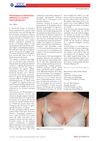
August 2012 in “Journal der Deutschen Dermatologischen Gesellschaft”
1 citations
,
August 2012 in “Journal der Deutschen Dermatologischen Gesellschaft” A woman's hyperandrogenism was caused by a genetic mutation leading to non-classic adrenogenital syndrome.
 3 citations
,
February 2017 in “Archives of Medical Science”
3 citations
,
February 2017 in “Archives of Medical Science” Finasteride treatment changes Cx43 in rat testes, possibly causing fertility issues.
 15 citations
,
December 2020 in “Pharmacology Research & Perspectives”
15 citations
,
December 2020 in “Pharmacology Research & Perspectives” Blocking enzymes that help the virus enter cells could be a promising way to treat COVID-19.
 4 citations
,
January 2022 in “The journal of investigative dermatology/Journal of investigative dermatology”
4 citations
,
January 2022 in “The journal of investigative dermatology/Journal of investigative dermatology” A faulty KLHL24 gene leads to hair loss by damaging hair follicle stem cells.
Controlling Tslp can improve health in AEC syndrome patients.
3 citations
,
July 2022 in “Brain and Behavior” The HtrA1L364P mutation causes brain dysfunction and blood vessel damage.
1 citations
,
September 2023 in “Frontiers in Genetics” A heterozygous mutation in HTRA1 can cause severe CARASIL symptoms.
 6 citations
,
August 2022 in “The Italian Journal of Pediatrics/Italian journal of pediatrics”
6 citations
,
August 2022 in “The Italian Journal of Pediatrics/Italian journal of pediatrics” New genetic mutations linked to rare skin disorders were found in three newborns.
January 2026 in “Animal Genetics” A genetic variant in the GJB6 gene likely caused the Labrador's paw pad condition.

Blocking CXCR4 may help treat hidradenitis suppurativa.
31 citations
,
October 1992 in “PubMed” A mycobacterial protein shares a similar region with a human skin protein, possibly affecting skin diseases.
33 citations
,
October 2006 in “European Journal of Immunology” The CD44-CD49d complex boosts T cell activation and survival in autoimmune disease.
 117 citations
,
May 2017 in “Human Reproduction Update”
117 citations
,
May 2017 in “Human Reproduction Update” The update highlights that non-classic congenital adrenal hyperplasia is common in women with excess male hormones, requires specific hormone tests for diagnosis, and has various treatment options depending on age and symptoms.