 December 2024 in “Chemical Senses”
 Taste disorders in Cronkhite-Canada syndrome are severe in the front of the tongue but improve with treatment.
January 2011 in “Anhui nongye kexue” The vector successfully directed specific gene expression in hair follicles.
 6 citations
,
November 2011 in “Journal of Dermatological Science”
6 citations
,
November 2011 in “Journal of Dermatological Science” A new gene mutation may allow some piebaldism patients to regain skin color in white patches.
 13 citations
,
June 2010 in “Journal of The American Academy of Dermatology”
13 citations
,
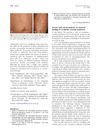
June 2010 in “Journal of The American Academy of Dermatology” A man with Cronkhite-Canada syndrome had all 20 nails detach but improved with treatment.
 3 citations
,
September 2022 in “The journal of investigative dermatology/Journal of investigative dermatology”
3 citations
,
September 2022 in “The journal of investigative dermatology/Journal of investigative dermatology” Keratin 75 is important for fast wound healing and works with SOX2 and the LINC complex to help skin cells move and repair damage.
3 citations
,
October 2020 in “Journal of Investigative Dermatology” Removing β-catenin in certain stem cells causes hair whitening and pigmentation issues.
20 citations
,
December 1999 in “Journal of Investigative Dermatology” Mutations in the hHb6 gene cause the hair disorder monilethrix.
82 citations
,
July 2012 in “Brain pathology” High LGR5 levels in glioblastoma indicate poor prognosis and are essential for cancer stem cell survival.
990 citations
,
October 1999 in “Development” Activated LEF/TCF complexes are crucial for hair development and cycling.
January 2009 in “Epsilon: Revista de la Sociedad Andaluza de Educación Matemática "Thales"” A CCS patient with severe complications was successfully treated using combined therapies.
January 2020 in “Archivio Istituzionale della Ricerca (Universita Degli Studi Di Milano)” Polycomb Repressive Complex 1 is crucial for keeping stem cells stable and maintaining healthy adult tissues.
 April 2023 in “Cancer research”
 KRTAP2-3 could help predict cancer recurrence by identifying specific cancer cells.
187 citations
,
May 1988 in “Differentiation” Trichocytic cytokeratins are found in hair, nails, tongue, and thymus cells, showing complex regulation in tissue development.
CCC1 is essential for ion balance and proper plant cell function.
July 2026 in “bioRxiv (Cold Spring Harbor Laboratory)” FAKΔe4 helps cells sense and respond to different stiffness levels in their environment.
Mutations in the PADI3 gene may cause central centrifugal cicatricial alopecia in women of African ancestry.
46 citations
,
November 2019 in “Journal of Integrative Plant Biology” CaM7 and CNGC14 interaction controls root hair growth in Arabidopsis.
99 citations
,
March 2013 in “Journal of Investigative Dermatology” Mutations in the ABCB6 gene cause Dyschromatosis Universalis Hereditaria.
6 citations
,
March 2007 in “BioTechniques” PCR genotyping in cre-loxP mice can be inaccurate due to unintended gene deletions in non-target tissues.
 November 2022 in “Journal of Investigative Dermatology”
 Dynlt3 is important for melanosome transport and skin coloration.
 13 citations
,
September 2021 in “Communications Biology”
13 citations
,
September 2021 in “Communications Biology” Co5M offers a new way to observe and understand wound healing without labels.
 14 citations
,
February 2018 in “Psychoneuroendocrinology”
14 citations
,
February 2018 in “Psychoneuroendocrinology” Mice lacking steroid 5α-reductase 2 show less aggression and better impulse control.
15 citations
,
June 2012 in “British Journal of Dermatology” A new mutation in the KRT86 gene causes a hair disorder with variable expression.
 September 2019 in “The journal of investigative dermatology/Journal of investigative dermatology”
 Not having enough cystatin M/E protein causes less hair growth and dry skin.
44 citations
,
August 1990 in “PubMed” Keratins K1 and K10 are found in the inner root sheath and cuticle of human hair follicles.
35 citations
,
September 1994 in “Journal of Investigative Dermatology” 98 citations
,
December 2015 in “The Journal of Cell Biology” Keratin is crucial for skin barrier formation and affects mitochondrial function.
92 citations
,
April 2009 in “Journal of Investigative Dermatology” The Celsr1 gene is crucial for normal hair patterning in mice.
42 citations
,
June 2019 in “Aging” 3,4,5-tri-O-caffeoylquinic acid promotes hair growth by activating the β-catenin pathway.

The CD4 protein may play a role in the behavior of certain skin cells, affecting their growth, movement, and differentiation.