March 1998 in “Journal of Dermatological Science” Keratin-associated proteins may have roles in various mouse tissues, not just hair.

CaBP1 and CaBP2 are important for continuous hearing by preventing inactivation of calcium currents in ear cells, with CaBP2 also able to restore hearing when reintroduced.
28 citations
,
November 2013 in “Cell and Tissue Research”  June 1997 in “The American Journal of Cosmetic Surgery”
 Scalp flaps are still a valuable hair loss treatment because of their benefits.
1 citations
,
January 2024 in “Journal of clinical medicine” Early recognition and treatment of tinea capitis are crucial to prevent severe scalp issues and prolonged therapy.
2 citations
,
January 2022 in “Materials today: proceedings” Caffeine may be good for hair growth and skin care because it binds well with keratin.
April 2012 in “The FASEB Journal” LPA 4 helps control blood and lymph vessel development in zebrafish.
 78 citations
,
June 2013 in “Science”
78 citations
,
June 2013 in “Science” Mice without the Sept4/ARTS gene heal wounds better due to more stem cells that don't die easily.
22 citations
,
December 2015 in “The journal of investigative dermatology/Journal of investigative dermatology” A mouse gene mutation increases the risk of skin cancer.
January 2026 in “Aging and Disease” DKK proteins could help diagnose and treat various non-cancerous diseases.
 June 2024 in “Computational and Structural Biotechnology Journal”
 Multi-omics techniques help understand the molecular causes of androgenetic alopecia.
Visible lesions are not always needed to diagnose tinea capitis.
 1 citations
,
April 2022 in “The Journal of Family Practice”
1 citations
,
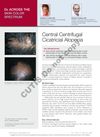
April 2022 in “The Journal of Family Practice” CCCA causes progressive hair loss in Black women, starting from a central scalp patch.
 3 citations
,
April 2022 in “Cutis”
3 citations
,
April 2022 in “Cutis” CCCA is a common, scarring hair loss in Black women that needs early detection.
 11 citations
,
May 2010 in “Annals of the Academy of Medicine Singapore”
11 citations
,
May 2010 in “Annals of the Academy of Medicine Singapore” Tinea capitis can cause scalp issues in children and should be considered in similar cases; treatment with griseofulvin and selenium sulfide is effective.
 97 citations
,
March 2002 in “Molecular and cellular biology”
97 citations
,
March 2002 in “Molecular and cellular biology” Mutant CDP/Cux protein causes hair defects and reduced male fertility in mice.
37 citations
,
February 2007 in “Experimental Dermatology” Increasing PDCD4 protein may help prevent or treat some skin cancers.
 July 2023 in “Experimental Dermatology”
 I cannot summarize the document because it is not accessible.
3 citations
,
October 2024 in “International Journal of Molecular Sciences” CRET therapy affects inflammation in skin cells by changing cytokine levels and activating certain proteins.
 4 citations
,
January 1994 in “Yakugaku zasshi”
4 citations
,
January 1994 in “Yakugaku zasshi” EPC-K is stable except at very acidic pH or when exposed to sunlight, and it can decompose in low ethanol concentrations.
 4 citations
,
January 2022 in “The journal of investigative dermatology/Journal of investigative dermatology”
4 citations
,
January 2022 in “The journal of investigative dermatology/Journal of investigative dermatology” A faulty KLHL24 gene leads to hair loss by damaging hair follicle stem cells.
August 2024 in “Archives of Dermatological Research” CHI3L1 and CXCL5 proteins help promote hair growth.
 1 citations
,
May 2019 in “Cytotherapy”
1 citations
,
May 2019 in “Cytotherapy” The new ddPCR method reliably detects unwanted viruses in CAR-T cell products, ensuring their safety for patients.
21 citations
,
June 2004 in “Experimental Dermatology” Ber‐EP4 marks cells related to the secondary hair germ in hair follicles.
 November 2009 in “Cambridge University Press eBooks”
 The document's conclusion cannot be provided because the content is not accessible.
 3 citations
,
September 1989 in “Journal of Investigative Dermatology”
3 citations
,
September 1989 in “Journal of Investigative Dermatology” Methyl caprate greatly increases drug absorption through the skin and is better than other enhancers.
 3 citations
,
May 1997 in “Hair transplant forum international”
3 citations
,
May 1997 in “Hair transplant forum international” The document's conclusion cannot be determined from the provided text.
32 citations
,
September 2013 in “Breast cancer research” A specific gene variant is linked to a higher risk of hair loss from chemotherapy in breast cancer patients.
April 2021 in “Journal of Investigative Dermatology”