 231 citations
,
July 2008 in “Nutrition reviews”
231 citations
,
July 2008 in “Nutrition reviews” Diet changes can protect against harmful environmental effects on fetal development.
1 citations
,
October 1988 in “Clinics in Dermatology” Scientists identified and cloned specific keratin proteins in mouse hair.
11 citations
,
November 1998 in “Journal of dermatological science” Knocking out certain genes in mice helps understand skin and hair growth problems.
1 citations
,
August 2022 in “Pigment Cell & Melanoma Research” New mouse models help study melanocytic cells for melanoma research.
3 citations
,
March 2023 in “Annals of the New York Academy of Sciences” Mutations in claudin-1 and claudin-3 cause hair loss in baby mice.
26 citations
,
July 2007 in “Wound Repair and Regeneration” MRL/MpJ mice heal burns slower with more scarring and less tissue regeneration than BALB/c mice.
11 citations
,
February 1982 in “Mutation Research/Fundamental and Molecular Mechanisms of Mutagenesis” A new method can detect mutations in mice by observing changes in hair follicle cells.
3 citations
,
October 2020 in “Journal of Investigative Dermatology” Removing β-catenin in certain stem cells causes hair whitening and pigmentation issues.
694 citations
,
April 2000 in “Nature genetics” Msx2 deficiency in mice leads to bone growth and organ development problems.
August 2001 in “The Journal of Cell Biology” A new keratin gene was found in mice, explaining hair growth.
 11 citations
,
March 2014 in “Journal of Investigative Dermatology”
11 citations
,
March 2014 in “Journal of Investigative Dermatology” Genetic mutation and carcinogen treatment are both needed for skin cancer to develop in these specific mice.
 April 2018 in “bioRxiv (Cold Spring Harbor Laboratory)”
 A gene variant causes patched hair loss in mice, similar to alopecia areata in humans.
35 citations
,
January 2006 in “Cancer Research” Mice with extra PKCδ resist chemical-induced skin cancer but not UV-induced.
1 citations
,
January 2014 in “PubMed” Certain substances can decrease or increase exploratory behavior in rodents.
 7 citations
,
February 2015 in “Journal of comparative pathology”
7 citations
,
February 2015 in “Journal of comparative pathology” CD8+ T cells play a key role in graft-versus-host disease in certain mice models.
April 2010 in “The FASEB Journal” Knockout mice showed anemia and hair loss, suggesting other ways exist for iron absorption.
 11 citations
,
December 2014 in “The American journal of pathology”
11 citations
,
December 2014 in “The American journal of pathology” A gene deletion in mice causes weak protein, immune issues, hair loss, airway problems, and wasting disease.
 4 citations
,
December 1962 in “European journal of endocrinology”
4 citations
,
December 1962 in “European journal of endocrinology” Alloxan diabetes, methylthiouracil, cortisone, and adrenaline affect how white mice hair follicles use glucose and cystine and their cell division.
37 citations
,
January 2006 in “Carcinogenesis” Antizyme slows skin tumor growth by reducing cell growth in mice.
 July 1995 in “Journal of Dermatological Science”
 Cyclosporine starts hair growth faster, while minoxidil makes it last longer.
49 citations
,
March 2012 in “Journal of Pharmacology and Experimental Therapeutics” Neurosteroids help reduce seizures, but their withdrawal increases seizure activity.
1 citations
,
August 2020 The Shaven mutation in mice affects hair growth and causes a greasy coat due to abnormal lipid content.
 37 citations
,
February 2019 in “Experimental Dermatology”
37 citations
,
February 2019 in “Experimental Dermatology” Spiny mice are better at regenerating hair after injury than laboratory mice and could help us understand how to improve human skin repair.
27 citations
,
November 1991 in “Journal of Investigative Dermatology” 72 citations
,
September 1997 in “Journal of Investigative Dermatology” 
Meis2 is essential for touch sensation and proper nerve connection to touch receptors in certain skin areas of mice.
 16 citations
,
April 1978 in “Genetics Research”
16 citations
,
April 1978 in “Genetics Research” Mice with the ab gene have abnormal sebaceous gland development, affecting sebum production.
 418 citations
,
September 2012 in “Nature”
418 citations
,
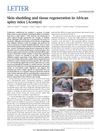
September 2012 in “Nature” African spiny mice can regenerate skin, hair, and cartilage, but not muscle, and their unique abilities could be useful for regenerative medicine.
51 citations
,
August 2012 in “Differentiation” Mouse genital development depends on male or female hormones for specific features.
133 citations
,
January 2009 in “Nature” Lgr5 and the vitamin D receptor are key in controlling skin inflammation and tumor risk in mice.