 19 citations
,
September 2010 in “The American journal of pathology”
19 citations
,
September 2010 in “The American journal of pathology” High glucocorticoids cause pancreatic malfunction and malabsorption, reversible with enzyme supplements.
April 2019 in “The journal of investigative dermatology/Journal of investigative dermatology” Disrupting the Tsc2 gene in certain cells leads to thicker skin, larger hair, and changes in hair growth signaling, which can be partly reversed with specific treatment.

CaBP1 and CaBP2 are important for maintaining hearing by supporting continuous calcium currents and nerve signaling in the ear.
 38 citations
,
April 2018 in “Psychopharmacology/Psychopharmacologia”
38 citations
,
April 2018 in “Psychopharmacology/Psychopharmacologia” Blocking CRF-R1 can reduce alcohol intake in stressed mice.
46 citations
,
May 1995 in “Proceedings of the National Academy of Sciences” A specific gene region can control targeted and responsive gene expression in mice, useful for skin disorder treatments.
 31 citations
,
November 2016 in “Cell Reports”
31 citations
,
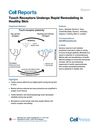
November 2016 in “Cell Reports” Touch sensitivity in mouse skin decreases during hair growth due to changes in touch receptors.
Deleting Smad4 and PTEN genes in mice causes rapid, invasive stomach cancer.
December 2023 in “JSFK (Jurnal Sains Farmasi Klinis)/JSFK (Jurnal Sains Farmasi dan Klinis)” The 0.3% cocoa bean extract tonic is best for hair growth in mice.
 3 citations
,
July 2013 in “Bioscience, Biotechnology, and Biochemistry”
3 citations
,
July 2013 in “Bioscience, Biotechnology, and Biochemistry” Chinese black tea extract helped mice grow hair, especially when combined with capsaicin.
114 citations
,
May 2001 in “Development” Overexpression of Hoxc13 in hair cells causes hair loss and skin issues.
June 2006 in “Experimental dermatology” The document concludes that while finding animal models for the skin disease Hidradenitis suppurativa is challenging, certain mouse mutations may provide useful insights for research and drug testing.
 8 citations
,
June 2012 in “PloS one”
8 citations
,
June 2012 in “PloS one” Mutations in Plcd1 and Plcd3 together cause severe hair loss in mice.
 52 citations
,
October 1999 in “Developmental Dynamics”
52 citations
,
October 1999 in “Developmental Dynamics” Mutations in the hairless gene in mice affect its expression and lead to a range of developmental issues in multiple tissues.
57 citations
,
January 1987 in “Journal of Biological Chemistry” Different keratins have unique expression patterns in mouse skin cells.
April 2019 in “Journal of Investigative Dermatology” FGFR2 signaling controls Merkel cell formation in different skin regions.
 January 2021 in “Medical Research Archives”
 Genetically modified rats help reveal how vitamin D affects bone and skin health.
63 citations
,
April 2005 in “Mechanisms of development” Mice with too much Claudin-6 have skin barrier problems and abnormal hair growth.
 35 citations
,
January 2013 in “The Journal of experimental medicine/The journal of experimental medicine”
35 citations
,
January 2013 in “The Journal of experimental medicine/The journal of experimental medicine” CD98hc's role in skin health decreases with age.
February 2018 in “bioRxiv (Cold Spring Harbor Laboratory)” Rodent spiny hair traits are due to genetic factors other than the Edar gene.
6 citations
,
October 1989 in “PubMed” Optimized conditions and specific treatments enhance the growth of hair cells from C3H mice.
1 citations
,
December 2024 in “The Journal of Dermatology” The study developed mouse models to help research and treat hair and sweat gland issues.
28 citations
,
February 2007 in “Cancer Research” Blocking certain proteins in mouse skin can reduce and shrink skin tumors.
 May 2024 in “Scientific Reports”
 Androgen receptors in the mouse brain may explain cognitive and mood changes in prostate cancer treatment.
June 2008 in “The Knowledge Bank (The Ohio State University)” Smad2 and Smad3 are essential for normal skin development, and their absence causes severe skin issues and cancer.
70 citations
,
December 2008 in “Cancer Research” CXCR2 in skin cells promotes tumor growth.
14 citations
,
September 2001 in “Archives of Dermatological Research” Blocking hair follicle development stops key gene signals needed for hair growth in mice.
 April 2023 in “The journal of investigative dermatology/Journal of investigative dermatology”
 The study found that a key immune pathway protecting hair follicles is reduced in a mouse model of scarring hair loss.
39 citations
,
September 2018 in “American Journal of Medical Genetics Part A” A new genetic mutation in the ODC1 gene causes developmental delay and other symptoms in a young girl.
 3 citations
,
May 2018 in “InTech eBooks”
3 citations
,
May 2018 in “InTech eBooks” Animal models, especially mice, are essential for advancing hair loss research and treatment.