8 citations
,
June 2023 in “European Journal of Endocrinology” The inhibitor affects androgen metabolism but not ovarian function.
49 citations
,
February 2022 in “Drug Design Development and Therapy” Ritlecitinib shows promise for hair regrowth in alopecia areata patients.
 January 2024 in “Deleted Journal”
 Radiation cystitis patients need better monitoring and early treatment due to higher readmission rates.
A lotion with tretinoin, minoxidil, and betamethasone valerate helped treat a woman's skin infection.
 April 2023 in “The journal of investigative dermatology/Journal of investigative dermatology”
 SETDB1 is essential for controlling DNA methylation, silencing retrotransposons, and maintaining skin cell health, with its absence leading to skin inflammation and hair loss.
 May 2012 in “Research and reports in neonatology”
 The newborn with Klippel-Trénaunay syndrome was healthy but needed regular check-ups for possible complications.
November 2023 in “SKIN The Journal of Cutaneous Medicine”  22 citations
,
January 2009 in “Medical mycology”
22 citations
,
January 2009 in “Medical mycology” A family got a fungal infection from a boy who had contact with rabbits, but they all recovered with treatment.
April 2012 in “韓國藥用作物學會誌 = Korean journal of medicinal crop science” Rosa multiflora root extract promotes hair growth and prevents hair loss.
 39 citations
,
March 2008 in “Growth hormone & IGF research”
39 citations
,
March 2008 in “Growth hormone & IGF research” Raspberry ketone may help grow hair and improve skin elasticity.
April 2021 in “Journal of Investigative Dermatology” Krox20 is crucial for hair growth and maintaining skin stem cells.
January 2003 in “The Chinese Journal of Burns Wounds & Surface Ulcers” CK 19 expression is higher in more severe skin cancers.
November 2025 in “Journal of Investigative Dermatology” TEDAR is crucial for skin cell differentiation and barrier formation.
49 citations
,
October 1989 in “Genomics” Type I keratin genes are closely linked to the rex locus on mouse chromosome 11, affecting hair development.
June 2023 in “bioRxiv (Cold Spring Harbor Laboratory)” Scientists created cell lines to study a genetic skin disorder using CRISPR technology.
April 2024 in “Anais Brasileiros de Dermatologia” 3 citations
,
June 2018 in “Internal Medicine” Recombinant thrombomodulin can effectively treat severe complications in Cronkhite-Canada syndrome.
12 citations
,
May 2010 in “Journal of Clinical Oncology” MK-5108 is safe and shows potential against tumors, especially alone.
April 2025 in “The Journal of Dermatology” Janus kinase inhibitors may help treat cutaneous T-cell lymphoma, but more research is needed.
Using regulatory T cells and Rapamycin together improves chronic graft-versus-host disease treatment outcomes in mice.
3 citations
,
January 2022 in “Burns & Trauma” CTHRC1 helps sweat glands recover by rebuilding nearby blood vessels.
July 2024 in “Journal of Investigative Dermatology” CRISPR/Cas9 and prime editing can potentially fix skin disorder genes safely and effectively.
March 2024 in “International journal of molecular sciences” Three specific genetic variants cause severe skin issues in children with EBS, highlighting the need for early genetic screening.
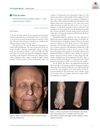 March 2019 in “Journal der Deutschen Dermatologischen Gesellschaft”
 Rothmund-Thomson syndrome type 2 can cause chronic, poorly healing wounds.
42 citations
,
September 2003 in “Journal of Investigative Dermatology” A missing mK6irs1 gene causes hair loss in mice.
 April 2016 in “Journal of Investigative Dermatology”
 Double-stranded RNA activates a pathway that causes a skin protein to be expressed in the wrong place.
 25 citations
,
November 2018 in “Cell reports”
25 citations
,
November 2018 in “Cell reports” The study concluded that specific proteins are necessary to maintain the structure that holds epithelial cells tightly together.
1 citations
,
February 2012 in “InTech eBooks” CK7 and CK20 help identify and classify tumors for accurate cancer diagnosis.
 December 2015 in “University of Birmingham Institutional Research Archive (University of Birmingham)”
 AKR1C3 could be a treatment target for metabolic issues in PCOS.
CRH causes hair loss by reducing cell survival in hair follicles.