 February 2025 in “Cureus”
 Early diagnosis and treatment of NCCAH can improve symptoms and fertility.
 October 2024 in “Journal of the Endocrine Society”
 Certain genetic variants reduce enzyme activity, contributing to non-classic congenital adrenal hyperplasia.
 October 2024 in “Journal of the Endocrine Society”
 Certain genetic variants impair enzyme activity, contributing to non-classic congenital adrenal hyperplasia.
 October 2024 in “Journal of the Endocrine Society”
 Ovarian steroid cell tumors can mimic adrenal hyperplasia, and surgery can normalize hormone levels.
 October 2024 in “Journal of the Endocrine Society”
 Early detection of ovarian steroid cell tumors is crucial to prevent lasting symptoms.
 April 2024 in “Pharmacoepidemiology and drug safety (Print)”
 The algorithm accurately identified alopecia in women of childbearing age using claims data.
 January 2024 in “Editora In Vivo eBooks”
 Illegal cattle slaughter in Brazil poses health risks and violates laws.

The treatment improved facial structure and corrected bite issues in patients.
 June 2023 in “Medicine and Pharmacy Reports”
 A woman with a specific mutation causing adrenal gland issues faced fertility problems, but careful hormone therapy helped her manage it successfully.
 January 2023 in “Endocrine Journal”
 Treating classic 21-hydroxylase deficiency requires precise glucocorticoid dosing and attention to individual patient needs, with new treatments showing promise.
January 2023 in “Pediatrics International” Non-classical 21-hydroxylase deficiency can be missed in newborn screenings and should be considered in cases of early puberty or virilization.
 December 2022 in “Research Square (Research Square)”
 The document concludes that an automatic system using deep learning can help diagnose skin disorders, but challenges and opportunities in this area remain.
 May 2021 in “Pakistan Journal of Medical and Health Sciences”
 M type hair loss is the most common in Pakistani men.
 May 2020 in “Hair transplant forum international”
 The updated NPRT system now covers different types of hair loss in men and women.
 February 2020 in “Open Access Macedonian Journal of Medical Sciences”
 The patient with severe hirsutism improved after being diagnosed with non-classic congenital adrenal hyperplasia and treated with corticosteroids.
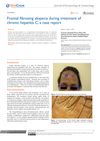 September 2017 in “Journal of Dermatology & Cosmetology”
 Hepatitis C treatment may cause frontal fibrosing alopecia.

A new mutation in the CYP11B1 gene was found in a woman with mild hyperandrogenemia, a rare cause of non-classic congenital adrenal hyperplasia.
January 2016 in “프로그램북(구 초록집)” The revised BASP classification for hair loss is less accurate and harder to use but could still be a viable option.
 July 2007 in “Faculty Opinions – Post-Publication Peer Review of the Biomedical Literature”
 The BASP classification is a detailed system for categorizing hair loss in both men and women, but it may be complex for beginners and not fully suitable for grading female hair loss.
 July 1976 in “Archives of Dermatology”
 The document suggests more research is needed to understand skin conditions related to toothpaste and other treatments.
December 2021 in “Acta dermato-venereologica” A deep learning model accurately predicts male hair loss types using scalp images.
Greater concern about hair loss is linked to more severe hair loss and worse quality of life.
November 2020 in “Дерматовенерология, косметология” The M-type is the most common form of male hair loss, and the BASP-classification is easy for different medical professionals to use.

Korean patients with androgenetic alopecia may have a higher risk of heart-related health issues and could benefit from early heart screening and healthier lifestyles.
78 citations
,
August 2014 in “Anais Brasileiros de Dermatologia” New vitiligo treatments focus on controlling immune damage and restoring skin color.
74 citations
,
July 2008 in “Dermatologic therapy” Early detection and histopathology are crucial to prevent permanent hair loss in cicatricial alopecia.
68 citations
,
August 2009 in “American Journal of Medical Genetics Part A” A new classification for trichothiodystrophy helps identify genetic causes and potential treatments.
46 citations
,
August 1977 in “Journal of Morphology” The big-clawed shrew's sinus hair follicles are highly specialized for sensing vibrations.
45 citations
,
February 2013 in “The Journal of Dermatology” Keratoacanthoma and some squamous cell carcinomas are linked to hair follicles, while others are not.
44 citations
,
December 2005 in “Journal of Investigative Dermatology” Certain genetic markers, especially the MICA gene, are linked to alopecia areata.