September 2019 in “The journal of investigative dermatology/Journal of investigative dermatology” New RIPK4 gene mutations were found to cause a type of skin and limb birth defect.
July 2025 in “Journal of Investigative Dermatology” Scarring alopecia involves increased immune cells and specific gene changes near damaged hair follicles.
 318 citations
,
January 2022 in “Signal Transduction and Targeted Therapy”
318 citations
,
January 2022 in “Signal Transduction and Targeted Therapy” The Wnt/β-catenin pathway is important for body functions and diseases, and targeting it may treat conditions like cancer, but with safety challenges.
 37 citations
,
April 2011 in “Journal of Biological Chemistry”
37 citations
,
April 2011 in “Journal of Biological Chemistry” LEF1 interacts with Vitamin D Receptor, affecting hair follicle regeneration and this could be linked to hair loss conditions.
8 citations
,
January 2015 in “Genetics and Molecular Research” Certain gene variations increase the risk of alopecia areata in Koreans.
Excluding alopecia and mucous membrane components from the CLASI-A score reduces its effectiveness in capturing important disease activity.
 9 citations
,
August 2013 in “PLOS ONE”
9 citations
,
August 2013 in “PLOS ONE” Genetic variants at 20p11 increase baldness risk in Chinese Han people.
 May 2022 in “Frontiers in Cell and Developmental Biology”
 miR-29a-5p prevents the formation of early hair structures by targeting a gene important for hair growth and is regulated by a complex network involving lncRNA627.1.
61 citations
,
September 1994 in “Journal of Medical Genetics” Pachyonychia congenita is linked to a keratin gene on chromosome 17.
July 2025 in “Journal of Investigative Dermatology” Discoid lupus erythematosus involves immune activation and fibrosis around hair follicles, with shared pathways across humans, dogs, and mice, suggesting potential treatments for both humans and animals.
421 citations
,
September 2003 in “Development” Stem cell behavior varies with stimuli, and lineage changes can happen without affecting stem cell division.
53 citations
,
July 2002 in “Journal of Investigative Dermatology” The Dfl mutation in mice causes poor sebaceous gland function and complete hair loss.
 June 2023 in “Medicine and Pharmacy Reports”
 A woman with a specific mutation causing adrenal gland issues faced fertility problems, but careful hormone therapy helped her manage it successfully.
22 citations
,
January 2009 in “Advances in experimental medicine and biology” FOXN1 mutations cause severe immunodeficiency, hair loss, nail issues, and thymus defects.
Cadd4 effectively reduces cholesterol levels without side effects.
January 2025 in “Dermatology Research and Practice” Higher activity in lichen planopilaris is linked to certain immune and tissue genes.

A new syndrome, Teelwani Syndrome, combines features of two rare genetic disorders.
 1 citations
,
June 2021 in “bioRxiv (Cold Spring Harbor Laboratory)”
1 citations
,
June 2021 in “bioRxiv (Cold Spring Harbor Laboratory)” GTL1 is needed to control root hair growth and prevent problems when there are too many nutrients.
 13 citations
,
February 2004 in “Clinical and Experimental Ophthalmology”
13 citations
,
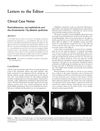
February 2004 in “Clinical and Experimental Ophthalmology” A baby boy with 13q deletion syndrome had eye cancer, a woman's vision improved after stopping a breast cancer drug, a man developed cataracts from using Propecia, and a rare skin disorder called Lipoid Proteinosis was discussed. Also, a tool called OCT is useful for diagnosing macular diseases.
65 citations
,
February 2018 in “The Plant Journal” PLDζ2 and NPC4 have different roles in lipid changes and root hair growth in Arabidopsis under low phosphate, with PLDζ2 reducing root hair growth and NPC4 promoting it.
 December 2025 in “Meditsinskiy sovet = Medical Council”
 Early diagnosis and multidisciplinary care are crucial for managing CNOT3 syndrome.
 13 citations
,
June 2010 in “Journal of The American Academy of Dermatology”
13 citations
,
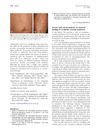
June 2010 in “Journal of The American Academy of Dermatology” A man with Cronkhite-Canada syndrome had all 20 nails detach but improved with treatment.
April 2024 in “Anais Brasileiros de Dermatologia” 57 citations
,
April 2009 in “Differentiation” SDF-1/CXCL12 and its receptor CXCR4 are crucial for melanocyte movement in mouse hair follicles.
2 citations
,
October 2024 in “Phenomics”  September 2016 in “Journal of Dermatological Science”
 The protein aPKCλ is crucial for keeping hair follicle stem cells inactive and for hair growth and regeneration.
33 citations
,
June 2007 in “Gene Expression Patterns” CTIP2 may help in skin development and maintenance.
12 citations
,
May 2021 in “The journal of investigative dermatology/Journal of investigative dermatology” Laminin 332 is essential for normal skin cell behavior and structure.
January 2022 in “Figshare” lncRNA MTC helps goat skin cells grow and may aid hair growth by controlling proteins linked to cell growth.
4 citations
,
March 2024 in “Developmental Dynamics” ALX4 is crucial for normal craniofacial and hair development, with specific roles in different cell types.