 December 2024 in “Kırıkkale Üniversitesi Tıp Fakültesi Dergisi”
 Chromosomal microarray analysis is important for diagnosing rare genetic variations and guiding treatment.
January 2005 in “Enlighten: Publications (The University of Glasgow)” Melanocyte pathology requires keratinocyte hyperplasia and regulation dysfunction.
November 2025 in “Journal of Investigative Dermatology” Certain immune cells in atopic dermatitis skin could be targeted for treatment.
July 2021 in “Anais brasileiros de dermatologia/Anais Brasileiros de Dermatologia” Monilethrix causes different levels of hair loss in family members.
5 citations
,
September 2021 in “Journal of Molecular Histology” LHX2, with other markers, can identify hair placodes in rats.
 October 2023 in “Psychiatry research. Case reports”
 A new HRAS gene variant may cause a range of symptoms including intellectual disability and psychiatric issues.
5 citations
,
January 2017 in “Arquivos Brasileiros de Oftalmologia” A rare genetic disorder causes sparse hair and vision loss due to a CDH3 gene mutation.
August 2025 in “Biomedicines” Half-siblings with a rare skin condition improved with treatment for a fungal infection, but hair loss remained.
26 citations
,
April 2011 in “British Journal of Dermatology” New mutations in the DSG4 gene cause a rare hair condition.
 November 2022 in “Journal of Investigative Dermatology”
 Scientists found a new type of skin cell that could help with skin repair and these cells work better with a certain protein.
July 2024 in “Journal of Investigative Dermatology” CRISPR/Cas9 and prime editing can potentially fix skin disorder genes safely and effectively.

BLTP1 and KIF27 gene mutations can help breed better wool sheep.
 5 citations
,
September 2012 in “Journal of Investigative Dermatology”
5 citations
,
September 2012 in “Journal of Investigative Dermatology” Scientists can mimic hair disorders by altering genes in lab-grown human hair follicles, but these follicles lack some features of natural ones.
 15 citations
,
May 2014 in “Journal of dermatology”
15 citations
,
May 2014 in “Journal of dermatology” Zouboulis syndrome is a rare condition that helps diagnose monosomy 18p early.
39 citations
,
September 2018 in “American Journal of Medical Genetics Part A” A new genetic mutation in the ODC1 gene causes developmental delay and other symptoms in a young girl.
4 citations
,
October 2001 in “Mycoses” A young cat had a rare fungal infection caused by Microsporum gypseum.
46 citations
,
October 2018 in “JCI insight” CD8+ T cells are involved in alopecia areata and may cause disease relapse.
April 2026 in “Human Genome Variation” Long-read RNA sequencing can identify complex gene changes in IFAP syndrome.
October 2025 in “Clinical and Experimental Pediatrics” A novel CLDN1 mutation in a 2-month-old with NISCH showed improvement with symptom management.
2 citations
,
May 2019 in “Small ruminant research” Mutations in specific llama genes may affect fiber quality for textiles.
January 1999 in “Journal of Investigative Dermatology” March 2026 in “Sexual Development” Tortoiseshell tomcats with XX/XY chimerism can be fertile.
93 citations
,
May 1990 in “The EMBO Journal” Mice with extra sheep genes had hair that fell out and regrew in cycles.
13 citations
,
February 2012 in “International Journal of Dermatology” A new genetic mutation in the CDH3 gene causes hair loss and eye problems in young people.
33 citations
,
September 1990 in “Proceedings of the National Academy of Sciences” The study showed that a specific DNA sequence can control gene expression in hair growth areas of mice.
 December 2022 in “American journal of medical genetics. Part A”
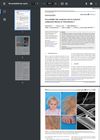
 A person got uncombable hair syndrome from two copies of chromosome 1 from their mother.
 March 2024 in “Research Square (Research Square)”
 Combining genetic and physical trait analysis improves diagnosis accuracy for monogenic diabetes.
8 citations
,
July 2015 in “International Journal of Dermatology” A new DSG4 gene mutation causes hair defects in a young girl.
13 citations
,
January 2018 in “Advances in experimental medicine and biology” 10 citations
,
January 2003 in “Dermatology” The E413K mutation in the hHb6 gene causes monilethrix, a hair disorder, but doesn't show consistent symptoms.