1 citations
,
March 1991 in “PubMed” Naevoid bundle hair is an unusual hair growth pattern where multiple hairs fuse together.
 July 2026 in “Journal of Ovarian Research”
 The study identified diverse cell types and gene expressions in ovarian steroid cell tumors, improving understanding of this rare tumor.
1 citations
,
October 2025 in “Micromachines” Portable point-of-care testing can improve quick and accurate genetic disorder detection.
November 2025 in “Practical Neurology” Correct diagnosis and treatment of lupus vasculitis improved the woman's severe symptoms.
9 citations
,
July 2020 in “JAMA dermatology” Dermatoscopy can help diagnose CCCA without visible hair loss, offering a less invasive option than biopsy.
 3 citations
,
May 1990 in “Journal of Steroid Biochemistry”
3 citations
,
May 1990 in “Journal of Steroid Biochemistry” Some women with excess hair growth have a hormone condition that can't be diagnosed by blood or urine tests alone.
 January 2024 in “Bratislavské lekárske listy/Bratislava medical journal”
 Chloroquine and cinchonine relax rat blood vessels by affecting calcium channels, with chloroquine needing caution in heart patients.
5 citations
,
December 2014 in “Molecular cytogenetics” A specific genetic change is linked to mental disorders, intellectual disability, and possibly autoimmune disease in a family.
1 citations
,
November 2022 in “Diagnostics” A woman with a rare hormone resistance condition also had missing teeth and hair loss, which might be new symptoms of her genetic disorder.
November 2025 in “BMC Genomics” Wrinkled skin in Xiang pigs is linked to gene changes related to oxidative stress and the extracellular matrix.
 March 2024 in “Bioactive Materials”
 New treatment using engineered nanovesicles in hydrogel improves hair growth by repairing hair follicle cells in a mouse model of hair loss.
 April 2025 in “Journal of Cosmetic and Laser Therapy”
 Microneedle delivery of platelet-rich plasma may be slightly better for hair regrowth than intradermal injection.
 July 2022 in “New Zealand journal of agricultural research”
 The KRTAP27-1 gene variations in sheep may affect wool length and weight.
Deleting the MAD2L1 gene is tolerated in certain mouse cancer models.
Deleting the MAD2L1 gene in mice led to rapid tumor growth despite chromosomal instability.
 150 citations
,
November 2007 in “The Journal of Clinical Endocrinology and Metabolism”
150 citations
,
November 2007 in “The Journal of Clinical Endocrinology and Metabolism” About 2.2% of women with symptoms of high male hormones have a mild form of congenital adrenal hyperplasia, and measuring a specific hormone level can accurately diagnose it.
23 citations
,
August 1983 in “PubMed” Clq deficiency is linked to systemic lupus erythematosus symptoms.
 4 citations
,
July 2012 in “Genesis”
4 citations
,
July 2012 in “Genesis” The Megsin-Cre transgene is a new tool for genetic manipulation in the skin and upper digestive tract.
November 2025 in “Cancer Cell International” Cancer-associated fibroblasts promote tumor growth in skin cancer.
December 2009 in “Pediatrics in review” A girl with Crohn's disease had a hairball causing bowel obstruction, which was removed, and she recovered well.
 32 citations
,
April 1994 in “Journal of the American Academy of Dermatology”
32 citations
,
April 1994 in “Journal of the American Academy of Dermatology” High androgen levels and genetic factors likely cause Becker's nevus and related symptoms.
October 2022 in “European Heart Journal” Potent extracellular vesicles from cardiosphere-derived cells can improve heart health and other functions in aging.
18 citations
,
July 2006 in “British Journal of Dermatology” Connexin 30 is usually absent in normal skin but can appear in certain skin conditions.
 May 2018 in “European Journal of Dermatology”
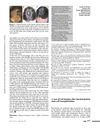
 Adjusting the medication tacrolimus resolved a boy's red nail beds after a stem cell transplant.
March 2019 in “SLAS TECHNOLOGY” New technologies show promise in healing wounds, treating cancer, autoimmune diseases, and genetic disorders.
18 citations
,
September 1994 in “Clinical and Experimental Dermatology” Localized trichorrhexis nodosa is a hair condition where hair becomes fragile and breaks easily due to damage.
 November 2022 in “The journal of investigative dermatology/Journal of investigative dermatology”
 The study suggests a link between varicella-zoster virus and segmental vitiligo, with evidence of the virus disrupting skin pigment cells.
 3 citations
,
February 2022 in “Frontiers in cell and developmental biology”
3 citations
,
February 2022 in “Frontiers in cell and developmental biology” A specific RNA molecule, circCOL1A1, affects the growth and quality of goat hair by interacting with miR-149-5p and influencing cell growth pathways.
 25 citations
,
June 2018 in “Journal of The American Academy of Dermatology”
25 citations
,
June 2018 in “Journal of The American Academy of Dermatology” Genes linked to fibrosis are more active in people with central centrifugal cicatricial alopecia.
 January 2025 in “Nature Communications”
 CPK1 helps root hair growth in Arabidopsis by activating channels for calcium signaling.