91 citations
,
December 2006 in “Proceedings of the National Academy of Sciences” Hair patterns in mice are controlled by both a global system dependent on Fz6 and a local self-organizing system.
 November 2023 in “Frontiers in veterinary science”
 The study provides insights into hair growth mechanisms in yaks.
April 2024 in “American Journal of Biological Anthropology” Hair traits vary widely and are not reliable indicators of ancestry.
Recognizing bamboo hair helps diagnose Netherton’s syndrome.
January 1996 in “Journal of Investigative Dermatology”  139 citations
,
July 1991 in “Journal of The American Academy of Dermatology”
139 citations
,
July 1991 in “Journal of The American Academy of Dermatology” Understanding hair follicle anatomy helps diagnose hair disorders.
18 citations
,
April 2010 in “Langmuir” Human hair surface varies in wettability, showing daily and monthly patterns.
 2 citations
,
September 2022 in “Frontiers in genetics”
2 citations
,
September 2022 in “Frontiers in genetics” Different proteins are linked to the varying thickness of sheep and goat hair types.
 1 citations
,
May 2019 in “Journal of The European Academy of Dermatology and Venereology”
1 citations
,
May 2019 in “Journal of The European Academy of Dermatology and Venereology” New method, hair distribution width (HDW), improves accuracy in diagnosing androgenetic alopecia (AGA).
109 citations
,
June 2000 in “Development” Notch pathway activation causes abnormal hair layer development.
December 2025 in “British Journal of Dermatology”  6 citations
,
March 2016 in “PLoS ONE”
6 citations
,
March 2016 in “PLoS ONE” The patient's hair was thinner and had fewer lipids due to a genetic mutation.
October 1999 in “Inpharma weekly” 5 citations
,
March 1943 in “Archives of Dermatology and Syphilology” A rare case of severe scalp hair loss and nail issues in keratosis follicularis was observed.
1 citations
,
February 1991 in “Journal of Biological Chemistry”  October 2023 in “Animal production science”
 Vitamin A deficiency changes cattle hair structure, while pregnancy may improve it, suggesting hair can indicate cattle health.
 September 2014 in “Springer eBooks”
 Aging causes hair to gray and thin, with the timing of graying varying by race, and factors like oxidative stress and genetics can lead to hair loss.

Hairlessness in mammals is caused by combined changes in genes and regulatory regions.
 January 2015 in “Indian Dermatology Online Journal”
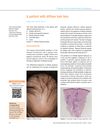
 The patient's hair loss is most likely due to diffuse alopecia areata.
 13 citations
,
September 2018 in “Scientific Reports”
13 citations
,
September 2018 in “Scientific Reports” The research found that a complex gene network, controlled by microRNAs, is important for hair growth in cashmere goats.
27 citations
,
February 1991 Cuticle damage doesn't affect hair's tensile strength; the cortex is responsible for it.
June 2023 in “The Journal of Family Practice” The hair loss is likely due to a fade haircut.
 4 citations
,
October 2012 in “Archives of Dermatology”
4 citations
,
October 2012 in “Archives of Dermatology” Hair diameter diversity is a key sign for diagnosing and managing male pattern baldness.
 3 citations
,
January 1998 in “ACTA HISTOCHEMICA ET CYTOCHEMICA”
3 citations
,
January 1998 in “ACTA HISTOCHEMICA ET CYTOCHEMICA” Hair keratins are mainly on macrofibrils in the cortex and in the endocuticle in the cuticle.
 11 citations
,
January 2018 in “Royal Society Open Science”
11 citations
,
January 2018 in “Royal Society Open Science” Scientists found genes linked to the growth of high-quality brush hair in Chinese Haimen goats.
 January 2013 in “Sen'i Gakkaishi”
 Microfibrils are key for permanent waves, and hydrolyzed keratin improves wave formation and hair condition.
 3 citations
,
July 2003 in “PubMed”
3 citations
,
July 2003 in “PubMed” The research found a way to measure hair surface changes by analyzing how light reflects off of it, and determined hair cuticle angles vary by hair length and color.
15 citations
,
January 2011 in “International journal of trichology” Using a hot iron on wet hair can cause dry, brittle hair with air bubbles inside.