127 citations
,
August 2016 in “The oncologist” Understanding and managing side effects of hedgehog pathway inhibitors can improve treatment for advanced basal cell carcinoma.
19 citations
,
July 2004 in “Australasian Journal of Dermatology” Her hair grew back normally after she stopped rubbing it.
 April 2023 in “Research Square (Research Square)”
 Combining stromal vascular fraction (SVF) injections with fractional CO2 laser treatment is more effective for treating burn scars than using the laser alone.
 16 citations
,
March 2015 in “Clinical Cancer Research”
16 citations
,
March 2015 in “Clinical Cancer Research” The document concludes that side effects from Smoothened inhibitor drugs for skin cancer are reversible and can be managed with a team approach to maintain quality of life.
 2 citations
,
March 2020 in “Skin”
2 citations
,
March 2020 in “Skin” Using cidofovir cream for a rare skin disease can cause skin darkening.
 5 citations
,
March 2013 in “International journal of surgical pathology”
5 citations
,
March 2013 in “International journal of surgical pathology” Cronkhite-Canada syndrome can be diagnosed without gastrointestinal polyps if there is severe mucosal atrophy and edema.
6 citations
,
January 1997 in “Medical Mycology” The fungus Piedraia hortae damages hair by slowly breaking down its layers, leading to long-lasting infection.
 3 citations
,
February 2019 in “Journal of endourology case reports”
3 citations
,
February 2019 in “Journal of endourology case reports” Polypoid cystitis can mimic bladder cancer but can be effectively treated with surgery, stents, and medication.
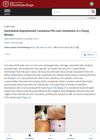 May 2024 in “Indian Journal of Dermatology”
 The woman has a rare skin condition called follicular Dowling-Degos disease, which has limited treatment options.
65 citations
,
September 2014 in “Orphanet Journal of Rare Diseases” Different STUB1 gene mutations cause varied symptoms in autosomal recessive ataxias.
4 citations
,
June 1988 in “The American journal of cosmetic surgery” The technique removes pitted scars by replacing them with skin from behind the ear and then smoothing the area after a few weeks.
 49 citations
,
April 2003 in “Biomaterials”
49 citations
,
April 2003 in “Biomaterials” Bismuth subgallate and borneol together improve skin wound healing better than when used separately or compared to other treatments.
Ablative CO2 laser resurfacing tightens skin by destroying and regenerating skin layers.
8 citations
,
January 2024 in “Regenerative Biomaterials” The hydrogel effectively treats dental implant issues by killing bacteria, reducing inflammation, and improving implant success.
10 citations
,
January 2022 in “Journal of Research in Pharmacy” Cotinus coggygria extract cream may help heal burn wounds.
May 2018 in “Dermatologic Surgery”  January 2011 in “Journal of The American Academy of Dermatology”
 A man developed a painful skin condition after multiple heart procedures involving radiation.
 December 2025 in “Cureus”
 Avoiding friction and using topical treatments can significantly improve rough skin caused by repeated rubbing.
 January 2025 in “Indian Dermatology Online Journal”
 Treatment reduced cystic lesions but didn't change existing Nevus Comedonicus.
January 2026 in “Regenerative Biomaterials” Strontium and cerium are most effective for tissue repair.
 14 citations
,
July 2012 in “Journal of the American Academy of Dermatology”
14 citations
,
July 2012 in “Journal of the American Academy of Dermatology” Topical tacalcitol ointment can help improve symptoms of EFFC.
 63 citations
,
May 2011 in “Clinical cancer research”
63 citations
,
May 2011 in “Clinical cancer research” The topical inhibitor CUR61414 was not effective in treating basal cell carcinoma in human trials.
 April 2018 in “The journal of investigative dermatology/Journal of investigative dermatology”
 Li2CO3 improved skin disease in a mouse model of Focal Dermal Hypoplasia without toxicity.
7 citations
,
April 2025 in “Science Advances” Silicate-based therapy may help treat inflammatory heart disease by reducing immune inflammation.
 February 2026 in “Frontiers in Medicine”
 Personalized sonidegib dosing can effectively treat Gorlin-Goltz syndrome with fewer side effects.
September 2022 in “Indian Journal of Paediatric Dermatology” Clouston syndrome is inherited in an autosomal dominant pattern and caused by a specific gene mutation, with no current treatment available.
June 2024 in “Indian Journal of Veterinary Medicine” The young goat had anaplasmosis and copper deficiency.
1 citations
,
January 2023 in “Annals of Indian Academy of Neurology” Recognizing CVG can help diagnose systemic amyloidosis early.
January 2006 in “International water power & dam construction” Nevus comedonicus can appear later in life and affect both eyelids.
7 citations
,
May 2008 in “Journal of Veterinary Internal Medicine” A cat had a rare severe reaction to fenbendazole, but recovered with treatment.