 2 citations
,
July 2019 in “PLOS ONE”
2 citations
,
July 2019 in “PLOS ONE” Certain genetic variations are linked to higher liver enzyme levels in patients treated for chronic hepatitis C with specific drugs.
1 citations
,
September 1986 in “Journal of the Forensic Science Society” Hair root sheaths can be used to accurately analyze genetic markers.
July 2022 in “Journal of Investigative Dermatology” Arg1+ macrophages may play a role in Alopecia Areata, offering new treatment targets.
36 citations
,
January 2010 in “Journal of Pediatric Endocrinology and Metabolism” A new gene mutation causes vitamin D resistance and hair loss in two unrelated girls.
26 citations
,
October 2007 in “American Journal of Dermatopathology” Basal cell carcinoma with matrical differentiation is a rare type linked to hair follicles, with .-catenin important for its development.
 March 2024 in “Skin research and technology”
 High CRP levels could indicate vitamin D deficiency in people with alopecia areata.
November 2025 in “Journal of Investigative Dermatology” Estetrol may help prevent hair loss and support hair growth in women.
March 2026 in “Experimental Dermatology” The new model helps understand and develop treatments for genetic skin disorders like AEC.
118 citations
,
December 2003 in “Mechanisms of Ageing and Development” Thymosin β4 helps heal wounds, grow hair, and improve blood vessel formation.
 April 2017 in “Journal of Investigative Dermatology”
 Removing the Crif1 gene in mouse skin disrupts skin balance and hair growth.
January 2009 in “한국피부장벽학회지” Calcium is crucial for skin development and healing.
September 2017 in “Journal of Investigative Dermatology” Loss of COL17A1 causes hair follicle stem cells to age and leads to hair loss.
3 citations
,
December 2008 in “Frontiers of Agriculture in China” The Cashmere goat hair keratin gene is crucial for hair structure.
September 2021 in “The journal of investigative dermatology/Journal of investigative dermatology” Three genes linked to the development of trichilemmal cysts were found.
83 citations
,
October 1998 in “The American Journal of Human Genetics” A specific gene mutation causes complete hair loss in an Irish Traveller family.
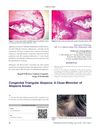 13 citations
,
January 2011 in “International Journal of Trichology”
13 citations
,
January 2011 in “International Journal of Trichology” CTA is often mistaken for AA but doesn't respond to steroids and may require hair transplantation.
12 citations
,
December 2023 in “Plant Communications” ADF8 and ADF11 help root hairs grow longer at high pH.
1 citations
,
September 2020 in “Journal of dermatology” Researchers found a new mutation in the LIPH gene of a woman with a rare hair condition.
4 citations
,
December 2021 in “Journal of clinical laboratory analysis” A new mutation in the DCAF17 gene was found to cause Woodhouse-Sakati syndrome in a large family.
7 citations
,
January 2011 Collagen XVIII is crucial for maintaining tissue structure and function in the brain, kidneys, and hair.
September 2017 in “The journal of investigative dermatology. Symposium proceedings/The Journal of investigative dermatology symposium proceedings” CCCA and lichen planopilaris have similar histological features, making them hard to distinguish.
 6 citations
,
August 2022 in “The Italian Journal of Pediatrics/Italian journal of pediatrics”
6 citations
,
August 2022 in “The Italian Journal of Pediatrics/Italian journal of pediatrics” New genetic mutations linked to rare skin disorders were found in three newborns.
October 2025 in “Science Advances” IFN-γ production by CD4 T cells is crucial for causing alopecia areata.

CaBP1 and 2 are important for maintaining the activity of calcium channels necessary for hearing in inner ear cells.
 35 citations
,
August 2010 in “The American journal of pathology”
35 citations
,
August 2010 in “The American journal of pathology” Researchers created a new mouse model for studying Citrullinemia Type I and similar conditions, showing symptoms and treatment responses like those in humans.
January 2017 in “Seoul National University Open Repository (Seoul National University)” AIMP1 can boost hair growth by increasing stem cell activity.
14 citations
,
April 2008 in “PROTEOMICS” Increased 14-3-3 proteins may block hair cycle regression, causing hair loss.
10 citations
,
May 2017 in “Wound Repair and Regeneration” Overexpression of ALK2 in hair follicles disrupts skin development and slows wound healing.
2 citations
,
May 2023 in “The Journal of Immunology” NXC736 significantly reduced hair loss in mice with alopecia areata.
1 citations
,
November 2022 in “Diagnostics” A woman with a rare hormone resistance condition also had missing teeth and hair loss, which might be new symptoms of her genetic disorder.