 30 citations
,
July 2019 in “Endocrinology”
30 citations
,
July 2019 in “Endocrinology” Certain HSD3B1 gene types are linked to worse prostate cancer outcomes and affect treatment response and other health conditions.
119 citations
,
September 2000 in “Journal of Biological Chemistry” GKLF/KLF4 and Sp1 control Keratin 19 gene activity, influencing cancer-related changes.
 19 citations
,
June 1999 in “Steroids”
19 citations
,
June 1999 in “Steroids” Different halogens on progesterone derivatives can either block or mimic male hormone effects, depending on their type and amount.
114 citations
,
May 2001 in “Development” Overexpression of Hoxc13 in hair cells causes hair loss and skin issues.
27 citations
,
May 2011 in “Journal of Investigative Dermatology” TCHHL1 is a protein important for hair growth, found in hair follicles.
July 2025 in “Pharmaceutics” Recombinant Human Annexin A5 may help treat localized scleroderma by reducing skin thickening and inflammation.
 April 2018 in “Journal of Investigative Dermatology”
  August 2016 in “Journal of Investigative Dermatology” January 2006 in “Linchuang pifuke zazhi”
 Stem cell factor and certain proteins help melanocytes from hair follicles move and attach better, aiding vitiligo repigmentation.
January 2010 in “Journal of Clinical Dermatology” Thai plant extracts, especially Avicennia marina, can promote hair growth by inhibiting certain enzymes and boosting growth factors.
38 citations
,
February 1988 in “Molecular and Cellular Biology” Only one of the two K16 genes on chromosome 17 makes a functional protein for keratin filaments.
 November 2022 in “The journal of investigative dermatology/Journal of investigative dermatology”
 Hemoglobin α acts as an antioxidant in skin cells, especially protecting hair follicle stem cells from UV damage.
 May 2025 in “Wound Repair and Regeneration”
 TSN6 peptide improves skin thickness and hair growth.
13 citations
,
July 1994 in “PubMed” Keratins K6 and K16 are expressed more freely in regenerating mouse skin than K1 and K10.
The trichohyalin gene is located at chromosomal region 1q21 with other skin-related protein genes.
 14 citations
,
November 2007 in “Journal of Dermatological Science”
14 citations
,
November 2007 in “Journal of Dermatological Science” Vitamin C derivative may promote hair growth by activating specific genes.
 April 2018 in “Journal of Investigative Dermatology”
 Nonmelanoma skin cancers have higher levels of certain osteopontin variants than normal skin.
December 2009 in “Cancer Research” Over-expression of Sp2 can lead to cancer by preventing proper stem cell differentiation.
26 citations
,
March 2006 in “Endocrine, metabolic & immune disorders. Drug targets” This enzyme helps metabolize fatty acids and isoleucine, and could be key in treating neurological diseases and certain cancers.
41 citations
,
January 2001 in “Journal of Investigative Dermatology” Keratinocytes can reverse the effects of the GNAQ oncogene, inhibiting melanoma cell growth.
 1 citations
,
January 1971 in “Acta dermato-venereologica”
1 citations
,
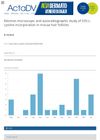
January 1971 in “Acta dermato-venereologica” Mice hair follicles take in the amino acid cystine.
February 2026 in “Experimental Dermatology” Cyclohexyl salicylate may help hair growth and treat hair loss.
January 2011 in “Zhongguo nongye Kexue” Transgenic sheep cells with spider silk gene were successfully created for future sheep hair expression.
 January 2008 in “Journal of Clinical Dermatology”
 Integrin alpha-6 and p63 proteins may play a role in hair loss and are important for hair growth and maintenance.
32 citations
,
January 2000 in “Human Heredity” Monilethrix severity varies and may be influenced by other genetic or environmental factors.
 October 2017 in “The Indian Journal of Animal Sciences”
 The prolactin gene polymorphism doesn't affect cashmere quality in these goats.
 January 2019 in “Proceedings for Annual Meeting of The Japanese Pharmacological Society”
 Nε-(carboxymethyl) lysine delays hair growth by blocking a key protein.
September 2017 in “Journal of Investigative Dermatology” Loss of COL17A1 causes hair follicle stem cells to age and leads to hair loss.