66 citations
,
October 2003 in “Dermatologic clinics” Excision and laser techniques can effectively treat acne keloidalis nuchae.
 1 citations
,
May 2023 in “Curēus”
1 citations
,
May 2023 in “Curēus” A man had a benign pilar cyst on his face, which is rare and was successfully removed by surgery.
14 citations
,
May 1979 in “International Journal of Dermatology” Trichostasis spinulosa mainly affects the nose, with many tiny hairs in one follicle, possibly influenced by hormones and sunlight.
 December 2021 in “International journal of research - granthaalayah”
 A young woman had a rare, usually non-cancerous tumor on her face that was initially mistaken for a different condition.
 September 2023 in “Clinical anatomy”
 Forehead creases are formed by a tight connection between the skin and muscle through dense fibers, with changes in skin thickness and fewer skin appendages near the creases.
19 citations
,
January 2022 in “Journal of Nanomaterials” NH-Tween-80 is a promising stable gel for treating acne.
 16 citations
,
October 2014 in “Oral surgery, oral medicine, oral pathology and oral radiology”
16 citations
,
October 2014 in “Oral surgery, oral medicine, oral pathology and oral radiology” Keratoacanthoma comes from hair follicle cells.
 1 citations
,
December 2019 in “American journal of ophthalmology. Case reports”
1 citations
,
December 2019 in “American journal of ophthalmology. Case reports” A rare skin condition caused droopy and outward-turning eyelids in a patient.
2 citations
,
September 2019 in “Serbian Journal of Dermatology and Venerology” A rare skin condition causing scarring was successfully treated with topical erythromycin and benzoyl peroxide.
20 citations
,
November 2004 in “Archives of Pathology & Laboratory Medicine” A rare benign skin growth called melanocytic matricoma was identified in a 69-year-old man.
9 citations
,
January 2002 in “Dermatology” Reduced CD44 expression may cause abnormal hyaluronate buildup in cutaneous myxoma.
May 2020 in “International Journal of Dermatology and Venereology” Calcified epidermal cysts are rare, hard skin nodules that are best treated with surgical removal.
2 citations
,
September 2018 in “bioRxiv (Cold Spring Harbor Laboratory)” Hair follicle niches are specified before they form and depend on progenitor cells.
June 2025 in “British Journal of Dermatology” Melanocytic matricoma can look like skin cancer but is usually harmless; surgery and follow-up are advised.
 4 citations
,
January 2009 in “Indian Journal of Dermatology, Venereology and Leprology”
4 citations
,
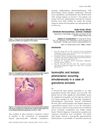
January 2009 in “Indian Journal of Dermatology, Venereology and Leprology” A patient with granuloma annulare experienced both isotopic and isomorphic responses, with skin lesions responding to steroids but relapsing after stopping treatment.
1 citations
,
October 2025 in “Journal of Visualized Experiments” The method creates skin organoids with hair follicles for research on skin conditions and treatments.
 26 citations
,
March 2014 in “International journal of pharmaceutics”
26 citations
,
March 2014 in “International journal of pharmaceutics” Researchers created a skin treatment that could effectively deliver medication into hair follicles.
8 citations
,
July 1986 in “International Journal of Dermatology” Eruptive vellus hair cysts are harmless skin bumps that may go away on their own.
5 citations
,
November 2001 in “Auris Nasus Larynx” Accurate diagnosis of Winer's dilated pore in the ear is crucial to avoid unnecessary aggressive treatment.
January 2022 in “Institutional Repositories DataBase (IRDB)” Pen-type microwells are best for forming hair follicle germ structures.
3 citations
,
July 1990 in “PubMed” Human hair follicles can grow and form structures in a collagen gel, useful for studying hair cell growth.
 4 citations
,
June 2005 in “British Journal of Dermatology”
4 citations
,
June 2005 in “British Journal of Dermatology” HPV 60 may cause cysts and warts on the face, not just hands and feet.
3 citations
,
March 2013 in “American Journal of Dermatopathology” Ossification in trichilemmal cysts is more common than previously believed.
 7 citations
,
July 2019 in “The Journal of Dermatology”
7 citations
,
July 2019 in “The Journal of Dermatology” Terbinafine effectively treated kerion celsi despite disrupted immune responses.
14 citations
,
November 2015 in “Dermatology” The research provided insights into the presentation and management of alopecic and aseptic nodules of the scalp.

Traumatic anserine folliculosis is a harmless skin condition in young males that needs correct diagnosis to avoid unnecessary treatments.
1010 citations
,
August 2000 in “Cell” Hair follicle stem cells can form both hair follicles and skin.
 September 2016 in “Journal of dermatological science”
 The OVOL1-OVOL2 axis is important for hair follicle differentiation and can help diagnose certain hair-related tumors.
178 citations
,
April 2011 in “Journal of Clinical Investigation” Basal cell carcinomas in mice can start from hair follicle stem cells and other skin cell types, depending on signaling levels.
 78 citations
,
June 2021 in “Dermatology and Therapy”
78 citations
,
June 2021 in “Dermatology and Therapy” Future acne treatments should aggressively target inflammation to prevent scarring.