29 citations
,
February 1989 in “Journal of Cutaneous Pathology” A unique hair tumor with a rippled pattern was identified, showing incomplete differentiation and unusual cell arrangements.
 March 2023 in “Journal of Cosmetic Dermatology”
 A genetic variant linked to hair thinning in Japanese women was found.
21 citations
,
August 2002 in “British Journal of Ophthalmology” Intralesional cidofovir may be a viable alternative treatment for SCC.
December 2003 in “British Journal of Urology”  April 2023 in “The journal of investigative dermatology/Journal of investigative dermatology”
 Folliculotropic mycosis fungoides has unique molecular features and cell interactions that could guide targeted therapy.
 March 2023 in “International Journal of Dermatology”
 COVID-19 can cause hair to become progressively kinked.
1 citations
,
August 2024 in “Pediatric Dermatology” A rare, harmless hair condition was found in an infant's eyebrow, needing no treatment.
16 citations
,
October 1992 in “Journal of cutaneous pathology” Bubble hair deformity may be caused by hair shaft trauma and can improve with gentle hair care.
Compound 6 is a promising candidate for better wound healing.
 2 citations
,
December 2024
2 citations
,
December 2024 The plant pathogen in Australia evolves through existing genetic variation, not new genotypes.
46 citations
,
September 2007 in “Journal of Investigative Dermatology” May 2023 in “Journal of the European Academy of Dermatology and Venereology” Many people experience hair loss after COVID-19 infection.
 29 citations
,
January 2010 in “Methods in Enzymology”
29 citations
,
January 2010 in “Methods in Enzymology” The document concludes that careful design of genetic fate mapping experiments is crucial for accurate cell lineage tracing in mice.
 May 2022 in “Authorea (Authorea)”
 A 17-year-old girl has had repeated hair loss since childhood, which can be triggered by infections like COVID-19.
87 citations
,
August 1974 in “Journal of Investigative Dermatology” February 2023 in “Zenodo (CERN European Organization for Nuclear Research)” 22 citations
,
March 2017 in “Transplant Infectious Disease” Leflunomide successfully treated a rare skin condition in a liver transplant patient.
 20 citations
,
July 2011 in “PLoS ONE”
20 citations
,
July 2011 in “PLoS ONE” HPV-150 and HPV-151 are rare skin viruses linked to warts and some skin cancers.
 867 citations
,
November 2020 in “Nature Communications”
867 citations
,
November 2020 in “Nature Communications” Collider bias can distort our understanding of COVID-19 risk and severity.
December 2015 in “European Journal of Pediatric Dermatology” Newborns can experience temporary hair loss in bands, unrelated to sleeping position.
February 2025 in “International Journal of Research Publication and Reviews” Butterfly pea flower is valued for its health benefits, color-changing ability, and use in food and drinks.
1 citations
,
April 2024 in “Journal of Cutaneous Pathology” Recurrent NICF is a rare skin condition with unclear causes, involving follicle inflammation and crystal deposits.
 7 citations
,
January 2015 in “Dermatology”
7 citations
,
January 2015 in “Dermatology” Two gene variations, rs6493497 and rs7176005, may be linked to female hair loss in Chinese people.
19 citations
,
March 2016 in “British journal of dermatology/British journal of dermatology, Supplement” Trichodysplasia spinulosa is a rare skin disease in immunocompromised patients caused by a specific virus targeting hair follicle cells.
2 citations
,
May 2018 in “Dermatologic Surgery” 20 citations
,
July 2005 in “Experimental dermatology” The fuzzy gene is crucial for controlling hair growth cycles.
October 2024 in “Journal of Cutaneous Pathology” Compound follicles in folliculitis decalvans mainly have active hair follicles.
 8 citations
,
February 2005 in “British Journal of Haematology”
8 citations
,
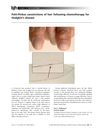
February 2005 in “British Journal of Haematology” Chemotherapy caused the patient's hair to have alternating thick and thin segments.
 March 2021 in “The British Journal of Psychiatry”
 Countries with stricter cultures had fewer COVID-19 cases and deaths, paranoia is linked to false memories, psychosocial intervention works as well with or without antipsychotic drugs for young people with psychosis, smartphones can detect changes in behavior indicating illness relapse, and recruitment agents show regional and gender biases.
1 citations
,
July 2016 in “Dermatologic surgery”