3 citations
,
June 2023 in “Modern Pathology” GLI1 RNA CISH effectively identifies basal cell carcinoma but is less specific for benign follicular tumors.
 October 2014 in “Journal of Minimally Invasive Gynecology”
 Genetic testing for cancer risk can lead to early and life-saving treatments in people without symptoms.
March 2009 in “European Urology Supplements” 13 citations
,
March 2021 in “Frontiers in oncology” Reflectance confocal microscopy reliably identifies skin cancer features like horizontal skin tissue sections.
 May 2015 in “Actas Dermo-Sifiliográficas”
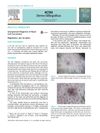
 A young man was unexpectedly diagnosed with basal cell carcinoma after a scalp examination and confocal microscopy.
 March 2011 in “Journal of Dermatology”
 The conclusion is that a certain test might help find cancer spread in lymph nodes for melanoma patients, but more research is needed due to false positives.
 January 2014 in “Pathology”
 Non-scarring hair loss can be diagnosed with two 4mm punch biopsies, one cut vertically and the other transversely.
December 2018 in “Dermatologic Surgery” Trichoscopy is a valuable tool for diagnosing hair loss accurately and non-invasively.
 93 citations
,
May 2010 in “European Journal of Cancer”
93 citations
,
May 2010 in “European Journal of Cancer” BI 2536 had limited effectiveness against several advanced cancers and caused significant side effects.
6 citations
,
April 2010 in “The American Journal of Surgical Pathology” Trichoblastoma in the breast can be mistaken for cancer, so expert review is crucial to avoid misdiagnosis.
 2 citations
,
July 2013 in “InTech eBooks”
2 citations
,
July 2013 in “InTech eBooks” Scalp biopsy helps tell apart permanent and temporary hair loss types and guides treatment.
 April 2018 in “Journal of Investigative Dermatology”
 Watching, not removing, skin growths with moderate atypia and positive edges is okay; patients may get melanoma elsewhere, especially if they've had it before.
1 citations
,
July 2025 in “Indian Dermatology Online Journal” Scalp biopsies are crucial for diagnosing hair loss types accurately.
71 citations
,
February 1992 in “Journal of Cutaneous Pathology” Antibodies help identify glycoproteins in normal skin and tumor cells.
 309 citations
,
May 1993 in “Journal of The American Academy of Dermatology”
309 citations
,
May 1993 in “Journal of The American Academy of Dermatology” Horizontal scalp biopsy sections effectively diagnose and predict MPAA, with follicular density and inflammation impacting hair regrowth.
87 citations
,
January 1999 in “British Journal of Dermatology” Trichoblastic fibroma and basal cell carcinoma are similar but different from trichoepithelioma.
 19 citations
,
September 2011 in “Clinical and Experimental Dermatology”
19 citations
,
September 2011 in “Clinical and Experimental Dermatology” Transverse scalp sections are better for diagnosing non-scarring hair loss, while vertical sections are better for a specific scarring hair loss called lichen planopilaris.
September 2024 in “Journal of the American Academy of Dermatology”  September 2010 in “European Urology Supplements”
 The document does not confirm if radical prostatectomy is the best treatment for locally advanced prostate cancer.
6 citations
,
March 2018 in “The American journal of dermatopathology/American journal of dermatopathology” BerEP4 and CD34 staining can help tell apart tricholemmoma from basal cell carcinoma.
 5 citations
,
September 2015 in “Journal of The American Academy of Dermatology”
5 citations
,
September 2015 in “Journal of The American Academy of Dermatology” Taking photos of your own skin can lead to fewer skin biopsies for mole monitoring.
 1 citations
,
October 2024 in “Dermatology Practical & Conceptual”
1 citations
,
October 2024 in “Dermatology Practical & Conceptual” Reflectance confocal microscopy is a promising non-invasive tool for diagnosing alopecia areata incognita.
13 citations
,
January 2010 in “PubMed”  November 2020 in “Journal of The American Academy of Dermatology”
 Certain immune markers may predict chemotherapy response in mesothelioma, and nivolumab is a tolerable and effective treatment for advanced non-small cell lung cancer.
 January 2011 in “Yearbook of Dermatology and Dermatologic Surgery”
 Finding a positive nonsentinel lymph node in melanoma patients indicates a worse prognosis.
21 citations
,
January 2000 in “Fetal Diagnosis and Therapy” Prenatal diagnosis of trichothiodystrophy is possible in the second trimester using fetal eyebrow biopsy, with sulfur content analysis being more reliable.
16 citations
,
December 2016 in “ecancermedicalscience” Hair analysis may help detect breast cancer early by identifying changes in lipid content.
2 citations
,
January 2023 in “Skin Appendage Disorders” More research is needed to confirm initial findings on hair loss patterns from chemotherapy.
25 citations
,
November 2010 in “Journal of Molecular Structure” Raman micro-spectroscopy can help distinguish basal cell carcinoma from hair follicles in skin tissue.