 3 citations
,
April 2020 in “Clinical endocrinology and metabolism journal”
3 citations
,
April 2020 in “Clinical endocrinology and metabolism journal” Imaging helps detect adrenal gland issues and monitor treatment in congenital adrenal hyperplasia, and can identify tumors affecting fertility.
3 citations
,
January 2020 in “International journal of trichology” Congenital triangular alopecia is a hair loss condition present from birth or early childhood with no effective treatment needed.
3 citations
,
March 2017 in “Pediatric Dermatology” FOXN1 duplication can cause excessive hair growth.
 3 citations
,
August 2012 in “The American Journal of Dermatopathology”
3 citations
,
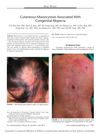
August 2012 in “The American Journal of Dermatopathology” A man with a birthmark on his scalp developed hair loss that improved with treatment, but the link between the birthmark and hair loss was unclear.
 3 citations
,
February 2012 in “The American Journal of Dermatopathology”
3 citations
,
February 2012 in “The American Journal of Dermatopathology” A 3-year-old girl with skin mast cell buildup and congenital baldness improved with treatment, suggesting a rare link between these conditions.
3 citations
,
January 2004 in “Journal of Wildlife Diseases” A deer fawn in South Dakota was the first cervid found with congenital hypotrichosis, a condition causing sparse or missing hair.
2 citations
,
November 2024 in “JCEM Case Reports” Inhaled substances in e-cigarettes can cause hormone imbalances similar to congenital adrenal hyperplasia.
 2 citations
,
October 2022 in “Frontiers in genetics”
2 citations
,
October 2022 in “Frontiers in genetics” Late diagnosis of congenital adrenal hyperplasia can greatly affect physical development, gender identity, and sexual health.
2 citations
,
March 2016 in “Serbian Journal of Dermatology and Venerology” A six-year-old boy with excessive hair growth and other symptoms may have a genetic link on chromosome 17q, requiring regular medical follow-ups.
 2 citations
,
January 2000 in “Journal of Toxicologic Pathology”
2 citations
,
January 2000 in “Journal of Toxicologic Pathology” A single recessive gene causes sparse hair in certain Japanese White rabbits.