 11 citations
,
May 2011 in “World Journal of Pediatrics”
11 citations
,
May 2011 in “World Journal of Pediatrics” The document emphasizes the importance of correctly identifying and classifying genetic hair disorders to help diagnose related health conditions.
 11 citations
,
February 1989 in “Journal of veterinary medicine. Series A”
11 citations
,
February 1989 in “Journal of veterinary medicine. Series A” Crossbreeding certain European cattle breeds may cause hair and physical issues in cattle.
 20 citations
,
January 2009 in “International Journal of Dermatology”
20 citations
,
January 2009 in “International Journal of Dermatology” Hair loss in Clouston's syndrome improved with minoxidil and tretinoin treatment.
 10 citations
,
July 2015 in “Current opinion in pediatrics, with evaluated MEDLINE/Current opinion in pediatrics”
10 citations
,
July 2015 in “Current opinion in pediatrics, with evaluated MEDLINE/Current opinion in pediatrics” New genes linked to ichthyosis were found, but there's still no cure; treatment options are improving.
 5 citations
,
January 2018 in “Acta Dermatovenerologica Alpina Pannonica et Adriatica”
5 citations
,
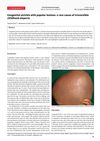
January 2018 in “Acta Dermatovenerologica Alpina Pannonica et Adriatica” Congenital atrichia with papular lesions causes permanent hair loss in children.

Early biotin treatment can reverse symptoms of congenital biotinidase deficiency.
 October 2018 in “Journal of Clinical Research in Pediatric Endocrinology”
 Children with classic congenital adrenal hyperplasia have thicker heart fat and more heart and blood vessel risk factors, especially if their condition is not well-controlled.
 24 citations
,
May 2012 in “International Journal of Dermatology”
24 citations
,
May 2012 in “International Journal of Dermatology” The document concludes that eyelash trichomegaly, which is the abnormal growth of eyelashes, can be present from birth, caused by diseases, or result from certain medications.
 September 2024 in “Egyptian Journal of Medical Human Genetics”
 Consider NF1 in newborns with rare congenital anomalies.
 260 citations
,
July 2010 in “Cell”
260 citations
,
July 2010 in “Cell” Mutations in the SRD5A3 gene cause a new type of glycosylation disorder by blocking the production of a molecule necessary for protein glycosylation.
 178 citations
,
October 2001 in “Genes & Development”
178 citations
,
October 2001 in “Genes & Development” The mutated hairless gene causes hair loss by acting as a new type of corepressor affecting thyroid hormone receptors.
 157 citations
,
May 2021 in “Endocrine Reviews”
157 citations
,
May 2021 in “Endocrine Reviews” Early diagnosis and individualized treatment improve outcomes for Congenital Adrenal Hyperplasia.
 151 citations
,
December 2004 in “Annals of the New York Academy of Sciences”
151 citations
,
December 2004 in “Annals of the New York Academy of Sciences” Congenital Adrenal Hyperplasia is a genetic disorder with two forms, causing symptoms like early puberty and severe acne, but can be identified through screening and treated with glucocorticoids.
 100 citations
,
May 2011 in “Journal of Pediatric and Adolescent Gynecology”
100 citations
,
May 2011 in “Journal of Pediatric and Adolescent Gynecology” The document concludes that proper diagnosis and a multidisciplinary approach are crucial for managing Congenital Adrenal Hyperplasia effectively.
 66 citations
,
June 2018 in “British Journal of Dermatology”
66 citations
,
June 2018 in “British Journal of Dermatology” European guidelines recommend regular eye and ear exams, skin care, vitamin D supplements, and cautious use of medications for managing congenital ichthyoses.
 52 citations
,
October 2012 in “Journal of Dermatological Science”
52 citations
,
October 2012 in “Journal of Dermatological Science” The document concludes that mouse models are crucial for studying hair biology and that all mutant mice may have hair growth abnormalities that require detailed analysis to identify.
 41 citations
,
November 2011 in “The Journal of Dermatology”
41 citations
,
November 2011 in “The Journal of Dermatology” Some hair loss disorders are caused by genetic mutations affecting hair growth.
 26 citations
,
March 2009 in “Dermato-endocrinology”
26 citations
,
March 2009 in “Dermato-endocrinology” The document concludes that diagnosing and treating Congenital Adrenal Hyperplasia is complex and requires a team approach due to its effects on the skin and other symptoms.
 19 citations
,
December 2015 in “European Journal of Human Genetics”
19 citations
,
December 2015 in “European Journal of Human Genetics” A rare ITGB6 gene variant causes intellectual disability, hair loss, and dental issues.
 16 citations
,
September 2008 in “Dermatologic Therapy”
16 citations
,
September 2008 in “Dermatologic Therapy” CAH is a genetic disorder affecting cortisol production and causing hormonal imbalances, with treatment and diagnosis varying by form and symptoms.
 12 citations
,
March 2013
12 citations
,
March 2013 Minoxidil cream can safely treat hair loss in kids with ectodermal dysplasia.
 10 citations
,
August 2016 in “Anais brasileiros de dermatologia/Anais Brasileiros de Dermatologia”
10 citations
,
August 2016 in “Anais brasileiros de dermatologia/Anais Brasileiros de Dermatologia” Vitiligo patients often have nail problems, so checking their nails is important.
 9 citations
,
May 2016 in “Veterinary dermatology”
9 citations
,
May 2016 in “Veterinary dermatology” Long-term oral and topical treatments improved skin condition in a goldendoodle with a genetic disorder.
 7 citations
,
November 2013 in “Pediatric and Developmental Pathology”
7 citations
,
November 2013 in “Pediatric and Developmental Pathology” Over half of the children had abnormal hair under a microscope, with many having genetic hair conditions.
 5 citations
,
June 2020 in “Journal of Endocrinological Investigation”
5 citations
,
June 2020 in “Journal of Endocrinological Investigation” Women with congenital adrenal hyperplasia (CAH) have more sexual function issues than those with polycystic ovary syndrome (PCOS), but physical activity can improve sexual functioning in all women.
 4 citations
,
September 2013 in “Journal of Plastic Surgery and Hand Surgery”
4 citations
,
September 2013 in “Journal of Plastic Surgery and Hand Surgery” A girl with a rare syndrome had successful hair loss treatment with no relapse after 4 years.
 2 citations
,
April 2013 in “Expert Review of Endocrinology & Metabolism”
2 citations
,
April 2013 in “Expert Review of Endocrinology & Metabolism” Identifying nonclassic congenital adrenal hyperplasia and carriers of CYP21 mutations is challenging, and genetic counseling is recommended due to their prevalence.
 2 citations
,
January 2000 in “Journal of Toxicologic Pathology”
2 citations
,
January 2000 in “Journal of Toxicologic Pathology” A single recessive gene causes sparse hair in certain Japanese White rabbits.
 1 citations
,
February 2025 in “Journal of Endocrinological Investigation”
1 citations
,
February 2025 in “Journal of Endocrinological Investigation” Screen young women with menstrual issues, acne, or excess hair for high cortisol to avoid misdiagnosis.
 1 citations
,
October 2022 in “Curēus”
1 citations
,
October 2022 in “Curēus” Diagnosing simple-virilizing congenital adrenal hyperplasia can be difficult and requires thorough testing and expert advice.