 1 citations
,
February 2019 in “PubMed”
1 citations
,
February 2019 in “PubMed” Minoxidil is effective in treating various types of hair loss and can improve quality of life, with combination therapies showing increased effectiveness.
Cholesterol affects hair growth, but more research is needed to understand how.
Hirsutism in women is mostly due to PCOS and can be managed with oral contraceptives and hair removal methods.
9 citations
,
July 2016 in “Genes” Genetic variants in PDE6H and LPAR6 cause vision impairment and hair loss in two Pakistani brothers.
 10 citations
,
February 2015 in “Clinics in Dermatology”
10 citations
,
February 2015 in “Clinics in Dermatology” The document concludes that changes in eyelashes and eyelid skin can indicate various local and systemic diseases.
186 citations
,
December 2012 in “Current opinion in cell biology” Keratin proteins are increasingly recognized as important for cell health and are linked to many diseases.
 14 citations
,
September 2007 in “Steroids”
14 citations
,
September 2007 in “Steroids” The study concluded that androstendione and DHEA are important for diagnosing high male hormone levels in women with excessive hair growth.
 1 citations
,
October 2014 in “Paediatrics and Child Health”
1 citations
,
October 2014 in “Paediatrics and Child Health” The document concludes that proper diagnosis and management of hair loss in children require a detailed examination and understanding of various hair disorders.
 July 2023 in “Developmental medicine and child neurology/Developmental medicine & child neurology”
 DFMO treatment improves hair growth, muscle tone, and development in Bachmann-Bupp syndrome patients.
13 citations
,
June 2006 in “Fertility and Sterility” Nonclassic 21-hydroxylase deficiency is a common, treatable genetic disorder causing reversible symptoms like acne and hair loss.
 December 2024 in “Journal of Clinical Research in Pediatric Endocrinology”
 21-hydroxylase deficiency causes hormone imbalances leading to various symptoms, and diagnosis involves clinical and genetic tests.

The document concludes that the girl's hairlessness is likely inherited from her parents.
 100 citations
,
May 2011 in “Journal of Pediatric and Adolescent Gynecology”
100 citations
,
May 2011 in “Journal of Pediatric and Adolescent Gynecology” The document concludes that proper diagnosis and a multidisciplinary approach are crucial for managing Congenital Adrenal Hyperplasia effectively.
 1 citations
,
August 1988 in “Journal of The American Academy of Dermatology”
1 citations
,
August 1988 in “Journal of The American Academy of Dermatology” Hair transplantation between identical twins can successfully treat severe, nonprogressive hair loss due to follicular aplasia.
 66 citations
,
June 2018 in “British Journal of Dermatology”
66 citations
,
June 2018 in “British Journal of Dermatology” European guidelines recommend regular eye and ear exams, skin care, vitamin D supplements, and cautious use of medications for managing congenital ichthyoses.
 20 citations
,
November 2012 in “Journal der Deutschen Dermatologischen Gesellschaft”
20 citations
,
November 2012 in “Journal der Deutschen Dermatologischen Gesellschaft” Hair diseases can have psychological effects and should be treated with a combination of psychosomatic care, therapy, and medication.
 10 citations
,
August 2012 in “Current Problems in Pediatric and Adolescent Health Care”
10 citations
,
August 2012 in “Current Problems in Pediatric and Adolescent Health Care” Hair changes can indicate systemic diseases or medication effects.
13 citations
,
January 2018 in “Yonsei Medical Journal” A specific gene mutation causes Olmsted syndrome.
11 citations
,
August 2019 in “PubMed” Hirsutism in women is mostly caused by polycystic ovary syndrome and idiopathic hyperandrogenism.
53 citations
,
August 2015 in “The Italian Journal of Pediatrics/Italian journal of pediatrics” Excessive body hair can signal complex health issues.
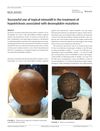 1 citations
,
August 2019 in “Pediatric dermatology”
1 citations
,
August 2019 in “Pediatric dermatology” Topical minoxidil helped an 8-year-old boy with a genetic hair disorder grow hair.
 7 citations
,
July 2011 in “Survey of Ophthalmology”
7 citations
,
July 2011 in “Survey of Ophthalmology” The document concludes that periocular hair disorders have various causes and treatments, and proper evaluation by specialists is important for management and prognosis.
 12 citations
,
March 2013
12 citations
,
March 2013 Minoxidil cream can safely treat hair loss in kids with ectodermal dysplasia.
20 citations
,
April 2000 in “Experimental dermatology” ODC transgenic mice can model human hair loss with skin lesions.
 November 2022 in “The Journal of Clinical Endocrinology and Metabolism”
 Postmenopausal hyperandrogenism, a condition with symptoms like increased hair growth and acne, is usually caused by PCOS but can also be due to other factors. It's diagnosed by checking testosterone levels and treated either by removing the adrenal tumor or through antiandrogen therapy.
 13 citations
,
March 2018 in “Pediatric Dermatology”
13 citations
,
March 2018 in “Pediatric Dermatology” Children with short anagen syndrome usually see their hair condition improve as they get older.
 July 2024 in “Journal of Dermatological Treatment”
 Botanical extracts and Minoxidil improved hair condition in a boy with a genetic disorder.
 14 citations
,
June 2016 in “Pediatric Dermatology”
14 citations
,
June 2016 in “Pediatric Dermatology” Some congenital hair disorders improve with age and can be managed with treatments like minoxidil, retinoids, supplements, and gentle hair care, but there's no cure.
 33 citations
,
June 2016 in “Pediatric Dermatology”
33 citations
,
June 2016 in “Pediatric Dermatology” Some congenital hair disorders improve in childhood or with treatments like minoxidil and retinoids, while others like Netherton syndrome and trichothiodystrophy have a poor prognosis.
 2 citations
,
January 2014 in “Hair therapy & transplantation”
2 citations
,
January 2014 in “Hair therapy & transplantation” New treatments for hair growth disorders are needed due to limited current options and complex hair follicle biology.