 February 2024 in “International neuropsychiatric disease journal”
 Alopecia areata severely impacts quality of life, mental health, and work productivity.
 February 2024 in “Asian journal of medical sciences”
 Proper hygiene, adequate sleep, and self-care can reduce common skin diseases.
 January 2024 in “Dermatology practical & conceptual”
 Atopic dermatitis in kids with alopecia areata can predict poor response to topical immunotherapy.
 January 2024 in “Journal of Ayurveda Campus”
 Psoralea corylifolia Linn. is a medicinal plant used for skin diseases and has various health benefits.
 December 2023 in “International journal of research in dermatology”
 Most pregnant women experience common skin changes like linea nigra and stretch marks.
 December 2023 in “bioRxiv (Cold Spring Harbor Laboratory)”
 AP-2α and AP-2β proteins are essential for healthy adult skin and hair.
 December 2023 in “Research Square (Research Square)”
 People with Down syndrome have higher rates of certain immune-related conditions and need special medical attention.
 October 2023 in “Frontiers in medicine”
 Targeted immunotherapy could be a promising new treatment for hair regrowth.
 September 2023 in “Family practice”
 Nearly half of the classification tools in the National Institute of Health and Clinical Excellence's Clinical Knowledge Summaries might not effectively guide management for general practitioners.
 September 2023 in “Research Square (Research Square)”
 TNC+ fibroblasts play a key role in skin inflammation by interacting with T cells.
 August 2023 in “JOJ dermatology & cosmetics”
 Antibiotics often cause skin reactions, making them a major health concern.

Various treatments exist for hair loss, but no definitive solution.
 June 2023 in “International Journal of Clinical Research and Reports”
 Method B with propylene glycol is better for stable low-concentration DPCP solutions for alopecia areata.
 June 2023 in “International Journal for Research in Applied Science and Engineering Technology”
 Emulgel improves skin delivery of various drugs better than traditional methods.
 May 2023 in “Jurnal Sains Insani”
 Shaykh Abbas Kuta Karang significantly advanced Malay medical knowledge with his detailed manuscript.

More research is needed to confirm the potential of various treatments, including Helichrysum plicatum, vitamins, bromelain, personalized medications, hydrogels, and bacteriophage therapy.
 February 2023 in “International Journal of Advanced Research in Science, Communication and Technology”
 Herbal shampoos with Neem and Tulsi might be safer and more effective for controlling dandruff.
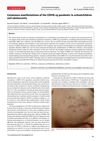 January 2023 in “Acta dermatovenerologica Alpina, Pannonica et Adriatica (Tiskana izd.)”
 The article concludes that schoolchildren and adolescents experienced various skin issues during the COVID-19 pandemic, including acne from masks and other skin reactions from the virus and vaccines.
 October 2022 in “Gadua Journal of Pure and Allied Science”
 Terbinafine is the most effective treatment for tinea capitis, a scalp infection often confused with other conditions.

Screening for iron levels in patients with hair loss may help find a genetic iron overload condition early.
 August 2022 in “International Journal of Health Sciences”
 Elderly in rural areas have many skin issues needing targeted healthcare.

Vitamin D is crucial for skin health and managing skin diseases.
 April 2022 in “Research Square (Research Square)”
 The combination of laser and topical steroids is more effective for treating alopecia areata than topical steroids alone.
 March 2022 in “Journal of Clinical Case Studies Reviews & Reports”
 COVID-19 can cause or worsen skin conditions and might show early signs of infection.
 March 2022 in “Journal of South Asian Association of Pediatric Dentistry”
 Dentists should start preventive treatments early for children with Ichthyosis Vulgaris to avoid dental problems.
 March 2022 in “Journal of clinical case studies reviews & reports”
 COVID-19 can cause different skin issues, including rashes and hair loss.
 January 2022 in “Dermatology Review”
 Higher IL-31 levels are linked to worse itching in chronic kidney disease patients.
 December 2021 in “The Sri Lanka Journal of Dermatology”
 COVID-19 can cause various skin issues, including rashes and lesions.
 November 2021 in “International Journal of Research in Medical Sciences & Technology”
 Skin surface chemistry and OCT can improve skin disease diagnosis.
 April 2021 in “Arab Journal of Nuclear Sciences and Applications/Arab Journal of Nuclear Sciences and Applications ”
 Repeated use of protein hair conditioner with heat or gamma irradiation can harm skin and hair health in rats.