 October 2022 in “Gadua Journal of Pure and Allied Science”
 Terbinafine is the most effective treatment for tinea capitis, a scalp infection often confused with other conditions.

The document concludes that the development of certain tumors is influenced by genetic background and that a specific gene modification can lead to tumor regression and reduced growth.
 January 2022 in “Dermatology Review”
 Higher IL-31 levels are linked to worse itching in chronic kidney disease patients.
A mange outbreak nearly wiped out vicuña and guanaco populations in San Guillermo National Park.
 June 2021 in “Journal of emerging technologies and innovative research”
 Onion and Aloe vera can help protect hair from damage caused by hair dyes.
 January 2021 in “International journal of basic and clinical pharmacology”
 Hydroxychloroquine is less effective than betamethasone oral mini pulse therapy for treating alopecia areata.
 January 2021 in “Middle East journal of applied sciences”
 Over 30% of livestock in New Valley Governorate, Egypt, had skin diseases, affecting their productivity and income.
 November 2020 in “Elsevier eBooks”
 Antiandrogens and androgen inhibitors like spironolactone, finasteride, and dutasteride can treat hair loss and skin conditions, but they have risks and side effects, including potential harm to pregnant women and risks of cancer and heart issues. Herbal remedies also have antiandrogenic effects but lack safety validation.
 October 2020 in “Veterinary Dermatology”
 New treatments and diagnostic methods for various animal skin conditions showed promising results.
 June 2019 in “Journal of Dermatological Treatment”
 BM-PHA is as effective and safe as Restylane Perlane for improving nasolabial folds with minor side effects.
 January 2019 in “ARC journal of pharmaceutical sciences”
 Acne can be managed with various treatments and requires psychological support due to its emotional impact.
 January 2019 in “Durham e-Theses (Durham University)”
 Advanced microscopy shows hair damage and keratin proteins' roles, aiding future cosmetic treatments.
 October 2018 in “InTech eBooks”
 The most effective treatments for hair loss are minoxidil, finasteride, PRP, and hair transplants, with steroids and immunosuppressants for autoimmune types.
 July 2018 in “Elsevier eBooks”
 Up to half of people experience itchy scalp, often due to skin conditions like seborrheic dermatitis or psoriasis, and treatments vary based on the specific cause.
Microneedle technology is effective for skin rejuvenation and enhancing cosmeceutical delivery, with ongoing innovation and increasing commercialization.
Combining microneedling with platelet-rich plasma enhances skin repair and collagen production but may not offer significant extra benefits.
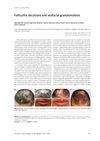 January 2018 in “Advances in Dermatology and Allergology”
 Treatment with dapsone, topical corticosteroids, and antibiotics improved the man's skin conditions.
 August 2017 in “Journal of evolution of medical and dental sciences”
 Trichoscopy is effective for diagnosing different types of non-scarring hair loss.
 March 2017 in “Fundamental & Clinical Pharmacology”
 The model and estimator can predict drug exposure in kidney transplant patients well.
 March 2017 in “InTech eBooks”
 Acne vulgaris is a common skin condition that can cause low self-esteem and depression, and early treatment is important to prevent scarring.
 January 2017 in “Springer eBooks”
 The document explains various skin conditions and their treatments.
 January 2017 in “Clinical approaches and procedures in cosmetic dermatology”
 Retinoids are effective for skin conditions like severe acne and psoriasis but must be used with caution due to potential side effects and risks during pregnancy.

Glycyrrhizic acid and licorice extract can significantly reduce unwanted hair growth.
 January 2016 in “Springer eBooks”
 Understanding drug interactions, side effects, and patient-specific factors is crucial for effective dermatological care.

Alopecia areata is an autoimmune disease affecting hair follicles and may harm heart health.
 March 2014 in “Journal of The American Academy of Dermatology”
 The document lists various dermatology topics, treatments, and diagnostic methods.
 May 2013 in “Springer eBooks”
 Skin problems in the elderly are unique and may indicate other diseases, involving changes in skin, hair, nails, and increased cancer risk.
 June 2011 in “CRC Press eBooks”
 Low-Level Laser Therapy can stimulate healing and cell function, potentially leading to wider medical use.
 September 2009 in “Pediatric Dermatology”
 UVB is good for a skin condition in Asian kids, a lotion works for head lice, a drug helps with a skin blistering disorder, a foam reduces itchiness in skin inflammation, birthmarks can be more widespread, and criteria for a neurocutaneous disorder were agreed upon.
 January 2009 in “Side effects of drugs annual”
 Some blood-thinning medications can increase the risk of bleeding, and certain factors like genetics and other health conditions affect their safety and effectiveness.