 10 citations
,
January 2014 in “BioMed research international”
10 citations
,
January 2014 in “BioMed research international” Rat whisker cells can help turn other cells into nerve cells and might be used to treat brain injuries or diseases.
September 2015 in “Fluids and Barriers of the CNS” Three skull models were found most useful for testing hydrocephalus valve programming.
 3 citations
,
May 1999 in “Dermatologic Surgery”
3 citations
,
May 1999 in “Dermatologic Surgery” Dr. Connelly agrees that linear basal cell carcinomas might be more aggressive but highlights the study's lack of clear criteria to identify them.
 8 citations
,
August 2020 in “PLOS Computational Biology”
8 citations
,
August 2020 in “PLOS Computational Biology” A machine learning model called CATNIP can predict new uses for existing drugs, like using antidepressants for Parkinson's disease and a thyroid cancer drug for diabetes.
87 citations
,
June 2010 in “Stem Cell Research & Therapy” Stem cells can move to brain injury sites and be tracked, showing promise for treating brain diseases.
 91 citations
,
March 2011 in “Stem Cell Reviews and Reports”
91 citations
,
March 2011 in “Stem Cell Reviews and Reports” Human epidermal neural crest stem cells can become bone and skin pigment cells, making them useful for therapies.
10 citations
,
September 2024 in “Neural Regeneration Research” Stem cells improve nerve repair by enhancing blood vessel growth.
 20 citations
,
November 2019 in “Current Opinion in Systems Biology”
20 citations
,
November 2019 in “Current Opinion in Systems Biology” The document concludes that computational models are useful for understanding immune responses and could improve cancer immunotherapy.
January 2026 in “JDDG Journal der Deutschen Dermatologischen Gesellschaft” A 5-year-old boy has Nevus Comedonicus Syndrome, causing skin lesions and a cataract.
41 citations
,
July 2016 in “Journal of Investigative Dermatology” Dysplastic nevi have unique gene expressions, making them distinct from common melanocytic nevi.
 December 2023 in “Journal of comparative pathology”
 A dog had a rare skin cyst, known as a dilated pore of Winer, surgically removed from its neck.
SL-HyDE improves medical information retrieval accuracy without needing labeled data.
 July 2022 in “International Journal of Applied Pharmaceutics”
 Machine learning and deep learning can effectively diagnose alopecia areata.
 24 citations
,
June 2012 in “BMC Research Notes”
24 citations
,
June 2012 in “BMC Research Notes” The HGCA tool helps identify genes that work together by analyzing their co-expression patterns.
 2 citations
,
December 2008 in “Clinical and Experimental Dermatology”
2 citations
,
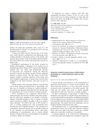
December 2008 in “Clinical and Experimental Dermatology” A small forehead lesion led to the discovery of a significant brain arteriovenous malformation in a young girl.
 May 2026 in “The Journal of Headache and Pain”
 Inhibiting certain brain neurons may reduce pain and anxiety in trigeminal neuralgia.
13 citations
,
September 2014 in “Birth defects research” Human epidermal neural crest stem cells could be used for therapies, drug discovery, and disease modeling.
 November 2022 in “The journal of investigative dermatology/Journal of investigative dermatology”
 Deleting the CD271 gene in mouse skin cells leads to disorganized skin and increased hair growth, suggesting CD271 is important for skin health.
 May 2026 in “Mendeley Data”
 Hair follicle stem cells and their exosomes help repair nerve injuries.
April 2023 in “Journal of clinical and translational science”  50 citations
,
December 2011 in “Skin Research and Technology”
50 citations
,
December 2011 in “Skin Research and Technology” The algorithm effectively removes hair from skin images, improving melanoma diagnosis accuracy.
2 citations
,
November 2024 Machine learning can accurately predict mental disorders.
31 citations
,
January 2007 in “Journal of the American Academy of Dermatology” A rare skin growth was successfully removed without recurrence after one year.
4 citations
,
July 2010 in “International Journal of Cosmetic Science” Curved human hair has different structures on its convex and concave sides.
December 2019 in “Journal of Cosmetic Dermatology” A new training model using an orange helps surgeons practice parietal whorl hair transplants effectively.
14 citations
,
May 2008 in “Journal of Visualized Experiments” Mouse epidermal neural crest stem cells can become various cell types and are easily obtained from hair follicles.
9 citations
,
August 2002 in “British journal of ophthalmology” The document reports a rare case of ECCL with a new association with optic disc colobomas.
5 citations
,
April 2024 in “JAAD International” AI can accurately measure hair loss severity in alopecia areata.
 2 citations
,
January 2018 in “European journal of pediatric surgery reports”
2 citations
,
January 2018 in “European journal of pediatric surgery reports” A baby girl's hair turned straight on one side due to a neck tumor and surgery, but it returned to curly as she recovered.
June 2022 in “Annals of Indian Academy of Neurology” A woman's shingles infection triggered her first episode of a rare neurological disorder and blood vessel inflammation.