64 citations
,
January 1995 in “Cells Tissues Organs” Merkel cells develop independently of nerves and are linked to specific hair follicles in mice.
 26 citations
,
April 2011 in “Skin Research and Technology”
26 citations
,
April 2011 in “Skin Research and Technology” In vivo confocal scanning laser microscopy is an effective, non-invasive way to study and measure new hair growth after skin injury in mice.
 2 citations
,
April 2010 in “The Open Dermatology Journal”
2 citations
,
April 2010 in “The Open Dermatology Journal” Corneodesmosin is essential for skin and hair health, and its dysfunction can lead to skin and hair disorders.
 2 citations
,
February 2023 in “Transgenic Research”
2 citations
,
February 2023 in “Transgenic Research” The E2 protein affects gene activity in hair follicles of mice.
March 2016 in “Benha Veterinary Medical Journal” Type XIX Collagen is present in specific skin and hair cells during development.
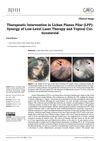 January 2024 in “Brazilian Journal of Hair Health”
 Combining low-level laser therapy with topical corticosteroids effectively improved Lichen Planopilaris symptoms.
 April 2019 in “Journal of Investigative Dermatology”
 Non-coding RNA boosts retinoic acid production and signaling, aiding regeneration.
2 citations
,
August 2022 in “Middle East Fertility Society Journal” The new rodent model successfully mimics non-lean human PCOS symptoms.
 3 citations
,
April 2010 in “Endocrinology”
3 citations
,
April 2010 in “Endocrinology” The mouse model suggests male pattern baldness may be due to an enzyme increasing DHT and higher androgen receptor levels in hair follicles.
53 citations
,
January 2013 in “Journal of toxicologic pathology” The project created a standardized system for classifying skin lesions in lab rats and mice.
May 2023 in “bioRxiv (Cold Spring Harbor Laboratory)” The research mapped diverse cell types in mouse lacrimal glands, aiding understanding of gland biology and diseases.
41 citations
,
September 2003 in “Journal of Investigative Dermatology” Overexpression of COX-2 causes early hair loss in mice, but can be prevented with a COX-2 inhibitor.
28 citations
,
June 1995 in “The Journal of Dermatology” The flaky skin mouse mutation is a natural model for studying human psoriasis.
 23 citations
,
September 2011 in “Journal of Dermatological Science”
23 citations
,
September 2011 in “Journal of Dermatological Science” Red LED light helps mouse hair grow by increasing growth factors from skin cells.
 June 2021 in “National Medical Journal of China”
 Bimatoprost helps mouse hair grow by turning on a specific growth pathway.
1 citations
,
September 2001 in “PubMed” ONO-3403 effectively reduces mouse skin tumor growth without side effects.
 3 citations
,
April 2022 in “International Journal of Molecular Sciences”
3 citations
,
April 2022 in “International Journal of Molecular Sciences” Scientists turned mouse skin cells into hair-inducing cells using chemicals, which could help treat hair loss.
 1 citations
,
November 2015 in “Indian Journal of Clinical Biochemistry”
1 citations
,
November 2015 in “Indian Journal of Clinical Biochemistry” The conference presented findings on how vitamin D levels, genetic factors, and lifestyle choices like smoking and yoga affect various health conditions and diseases.
44 citations
,
April 1979 in “Journal of Ultrastructure Research” Ganoderma lucidum extract and microneedle therapy promote hair growth in mice.
2 citations
,
July 2025 in “Drug development & registration” A new algorithm accurately analyzes animal coat and skin colors quickly and easily.
4 citations
,
January 1982 in “Neuroendocrinology” Dopamine affects coat color changes in agouti mice.
 5 citations
,
September 2015 in “PLoS ONE”
5 citations
,
September 2015 in “PLoS ONE” Gelfoam® histoculture supports long-term hair and nerve growth in mouse whisker follicles.
 7 citations
,
May 2005 in “Experimental Dermatology”
7 citations
,
May 2005 in “Experimental Dermatology” Two mouse mutations cause similar hair loss despite different skin changes.
23 citations
,
December 1977 in “Virchows Archiv B Cell Pathology” 11 citations
,
January 2005 in “Brazilian Journal of Medical and Biological Research” Hairless USP mice have enlarged skin cysts as they age.
March 2026 in “Sexual Development” Tortoiseshell tomcats with XX/XY chimerism can be fertile.
51 citations
,
August 2012 in “Differentiation” Mouse genital development depends on male or female hormones for specific features.
 5 citations
,
September 2022 in “Journal of Investigative Dermatology”
5 citations
,
September 2022 in “Journal of Investigative Dermatology” Careful selection of mice by genetics and age, and controlled housing conditions improve the reliability of hair regrowth in wound healing tests.
 1 citations
,
April 2023 in “Science Advances”
1 citations
,
April 2023 in “Science Advances” High levels of ERK activity are key for tissue regeneration in spiny mice, and activating ERK can potentially redirect scar-forming healing towards regenerative healing in mammals.