 48 citations
,
July 1993 in “The journal of investigative dermatology/Journal of investigative dermatology”
48 citations
,
July 1993 in “The journal of investigative dermatology/Journal of investigative dermatology” Hair growth is controlled by specific gene clusters and proteins, and cysteine affects hair gene expression in sheep.
55 citations
,
November 2010 in “Development” Hair follicles in mutant mice self-organize into ordered patterns within a week.
7 citations
,
May 1988 in “International Journal of Dermatology” The patient's hair has unique structural differences with alternating bright and dark bands.
6 citations
,
October 2006 in “International Journal of Dermatology” Hair splitting and nail detachment are linked conditions.
9 citations
,
March 2005 in “International Journal of Cosmetic Science” The torsional method effectively evaluates hair damage and the performance of hair care ingredients.
 February 2019 in “bioRxiv (Cold Spring Harbor Laboratory)”
 The gene Prss53 affects hair shape and bone development in rabbits.
Researchers made a mouse model with curly hair and hair loss by editing a gene.
 191 citations
,
November 1959 in “Annals of the New York Academy of Sciences”
191 citations
,
November 1959 in “Annals of the New York Academy of Sciences” Hair and wool have complex microscopic structures with microfibrils and varying cystine content.
30 citations
,
July 2000 in “PubMed” Hair has unevenly distributed proteins and lipids, with lipids mainly in the cuticle and proteins in the cortex and medulla.
 24 citations
,
November 2015 in “Scientific reports”
24 citations
,
November 2015 in “Scientific reports” Human hair has a new region with ordered filaments and the cuticle contains β-keratin sheets.
65 citations
,
March 2017 in “Experimental Dermatology” Curly hair is influenced by specific genetic variations.
26 citations
,
October 1999 in “Archives of Dermatology” Curly hair in certain scalp areas can be an early sign of hair loss.
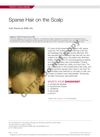
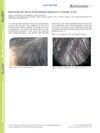
A 5-year-old girl has sparse, dry, and brittle hair but is otherwise healthy.
 1 citations
,
January 2018 in “Acta dermato-venereologica”
1 citations
,
January 2018 in “Acta dermato-venereologica” A teenager's hair with alternating white and dark bands, known as Pili annulati, is a genetic condition that is usually harmless and often considered attractive.
10 citations
,
January 1925 in “Archives of Dermatology” Trichostasis spinulosa is a rare skin condition with hair-filled plugs in hair follicles.
The curly mutation in SELH/Bc mice affects hair and may help study human genetic disorders.
 34 citations
,
August 1966 in “Experimental cell research”
34 citations
,
August 1966 in “Experimental cell research” Keratin fibrils in hair form and stop growing at specific points in the follicle.
 May 2024 in “Frontiers in medicine”
 A genetic mutation in the LIPH gene causes tightly curled hair that stops growing in some Japanese individuals.
 September 2014 in “Proceedings of SPIE, the International Society for Optical Engineering/Proceedings of SPIE”
 OCT can effectively examine and reveal details about human hair and scalp conditions.
29 citations
,
July 2015 in “Journal of Medical Genetics” A genetic variant in the KRT25 gene causes tightly curled hair.
2 citations
,
February 2021 in “FEBS open bio” Human hair keratins K85 and K35 create unique filament patterns important for early hair formation.
April 2019 in “Progress in Crystal Growth and Characterization of Materials” Hair grows like a crystal at a solid-liquid interface without cell division.
3 citations
,
December 2021 in “Proteins” Wool fiber curliness is linked to the presence of certain proteins and K38.
1 citations
,
June 2022 in “Tidsskrift for Den norske legeforening” A young boy's uncombable hair is due to a rare genetic condition that usually improves over time.
December 1978 in “Indian Journal of Otolaryngology and Head & Neck Surgery” 254 citations
,
January 2007 in “Chemical Society Reviews” Hair is a complex protein fiber with unique properties useful for developing hair products.
research Hair
January 1983 in “Elsevier eBooks” Hair grows from living roots, is made of dead keratin, and goes through growth, rest, and shedding stages.
 13 citations
,
August 2020 in “Frontiers in Cell and Developmental Biology”
13 citations
,
August 2020 in “Frontiers in Cell and Developmental Biology” Twist1 helps maintain important features of cells crucial for hair growth by working with Tcf4 and β-catenin.
3 citations
,
March 2009 in “Hirosaki University Repository for Academic Resources (Hirosaki University)” Hirosaki hairless rats have sparse, twisted hair due to missing hair keratin genes.
 245 citations
,
January 1998 in “Genes & Development”
245 citations
,
January 1998 in “Genes & Development” Hoxc13 gene is essential for hair, nail, and papilla development.