 January 2024 in “Authorea (Authorea)”
 Convalescent Plasma Therapy may help treat COVID-19 Long-Hauler symptoms.
 January 2024 in “Future postharvest and food”
 Frankincense may help treat COVID-19, but more research is needed.
 January 2024 in “Wiadomości Lekarskie”
 The Polish Medical Association in Chicago effectively supported the Polish community during COVID-19.
 January 2024 in “ARC Journal of Dermatology”
 During the COVID-19 pandemic, dermatology visits decreased, especially among older patients, patients of color, men, and those with chronic conditions.

Sex hormones may affect COVID-19 severity and outcomes.
 December 2023 in “International journal of statistics and probability”
 Blood type affects COVID-19 infection rates differently in Europe and Africa.
November 2023 in “Advances in clinical medical research & healthcare delivery”  November 2023 in “Advances and Applications in Statistics”
 AI can effectively predict COVID-19 mortality risk using patient data.
 September 2023 in “Irish Journal of Medical Science (1971 -)”
 About 61% of women who had COVID-19 experienced hair loss afterward.
May 2023 in “Indian Journal of Dermatology” BCG site reactions after COVID-19 mRNA vaccination are mild, temporary, and likely under-reported.
 April 2023 in “International Journal of Community Medicine and Public Health”
 Older people with severe COVID-19, especially those with certain health conditions, are more likely to experience post-COVID syndrome.
April 2023 in “Mayo Clinic Proceedings” Estrogen may help improve COVID-19 outcomes, especially in women.
 April 2023 in “Journal of Investigative Dermatology”
 During the COVID-19 pandemic in China, skin conditions like eczema and warts increased among children, while respiratory-transmitted skin infections decreased, partly due to mask-wearing.
March 2023 in “Brazilian Journal of Health Review” The combination tablet of finasteride and doxazosin works the same as taking each drug separately.
March 2023 in “Medical Bulletin of Haseki” Extracellular water levels don't indicate COVID-19 pneumonia severity.
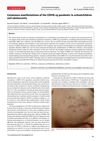 January 2023 in “Acta dermatovenerologica Alpina, Pannonica et Adriatica (Tiskana izd.)”
 The article concludes that schoolchildren and adolescents experienced various skin issues during the COVID-19 pandemic, including acne from masks and other skin reactions from the virus and vaccines.
 January 2023 in “Health Sciences”
 Androgens may worsen COVID-19 severity in men.
 January 2023 in “Editora Conhecimento Livre eBooks”
 A balanced diet with key nutrients and possible supplements can help manage post-COVID-19 symptoms.
 October 2022 in “Journal of experimental and clinical medicine”
 Repurposing existing drugs for COVID-19 shows promise but requires more research to confirm effectiveness.
 October 2022 in “Amplla Editora eBooks”
 The document's conclusion cannot be provided because the content is not available for analysis.
 October 2022 in “Amplla Editora eBooks”
 The document's conclusion cannot be provided because the document is not accessible or understandable.
 September 2022 in “Acta Medica”
 The pandemic caused new skin problems in children, mainly due to mask-wearing and stress.
 September 2022 in “Revista de la Asociación Colombiana de Dermatología y Cirugía Dermatológica”
 Skin symptoms appear in up to 20% of Covid-19 cases.
 September 2022 in “Journal of The American Academy of Dermatology”
 Different types of hair loss are linked to COVID-19, with some types possibly increasing risk of getting the virus, while others may be triggered or worsened by the virus.
 July 2022 in “International Journal of Research in Dermatology”
 Some children with COVID-19 develop skin symptoms linked to a severe inflammatory condition.
 July 2022 in “Revista Ibero-Americana de Humanidades, Ciências e Educação”
 Many recovered COVID-19 patients, especially women, experience lingering symptoms like fatigue and headaches.
 June 2022 in “Indian Dermatology Online Journal”
 Teledermatology effectively managed most skin conditions remotely during the COVID-19 pandemic.
 June 2022 in “Journal of the turkish academy of dermatology”
 During the COVID-19 pandemic, some skin conditions became more common while others decreased.
 May 2022 in “F1000Research”
 During the COVID-19 pandemic, Iraqi women experienced more hair loss and certain skin conditions, while contagious skin infections decreased.