 November 2023 in “Advances and Applications in Statistics”
 AI can effectively predict COVID-19 mortality risk using patient data.
 11 citations
,
May 2023 in “Journal of Cancer Research and Clinical Oncology”
11 citations
,
May 2023 in “Journal of Cancer Research and Clinical Oncology” CRISPR/Cas systems show promise for cancer treatment by targeting miRNAs, but delivery and specificity challenges remain.
4 citations
,
February 2018 in “EMBO reports” New DNA analysis and machine learning are advancing forensic science, improving accuracy and expanding into non-human applications.
January 2026 in “JAMA Dermatology” ICD codes for skin conditions vary in accuracy, needing better validation for some common conditions.
3 citations
,
December 2021 in “Proteins” Wool fiber curliness is linked to the presence of certain proteins and K38.
February 2024 in “arXiv (Cornell University)” Adjusting AI training data for skin condition distribution improves accuracy across different clinical settings.
4 citations
,
September 1999 in “Journal of Clinical Forensic Medicine” Caffeine in hair might help identify people, but it's not always reliable.
 2 citations
,
November 2018 in “Modern Applied Science”
2 citations
,
November 2018 in “Modern Applied Science” The method accurately detects and removes hair from skin images to improve melanoma diagnosis.
The method creates realistic, anonymous acne face images for research, achieving 97.6% accuracy in classification.
149 citations
,
August 2022 in “Biochemistry (Moscow)” CRISPR-Cas9 allows precise DNA editing but raises ethical concerns about modifying human embryos.
19 citations
,
August 2022 in “Forensic Science International Genetics” The model accurately predicts age from saliva and buccal cells for forensic use.
 January 2024 in “Lecture notes in networks and systems”
 "TRICHOASSIST" is a system that analyzes hair and scalp images to help diagnose scalp diseases.
 5 citations
,
July 2019 in “Applied statistics/Journal of the Royal Statistical Society. Series C, Applied statistics”
5 citations
,
July 2019 in “Applied statistics/Journal of the Royal Statistical Society. Series C, Applied statistics” Case-only trees and random forests improve predictions of treatment effects in clinical trials.
![Benzo[c]quinolizin-3-ones Theoretical Investigation: SAR Analysis and Application to Untested Compounds](/images/assets/6712367a-949f-47c7-a756-2bfe6316fc69/small/15331.jpg) 6 citations
,
August 2004 in “Journal of Chemical Information and Computer Sciences”
6 citations
,
August 2004 in “Journal of Chemical Information and Computer Sciences” The research found a link between certain molecular features and the biological activity of BC3, which can help identify or create new active compounds.
 2 citations
,
December 2018 in “Novos Estudos Jurídicos”
2 citations
,
December 2018 in “Novos Estudos Jurídicos” Predictive computational analyses have evolved biopower by using technology to track and predict individual and group behaviors.
 1 citations
,
September 2017
1 citations
,
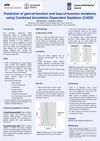
September 2017 C-scores can help predict gain-of-function and loss-of-function mutations.
3 citations
,
May 2024 in “BMC Medical Genomics” A new ARID1B gene variation causes Coffin-Siris syndrome 1 and early high myopia in a Chinese family.
 December 2020 in “Research Square (Research Square)”
 The AndroCoV Clinical Scoring is a quick, affordable, and accurate method for diagnosing COVID-19.
13 citations
,
February 2025 in “Nature Communications” A new neural network helps identify key regulators in cell changes, aiding in understanding diseases and finding new treatments.
 November 2025 in “Kufa Journal of Engineering”
 AI can effectively detect hair and scalp disorders from images.
 September 2023 in “Research Square (Research Square)”
 The document concludes that the new expert system can assess the risk of PCOS effectively despite uncertainties in diagnosis.
 6 citations
,
September 2025 in “Scientific Reports”
6 citations
,
September 2025 in “Scientific Reports” Machine learning can accurately diagnose PCOS non-invasively using clinical and ultrasound features.
 March 2021 in “The British Journal of Psychiatry”
 Countries with stricter cultures had fewer COVID-19 cases and deaths, paranoia is linked to false memories, psychosocial intervention works as well with or without antipsychotic drugs for young people with psychosis, smartphones can detect changes in behavior indicating illness relapse, and recruitment agents show regional and gender biases.
January 2026 in “SSRN Electronic Journal” 4 citations
,
March 2024 in “Forensic Sciences Research” Forensic DNA phenotyping faces challenges like inconsistent terms and limited genetic knowledge.
A machine-learning test using hair can help detect autism early in infants.
 April 2024 in “Archives of Dermatological Research”
 The approach improves scalp surgery results by tailoring techniques to defect size and location.
 6 citations
,
November 2022 in “Forensic Science Medicine and Pathology”
6 citations
,
November 2022 in “Forensic Science Medicine and Pathology” Genetic markers can help predict ear shapes for forensic use.
822 citations
,
January 2021 in “Genome biology” scMC effectively separates biological signals from technical noise in single-cell genomics data.
4350 citations
,
May 2012 in “Arthritis & Rheumatism” The new SLICC criteria for diagnosing lupus are more sensitive and accurate than the old criteria.