September 2019 in “The journal of investigative dermatology/Journal of investigative dermatology” New RIPK4 gene mutations were found to cause a type of skin and limb birth defect.
 April 2017 in “Journal of Investigative Dermatology”
 PRC1 influences skin stem cell development by both turning genes on and off, affecting hair growth and skin cell types.
20 citations
,
May 2011 in “Journal of Clinical Investigation” The study created a mouse model to mimic degenerative diseases for testing tissue repair and new therapies.

Blocking CXCR4 may help treat hidradenitis suppurativa.
6 citations
,
June 2025 in “Nano Biomedicine and Engineering” Smart nano-PROTACs improve cancer treatment by targeting proteins more precisely and reducing side effects.
53 citations
,
October 2003 in “Genetics” The mK6irs1/Krt2-6g gene likely causes wavy hair in mice.
Ribonucleotide excision repair is crucial to prevent skin cancer.
Ribonucleotide excision repair is crucial to prevent skin cancer.
 April 2018 in “Journal of Investigative Dermatology”
 CREB, a protein that can promote cancer traits, is controlled by β-catenin in skin cancer cells.
 June 2026 in “Institutional Repositories DataBase (IRDB)”
 Crickets have genetically controlled hair plates that help them sense and move their antennae.

Dual TCR Treg cells are common in mouse tissues and vary by location.
July 2024 in “Journal of Investigative Dermatology” A new test helps find drugs to treat head and neck cancer by targeting c-Rel.
188 citations
,
June 1998 in “Molecular cell” Researchers created a mouse with the same mutation as humans with trichothiodystrophy, showing similar symptoms and confirming the condition is due to defects in DNA repair and gene activity.
19 citations
,
May 2016 in “Biology Direct” A new method, iSiMPRe, effectively identifies key protein regions in cancer genes, highlighting potential drug targets.
 January 2014 in “Springer eBooks”
 Inflammasome proteins can indicate the severity and treatment response of various diseases and injuries.
 11 citations
,
July 2014 in “Gene”
11 citations
,
July 2014 in “Gene” The S250C variant in a gene may cause autoimmunity and immunodeficiency by impairing protein function.
 6 citations
,
August 2015 in “Journal of Molecular Histology”
6 citations
,
August 2015 in “Journal of Molecular Histology” Caspase-7 has functions in skin and hair that are not related to cell death.
 October 2018 in “Current Opinion in Genetics & Development”
 The document emphasizes the importance of ongoing research and ethical considerations in genome editing and cellular reprogramming.
April 2018 in “The journal of investigative dermatology/Journal of investigative dermatology” Esrp1 is important for skin health by helping form and maintain the skin barrier.
 1 citations
,
May 2019 in “Cytotherapy”
1 citations
,
May 2019 in “Cytotherapy” The new ddPCR method reliably detects unwanted viruses in CAR-T cell products, ensuring their safety for patients.
13 citations
,
February 2025 in “Nature Communications” A new neural network helps identify key regulators in cell changes, aiding in understanding diseases and finding new treatments.
2 citations
,
April 2023 in “American Journal of Dermatopathology” CCCA may involve the PD1/PDL1 pathway and increased caspase 3, leading to permanent hair loss.
 1 citations
,
September 2017
1 citations
,
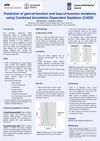
September 2017 C-scores can help predict gain-of-function and loss-of-function mutations.
12 citations
,
July 2004 in “Molecular genetics and genomics” A new mouse mutation causes skin and hair defects due to a gene change.
 1 citations
,
April 2018 in “Journal of Investigative Dermatology”
1 citations
,
April 2018 in “Journal of Investigative Dermatology” People respond differently to hair loss treatment with PRP because of individual differences in growth factors from platelets.
 April 2018 in “Journal of Investigative Dermatology”
 Desmoglein 3 organization in cell connections changes without calcium, affecting cell adhesion.
 April 2018 in “Journal of Investigative Dermatology”
 IL-9 increases skin cell movement but decreases their ability to invade, and this effect is controlled by cell contractility, not by MMPs.
 April 2018 in “Journal of Investigative Dermatology”
 The conclusion is that a new method combining magnetic tweezers and traction force microscopy may help understand skin cell interactions and diseases.
 April 2018 in “Journal of Investigative Dermatology”
 Nonmelanoma skin cancers have higher levels of certain osteopontin variants than normal skin.
June 2020 in “Zenodo (CERN European Organization for Nuclear Research)” Robertsonian translocation can cause recurrent miscarriages.