 February 2023 in “EAS Journal of Medicine and Surgery”
 Most Idoma people have a curved hairline due to genetics.
 January 1957 in “Nihon Chikusan Gakkaiho”
 Rabbit hair color is influenced by the shape and distribution of pigment granules.
 8 citations
,
November 2022 in “International Journal of Cosmetic Science”
8 citations
,
November 2022 in “International Journal of Cosmetic Science” Human hair varies widely and should be classified by curl type rather than race.
 7 citations
,
July 2004 in “International Journal of Cosmetic Science”
7 citations
,
July 2004 in “International Journal of Cosmetic Science” Different hair types from various ethnic groups affect hair shine due to characteristics like thickness and shape.
 4 citations
,
June 2021 in “Scientific Reports”
4 citations
,
June 2021 in “Scientific Reports” Hair fiber shape and curvature are not significantly linked when ancestry is considered.
85 citations
,
October 2007 in “International Journal of Dermatology” Curly hair shape is due to uneven growth patterns in the hair follicle.
27 citations
,
September 1988 in “PubMed” Hair follicle shape determines hair type: curly, straight, or in-between.
 September 2014 in “Proceedings of SPIE, the International Society for Optical Engineering/Proceedings of SPIE”
 OCT can effectively examine and reveal details about human hair and scalp conditions.
 28 citations
,
November 2018 in “Journal of structural biology”
28 citations
,
November 2018 in “Journal of structural biology” Different populations have distinct hair structures related to their ancestry.
23 citations
,
January 2008 in “Skin Pharmacology and Physiology” Optical coherent tomography can effectively detect steroid use by analyzing hair changes.
 August 2007 in “Microscopy and Microanalysis”
 Hair fibers break by cuticle cell slipping, shape changing, cuticle fraying, and surface cracking when stretched under specific conditions.
7 citations
,
June 2018 in “Journal of the American Academy of Dermatology” The document suggests finding a simpler, cheaper way to diagnose Uncombable Hair Syndrome.
 February 2024 in “Hormones”
 Future hormone therapy trials should match the diverse needs and priorities of the gender-diverse community.
 6 citations
,
December 2018 in “International Journal of Cosmetic Science”
6 citations
,
December 2018 in “International Journal of Cosmetic Science” Mexican women's hair is between Asian and Caucasian hair in thickness and shape, with varied strength and some damage.
 80 citations
,
February 2021 in “Cureus”
80 citations
,
February 2021 in “Cureus” Many COVID-19 survivors continue to experience symptoms like fatigue and concentration problems after recovery, possibly needing rehabilitation.
 May 2021 in “Pakistan Journal of Medical and Health Sciences”
 M type hair loss is the most common in Pakistani men.
November 2023 in “PubMed” Men with COVID-19 have different hormone levels linked to disease severity.
2 citations
,
March 2025 in “Archives of Dermatological Research” Negative views about alopecia worsen quality of life and increase anxiety and depression.
41 citations
,
November 2019 in “Journal of Ultrasound in Medicine” Ultrasound can help detect early signs and severity of hidradenitis suppurativa.
February 2018 in “bioRxiv (Cold Spring Harbor Laboratory)” Rodent spiny hair traits are due to genetic factors other than the Edar gene.
101 citations
,
July 1985 in “Journal of the American Academy of Dermatology” Biotin improved hair growth and combability in one child with uncombable hair syndrome.
 2 citations
,
March 1977 in “Journal of animal science/Journal of animal science ... and ASAS reference compendium”
2 citations
,
March 1977 in “Journal of animal science/Journal of animal science ... and ASAS reference compendium” Defective mink guard hairs have split tips and missing cuticle cells, causing a metallic sheen.
2 citations
,
May 2020 in “Journal of the American Academy of Dermatology” Hair shaft changes may be linked to CCCA, but their role is unclear.
June 2020 in “Journal of Investigative Dermatology” Hair shaft malformation contributes to Central Centrifugal Cicatricial Alopecia.
4 citations
,
November 2016 in “The Journal of Dermatology” Pili torti hair is fragile due to loose keratin filaments and weak disulfide bonds.
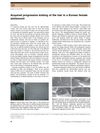 1 citations
,
October 2012 in “The Journal of Dermatology”
1 citations
,
October 2012 in “The Journal of Dermatology” A Korean girl developed kinky hair without known cause or effective treatment.
February 2013 in “Journal of the American Academy of Dermatology” Uncombable hair syndrome causes dry, frizzy hair that can't be combed flat, seen in a young child.
 29 citations
,
March 2008 in “Dermatologic Surgery”
29 citations
,
March 2008 in “Dermatologic Surgery” The Cross-section Trichometer is a new tool that can measure hair quantity and detect hair loss and growth.
 2 citations
,
July 2008 in “Dermatologic Surgery”
2 citations
,
July 2008 in “Dermatologic Surgery” The Cross-section Trichometer is a promising tool for measuring hair characteristics without cutting the hair and may have various clinical uses.
 4 citations
,
March 2020 in “BMC Research Notes”
4 citations
,
March 2020 in “BMC Research Notes” Skin tags in obese individuals may indicate higher cardiovascular risk.