August 2019 in “Wiedza Medyczna” Kerion is a severe scalp infection that needs quick treatment to avoid permanent hair loss in children.
16 citations
,
January 1995 in “Dermatology” The treatment for alopecia areata with diphenylcyclopropenone was unsuccessful.
 36 citations
,
September 1999 in “Toxicologic pathology”
36 citations
,
September 1999 in “Toxicologic pathology” Stronger corticosteroids cause more skin damage in hairless dogs, similar to effects in humans.
1 citations
,
May 2011 in “DOAJ (DOAJ: Directory of Open Access Journals)” The study found genetic diversity in coat color dilution among Czech pointers in Slovakia.
3 citations
,
November 1998 in “Pediatrics in review” For hair fungal infections, take oral antifungals; for skin and nail infections, use topical antifungals, and keep affected areas cool and dry.
 21 citations
,
July 2006 in “Veterinary dermatology”
21 citations
,
July 2006 in “Veterinary dermatology” CD34 marks potential stem cells in dog hair follicles.
 10 citations
,
June 1998 in “PubMed”
10 citations
,
June 1998 in “PubMed” Finasteride significantly reduces DHT levels in male dogs without affecting testosterone levels, suggesting it could be used to treat benign prostatic hypertrophy in dogs weighing 10 to 50 kilograms.
 10 citations
,
February 2019 in “BMC pediatrics”
10 citations
,
February 2019 in “BMC pediatrics” An infant with scalp fungus was cured after extended treatment with antifungal medication.
 November 2022 in “Brazilian journal of veterinary pathology”
 The Yorkshire terrier has a genetic hair loss condition not improved by treatment.
May 2020 in “The Journal of Pediatrics” Tinea capitis can be quickly diagnosed and treated using dermoscopy to prevent hair damage.
 March 2026 in “International Journal of Advanced Biochemistry Research”
 German shepherd hair varies in color and pattern but is flat with a consistent internal structure.
3 citations
,
May 2023 in “Pediatric Dermatology” A 9-year-old boy had a rare scalp condition usually seen in young men.
 6 citations
,
January 2011 in “Journal of veterinary medical science”
6 citations
,
January 2011 in “Journal of veterinary medical science” Using a video otoscope effectively treated ear infections in dogs.
2 citations
,
May 2020 in “Journal of the American Academy of Dermatology” Hair shaft changes may be linked to CCCA, but their role is unclear.
7 citations
,
October 1992 in “PubMed” Sinus hair follicles in mammals have different nerve fiber types with species-specific patterns, especially in cats.
20 citations
,
December 2020 in “Frontiers in Immunology” The immune processes causing VKH and vitiligo are similar in dogs and humans.
 2 citations
,
January 2005 in “Elsevier eBooks”
2 citations
,
January 2005 in “Elsevier eBooks” The document describes skin diseases affecting the outer ear in dogs and cats, their spread to other body parts, and treatment options.
6 citations
,
June 2016 in “The anatomical record” Dogs have varying numbers of touch-sensitive Merkel cells in different skin areas, with most in the oral mucosa and facial skin, unrelated to age, sex, breed, or color.
13 citations
,
November 2017 in “BMC Veterinary Research” Fusidic acid can be an effective topical treatment for superficial bacterial infections in dogs.
3 citations
,
January 2004 in “Journal of Wildlife Diseases” A deer fawn in South Dakota was the first cervid found with congenital hypotrichosis, a condition causing sparse or missing hair.
36 citations
,
April 2010 in “The journal of investigative dermatology/Journal of investigative dermatology” Canine hair follicles have stem cells similar to human hair follicles, useful for studying hair disorders.
 34 citations
,
March 2003 in “Veterinary Dermatology”
34 citations
,
March 2003 in “Veterinary Dermatology” Most dogs with alopecia had higher than normal levels of certain hormones, but hair loss might not always be linked to these hormone changes.
 13 citations
,
October 2021 in “Anais Brasileiros de Dermatologia”
13 citations
,
October 2021 in “Anais Brasileiros de Dermatologia” Dermoscopy is effective for diagnosing various skin infestations and infections.
 January 2008 in “Pratique médicale & chirurgicale de l'animal de compagnie”
 Alopecia X in dogs is a cosmetic issue, not a hormonal disorder, and harmful treatments should be avoided.
 5 citations
,
February 2015 in “Journal of Comparative Pathology”
5 citations
,
February 2015 in “Journal of Comparative Pathology” High proliferative activity and peripheral invasion indicate malignancy in canine sebaceous gland tumors; the term 'epithelioma' should be updated for clarity.
57 citations
,
August 2002 in “American Journal Of Pathology” Cathepsin L deficiency causes hair and skin issues in mice.
 86 citations
,
January 2019 in “Frontiers in Immunology”
86 citations
,
January 2019 in “Frontiers in Immunology” The document concludes that diagnosing and treating Human African Trypanosomiasis is challenging, but new treatments like fexinidazole are promising.
6 citations
,
June 2017 in “Aesthetic Surgery Journal” Microneedling can cause skin infections if not used safely.
 9 citations
,
October 2013 in “Pediatric dermatology”
9 citations
,
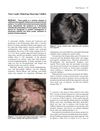
October 2013 in “Pediatric dermatology” Proper antifungal treatment is crucial to avoid misdiagnosis and prevent scarring alopecia.
 February 2023 in “Vlaams dierengeneeskundig tijdschrift”
 Two young cats with a severe ear and skin condition improved with immune system-targeting treatments.