 December 2023 in “Data in Brief”
 Curly hair's strength and flexibility vary with moisture and temperature.
 November 2023 in “British journal of nutrition”
 Curcumin supplements increase adiponectin and decrease leptin in adults.
 June 2023 in “International journal of biology, pharmacy and allied sciences”
 New medications are improving depression treatment, emphasizing accurate diagnosis and chronic care.
 June 2023 in “Journal of Education, Health and Sport”
 CBD is effective for certain epilepsy conditions, shows promise for other health issues, but needs more research for safety and effectiveness.
 May 2023 in “Accounts of chemical research”
 New methods can better classify curly hair types and lead to improved hair care products.
A new system for classifying curly hair types using precise measurements can improve hair care products and cultural inclusion.
 April 2023 in “Dermatologica Sinica”
 Sex hormones affect hair growth and loss, and treatments for related hair diseases include various medications, hair transplantation, and light therapy.
 January 2023 in “Endocrine Journal”
 Treating classic 21-hydroxylase deficiency requires precise glucocorticoid dosing and attention to individual patient needs, with new treatments showing promise.
 January 2023 in “Theranostics”
 A patch with curcumin-zinc can improve hair growth and health by delivering beneficial particles to the skin, increasing hair follicles, and reversing effects of a hair loss hormone.
 December 2022 in “GS Publishing Services eBooks”
 Science and technology are rapidly advancing and impacting various aspects of life in Ukraine.
December 2022 in “Zenodo (CERN European Organization for Nuclear Research)” Curry leaves can be used to make effective herbal hair oil for promoting hair growth.
New methods to classify curly hair types were developed based on shape and strength.
January 2022 in “Journal for ReAttach Therapy and Developmental Diversities” Ayurveda-based care with Guduchi, Ashwagandha, and Curcumin improved quality of life for breast cancer patients without serious side effects.
 May 2021 in “Клітинна та органна трансплантологія”
 Skin aging can be slowed down with proper care and treatments.
 June 2020 in “International journal of medical science and clinical invention”
 Modern research supports traditional uses of Yarrow for hair loss and skin issues.
December 2019 in “Orvostudományi Értesítö” Lifestyle changes, medications, and fertility treatments can improve PCOS symptoms and prevent complications.
 February 2019 in “IP Indian journal of clinical and experimental dermatology”
 Continuous use of hair relaxers and curlers can cause hair loss, dryness, dandruff, thinning, greying, and split ends.
January 2019 in “Can Tho University Journal of Science” The nanosilica-curcumin-bromelain complex speeds up wound healing and hair growth in burns.
 January 2019 in “Nihon Yakuri Gakkai nenkai yoshishu”
 Current treatments for lower urinary tract symptoms include α1-blockers, 5ARIs, PDE5 inhibitors, anticholinergic agents, and β3-adrenergic receptor agonists.
 January 2019 in “Pediatric Oncall”
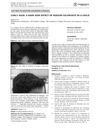
 Sodium valproate can rarely cause curly hair in children.
March 2018 in “Journal of Experimental Biology” Hair curliness is caused by the arrangement and length of two different cell types.
Fractional laser resurfacing is effective for skin conditions, has lasting results, quick recovery, and is safe but requires careful consideration of risks.
No cure exists for alopecia areata; treatments aim to manage symptoms.
 January 2013 in “The Journal of Sexual Medicine”
 The document suggests that finasteride may cause depression and suicidal thoughts, while prostate surgery does not harm sexual health.
January 2011 in “The Chinese Journal of Dermatovenereology” Curcuma anti-acne gel effectively reduces acne symptoms.
Encapsulating curcumin in nanoparticles improves its stability, release, and absorption in the body.
 January 2009 in “Nihon Keshouhin Gijutsushakaishi/Journal of S C C./Nihon Keshouhin Gijutsushakai kaishi”
 Curved human hair has different structures on each side, which might cause its shape and is similar to wool.
 January 2007 in “Proceedings of the Korean Fiber Society Conference”
 New resin B makes artificial hair fibers hold curls longer than traditional resin A.
 January 2006 in “Seibutsu Butsuri”
 Curly and straight hair differ in how their internal fibers are arranged.
May 2005 in “Comparative and Functional Genomics”