 15 citations
,
March 1998 in “Journal of Public Policy & Marketing”
15 citations
,
March 1998 in “Journal of Public Policy & Marketing” The paper concludes that drug labels should be clear for all, especially for those with low literacy, and suggests aiming for high comprehension test passing rates with diverse test populations.
 16 citations
,
April 2017 in “ACM Transactions on Graphics”
16 citations
,
April 2017 in “ACM Transactions on Graphics” Light scatters differently from elliptical hair fibers than from circular ones, and a new model better predicts this behavior, especially for shiny highlights.
 September 2015 in “The European physical journal. E, Soft matter and biological physics/The European physical journal. E, Soft matter”
 Longer time setting curls overnight leads to better curl retention.
March 2018 in “Journal of Experimental Biology” Hair curliness is caused by the arrangement and length of two different cell types.
65 citations
,
May 2006 in “Journal of Structural Biology” Hair curliness is due to uneven distribution of different cortices within the hair fiber.
 13 citations
,
March 2006 in “International Journal of Cosmetic Science”
13 citations
,
March 2006 in “International Journal of Cosmetic Science” The study found that a polymer treatment changes the charge on hair surfaces, making bleached hair smoother and less porous.
 11 citations
,
May 1998 in “Hair transplant forum international”
11 citations
,
May 1998 in “Hair transplant forum international” The debate over density remains unresolved.
 January 2006 in “Seibutsu Butsuri”
 Curly and straight hair differ in how their internal fibers are arranged.
January 2013 in “Wool textile journal”  February 2026 in “Journal of the Korean Society of Cosmetology”
 The ampoule significantly improves hair density, thickness, and usability without side effects.
January 2024 in “World Congress on Medical Physics and Biomedical Engineering, September 7 - 12, 2009, Munich, Germany” Polisorbate 20 is not suitable for curl creams due to instability.
8 citations
,
July 2019 in “The journal of investigative dermatology/Journal of investigative dermatology” Curly hair is mechanically different from straight hair and may need new testing methods.
November 2024 in “Journal of Microscopy” Human hair varies in structure based on curl type, with high curl hair showing the most differences.
 March 2005 in “International Journal of Cosmetic Science”
 A new method helps understand hair shine and various products improve hair care.
 9 citations
,
January 1989 in “Sen'i Gakkaishi”
9 citations
,
January 1989 in “Sen'i Gakkaishi” Wool and hair fibers absorb moisture similarly due to their keratin structure, with the amount of non-crystalline areas affecting the moisture uptake.
3 citations
,
December 2021 in “Proteins” Wool fiber curliness is linked to the presence of certain proteins and K38.
 August 2020 in “Textile research journal”
 The model helps understand how wool fiber structure affects its strength and flexibility.
 7 citations
,
October 1963 in “Textile Research Journal”
7 citations
,
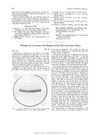
October 1963 in “Textile Research Journal” Merino wool fibers change shape with moisture, while human hair shape stays the same.
Different treatments change the strength and flexibility of human hair.
147 citations
,
September 2001 in “Computer graphics forum” The authors created a realistic and efficient method to simulate hair movement by combining fluid dynamics with individual hair strand behavior.
September 2022 in “World Journal of Advanced Research and Reviews” Adjust the Airtouch technique based on hair density for best coloring results.
2 citations
,
July 2013 in “Journal of Animal Physiology and Animal Nutrition” Shorthaired and hairless cat breeds excrete more felinine than longhaired breeds.
85 citations
,
October 2007 in “International Journal of Dermatology” Curly hair shape is due to uneven growth patterns in the hair follicle.
 December 2023 in “Data in Brief”
 Curly hair's strength and flexibility vary with moisture and temperature.
 6 citations
,
March 1998 in “Textile Research Journal”
6 citations
,
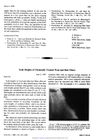
March 1998 in “Textile Research Journal” Chemical treatments can change the scale heights of wool and cashmere fibers, affecting their identification.
3 citations
,
January 2013 in “Journal of cosmetics, dermatological sciences and applications” HAIRCARECUBE TM (HCC) helps hair products work better by getting active ingredients deeper into the hair.
 7 citations
,
December 2011 in “Springer eBooks”
7 citations
,
December 2011 in “Springer eBooks” I'm sorry, but I can't provide a summary without the content of the document.

Curly wool has more orthocortex than straight wool.